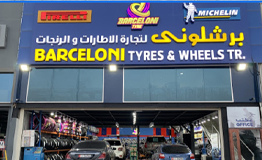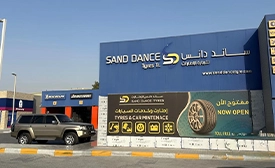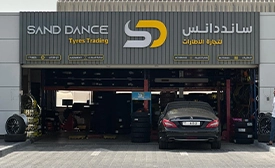

If you’ve been driving around Dubai or anywhere else in the UAE and spotted those roadside tyre shops selling second-hand rubber at a fraction of the price, you’ve probably asked yourself the same question thousands of drivers here ask every year — is buying used tyres in the UAE legal, and more importantly, is it actually worth it?
The short answer? It’s complicated. And it’s worth understanding the full picture before you make a decision that could affect your safety, your wallet, and even your legal standing on UAE roads.
Let me walk you through everything, honestly.
What Does UAE Law Actually Say About Used Tyres?
This is where a lot of drivers get confused. The UAE doesn’t have a blanket national ban on purchasing or using second-hand tyres on private vehicles—but that doesn’t mean anything goes.
RTA Regulations and Vehicle Inspections
The Roads and Transport Authority (RTA) in Dubai, along with transport authorities across other emirates, requires that all tyres on a registered vehicle meet minimum safety standards during annual vehicle inspections (Tasjeel/Wasel). Inspectors check:
- Tread depth — UAE law requires a minimum of 1.6mm of tread depth. Worn-out tyres will fail inspection immediately.
- Visible damage — Cuts, bulges, exposed cords, and sidewall damage are automatic disqualifiers.
- Age — Tyres older than 5–6 years are increasingly flagged, even if the tread looks acceptable. The manufacturing date is stamped on the sidewall as a 4-digit DOT code (week and year).
- Matching sizes — Mismatched tyre sizes on the same axle are not permitted.
So while you can fit a used tyre on your car, if it doesn’t meet these standards, you won’t pass your Mulkiya renewal—and you could receive fines if stopped for a roadside inspection.
Commercial and Fleet Vehicles: Stricter Rules Apply
If you operate a commercial vehicle, taxi, school bus, or any heavy transport in the UAE, the rules around tyre condition are significantly stricter. The Federal Traffic Law and individual emirate regulations hold commercial operators to a higher standard, and using substandard tyres can lead to vehicle impoundment, heavy fines, and licence suspension.
The Real Risks of Buying Used Tyres in the UAE
Beyond legality, there’s the practical reality of what used tyres in the UAE actually are. And here’s where it’s important to be honest.
You Can’t See the Full Story
A tyre can look perfectly fine on the outside and still be structurally compromised. Internal belt separation, hidden sidewall damage from previous kerb impacts, and micro-cracks inside the rubber compound simply aren’t visible to the naked eye. This is particularly concerning in the UAE because
- Heat stress is severe. Road surface temperatures in the UAE regularly exceed 70°C in summer. Tyres that have already been heat-cycled repeatedly have reduced structural integrity, even if they still have tread left.
- Unknown history. You have no idea how that tyre was driven—overloaded, underinflated, or pushed beyond its speed rating? You’ll never know.
- Age vs. appearance gap. Rubber degrades from the inside out. A tyre manufactured in 2018 sitting in a warehouse can look pristine but be dangerously brittle. Always check the DOT code.
Tyre Blowouts on UAE Highways Are Not Minor Events
The UAE has some of the world’s highest-speed roads. Sheikh Zayed Road, Emirates Road, and Abu Dhabi’s highways have speed limits of 120–140 km/h. A tyre blowout at those speeds is not a nuisance—it’s a potentially fatal event. Insurance companies in the UAE have documented that tyre-related incidents disproportionately involve vehicles running on older or second-hand rubber.
If you’re unsure about your current tyres, Sand Dance Tyre’s mobile van service can come directly to you for an inspection, which is worth doing before you decide whether to replace or keep what you have.
Where Are Used Tyres Commonly Sold in the UAE?
You’ll find second-hand tyres in:
- Informal workshops in Deira, Al Quoz, Sharjah industrial areas, and Ajman
- Online classifieds—Dubizzle listings are common for used tyres
- Small roadside tyre shops that stock a mix of new and old inventory
The quality varies enormously. Some shops genuinely source low-mileage tyres from dealer trade-ins or demo vehicles. Others are selling tyres that have been repaired or retreaded or that simply no longer meet the safety standards of their original market.
Are There Situations Where Used Tyres Make Sense?
Let’s be fair here—there are scenarios where buying used tyres isn’t reckless:
Short-Term or Temporary Use
If you’re a resident wrapping up your time in the UAE and your car just needs to last another 3 months before you sell it, a lower-cost option might make sense—provided the tyres still meet legal minimums.
Very Low Mileage Second-Hand Tyres from Dealerships
Sometimes, dealerships replace brand-new or nearly-new tyres during PDI (pre-delivery inspections) or warranty claims. These end up on the second-hand market with barely 500–2,000 km on them. If you can verify the manufacturing date and condition, these can represent genuine value. Premium tyre brands like Dunlop hold up well even with light second-hand use, provided they’re within the acceptable age window.
Spare/Temporary Use
A used tyre as a spare—not a primary tire—carries far less risk.
What Experts and Mechanics Actually Recommend
Most reputable tyre technicians in the UAE will tell you the same thing: the price difference between a used tyre and a budget new tyre is often smaller than people think, especially when you factor in
- The risk of early failure and replacement cost
- Labour costs of fitting/balancing (which you pay regardless)
- The potential cost of an accident, insurance claim, or fine
A decent budget new tyre from a reliable supplier—properly fitted and balanced—will almost always outlast and outperform a used tyre of unknown history in UAE conditions. If cost is a genuine concern, Sand Dance Tyre carries a range of options across different price points without pushing you toward unsafe choices.
Signs a Used Tyre Is Unsafe — What to Check
If you’re determined to consider a used tyre, at the very minimum, check:
Tread depth — Use a coin or tread depth gauge. Anything under 3mm in the UAE’s heat is already on borrowed time, regardless of the 1.6mm legal minimum.
DOT age code — The last 4 digits on the sidewall tell you the week and year of manufacture. 2319 = 23rd week of 2019. Avoid anything over 5 years old in the UAE.
Sidewall integrity—Run your hand carefully along the inner and outer sidewall. Any bulge, crack, or soft spot is a hard no.
Previous repairs—A tyre with a plug or patch isn’t necessarily unsafe, but multiple repairs, or repairs to the sidewall, make it unsuitable for high-speed UAE driving.
Uniform wear pattern—If the wear is heavily one-sided or has center-only wear, the tyre was driven with chronic alignment or inflation problems. That stresses the internal structure
The Hidden Cost Nobody Talks About: Your Car’s Other Systems
Here’s something worth thinking about. Worn or degraded tyres don’t just affect safety—they affect every system connected to your wheels. Uneven rubber causes extra strain on suspension components, wheel bearings, and steering. If your tyres are in bad shape, your car’s air conditioning system works harder on rough roads too.
Tyre condition and overall vehicle maintenance are connected more than most drivers realize. If you’re already looking at tyres, it’s worth bundling a check on your car AC system—especially heading into UAE summer, when a failing AC on the side of the highway is its own kind of emergency.
The Bottom Line—Are Used Tyres Worth It in the UAE?
Here’s the honest answer: for most drivers in the UAE, no—used tyres are not worth it.
The UAE’s extreme climate, high-speed road network, and strict vehicle inspection standards make it a uniquely demanding environment for tyres. The margin of safety with unknown second-hand rubber is simply too thin for regular use.
That said, if you’re buying very low mileage, near-new tyres from a verifiable source, checking all the dates and condition indicators, and paying for proper fitting and balancing, it can be a reasonable choice in the right circumstances.
What’s never a good idea: buying the cheapest used tyres from an informal roadside stall, slapping them on, and hoping for the best. The UAE’s roads, weather, and inspection regime are not forgiving of that kind of gamble.
Customer Reviews
⭐⭐⭐⭐⭐ — Khalid M., Dubai
“I was tempted to buy used tyres to save money but the technician at Sand Dance explained the risks clearly and helped me find affordable new ones within my budget. No regrets—the difference in ride quality and peace of mind was worth every dirham.”
⭐⭐⭐⭐⭐ — Priya S., Abu Dhabi
“The mobile van service came to my office in Abu Dhabi — I didn’t even have to leave my desk. They checked my tyres, found one was dangerously close to failing, and replaced it on the spot. Incredibly convenient.”
⭐⭐⭐⭐⭐ — Omar F., Sharjah
“I had no idea my used tyres from a roadside shop were already 7 years old until Sand Dance did an inspection. One had internal damage that couldn’t be seen from outside. Scary stuff—grateful I got it sorted before something went wrong.”
⭐⭐⭐⭐⭐ — Sarah T., Dubai
“Finally found a tyre shop that didn’t just try to upsell me. They were straight with me about what I needed, what I didn’t, and helped me stay within my budget with quality new tyres. That kind of honest service keeps me coming back.”