
If you drive regularly in the UAE, knowing how long car tyres last is essential for both safety and vehicle performance. Unlike cooler climates, the UAE exposes tyres to extreme heat, hot road surfaces, long highway journeys, sand, and intense sunlight. These conditions can accelerate rubber ageing and tread wear. In general, many tyres can last around 40,000–60,000 kilometres, but actual lifespan depends heavily on driving habits, tyre quality, maintenance, road conditions, and age.
The UAE’s Roads and Transport Authority (RTA) also stresses regular tyre inspections, particularly during summer, when high temperatures put additional pressure on tyres.
What Is the Average Lifespan of Car Tyres in the UAE?
There is no single mileage figure that applies to every vehicle. Well-maintained car tyres may commonly provide several years of service, but the harsh UAE climate can shorten their usable life.
Some tyres may reach 40,000–60,000 kilometres under normal conditions, while other tyres can wear out sooner because of aggressive driving, incorrect tyre pressure, poor wheel alignment, heavy loads, or frequent driving on rough surfaces.
Age is equally important. RTA guidance has recommended replacing tyres no later than five years, or earlier if they have insufficient tread or visible damage.
This means you should not judge tyre condition by mileage alone. A tyre that has covered relatively few kilometres may still need replacement if the rubber has aged or developed cracks.
Why Does UAE Heat Affect Car Tyres?
Extreme heat is one of the biggest challenges for car tyres in the UAE. As temperatures rise, tyre pressure changes and the rubber is exposed to greater thermal stress. Long journeys on hot roads can increase this stress even further.
Recent UAE safety warnings have highlighted the risks associated with worn or poorly maintained tyres during the summer. Heat can contribute to rubber cracking and increase the risk of tyre failure, particularly when tyres are underinflated, damaged, or old.
Sun exposure can also contribute to rubber deterioration. If your vehicle is regularly parked outdoors for long periods, inspecting the sidewalls for signs of ageing becomes especially important.
7 Signs Your Car Tyres Need Replacement
1. The Tread Is Too Low
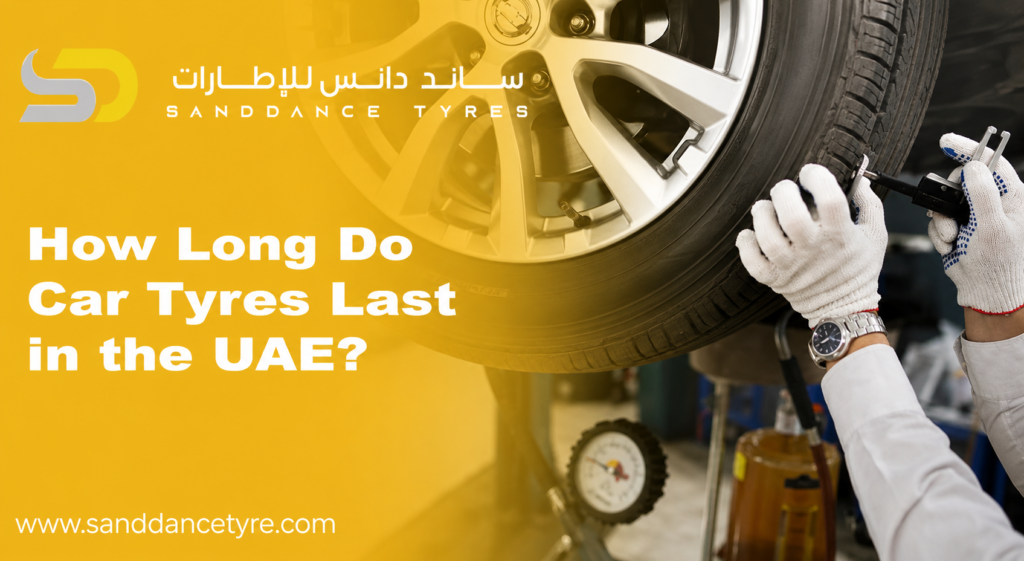
Tread depth is one of the most important indicators of tyre condition. In the UAE, the minimum legal tread depth for passenger car tyres is 1.6 mm.
However, you should not necessarily wait until the tread reaches the legal minimum. Reduced tread can affect grip, braking and water evacuation, particularly when driving during sudden UAE rain.
2. Cracks Are Appearing on the Sidewalls
Small cracks, cuts or signs of dry rubber should never be ignored. They can indicate that the tyre’s rubber is ageing and becoming less flexible.
If you notice significant cracking, have the tyre inspected by a qualified professional rather than continuing to drive on it.
3. You Notice Bulges
A bulge on the sidewall can indicate damage to the tyre’s internal structure. Unlike normal tread wear, this is a structural problem and can create a serious safety risk.
A damaged tyre should be professionally assessed and replaced when necessary.
4. Your Tyres Keep Losing Pressure
If one tyre repeatedly loses air, there could be a puncture, valve problem, bead leak or other issue.
Do not simply keep adding air. Find the cause and have the tyre inspected.
5. Uneven Tread Wear Appears
If the inner or outer section of a tyre is wearing significantly faster than the rest, your vehicle could have an alignment, balancing, suspension or inflation problem.
Correcting the underlying issue can help prevent premature wear on your replacement car tyres.
6. You Feel Vibrations While Driving
Unusual steering-wheel vibrations can sometimes indicate tyre damage, wheel imbalance, alignment problems or uneven wear.
If vibrations appear or become stronger at higher speeds, get the wheels and tyres checked instead of assuming the problem is minor.
7. Your Tyres Are More Than Five Years Old
A tyre can look relatively good while its rubber has deteriorated with age. This is particularly important in the UAE because of the country’s hot climate.
Check the four-digit manufacturing date on the tyre sidewall. The code identifies the production week and year, helping you determine how old the tyre actually is.
How to Make Car Tyres Last Longer in the UAE
Proper maintenance can help you get more usable life from your car tyres while improving road safety.
Check Tyre Pressure Regularly
Always maintain the pressure recommended by your vehicle manufacturer. The correct figure is generally found on the driver’s door-frame sticker or in the vehicle handbook.
Check pressure when the tyres are cold because heat changes the reading. During the UAE summer, making pressure checks part of your regular vehicle routine is particularly important.
Keep Your Wheels Properly Aligned
Incorrect alignment can cause uneven tread wear and shorten tyre life. If your vehicle pulls to one side or you notice uneven wear, have the alignment checked.
Rotate Your Tyres
Tyre rotation helps distribute wear more evenly between the front and rear tyres. The appropriate rotation interval depends on the vehicle and tyre manufacturer, but regular rotation is commonly recommended as part of routine maintenance.
Avoid Aggressive Driving
Hard acceleration, sudden braking and high-speed driving can increase tyre wear. Smooth driving helps reduce unnecessary stress on the tread and sidewalls.
Avoid Overloading Your Vehicle
Carrying loads beyond your vehicle’s recommended capacity puts additional stress on the tyres. Always follow the manufacturer’s load specifications.
Park in Shade When Possible
Regular exposure to intense sunlight and heat can accelerate rubber ageing. Parking in covered or shaded areas can help reduce unnecessary exposure.
How Often Should You Check Car Tyres in the UAE?
Do not wait until a tyre looks completely worn before checking it. Make visual inspections part of your regular vehicle maintenance.
Before a long UAE road trip, inspect the tread, sidewalls and tyre pressure. Also check the spare tyre if your vehicle has one. Recent UAE safety guidance recommends checking for cuts, cracks, bulges, uneven wear and correct pressure before longer journeys.
During particularly hot summer periods, more frequent pressure checks are sensible because temperature changes can affect tyre pressure.
Does Driving on Highways Reduce Tyre Life?
Highway driving itself does not automatically mean your tyres will wear out faster. However, sustained high speeds, long distances, heavy loads and high temperatures can place additional stress on car tyres.
This is especially relevant in the UAE, where drivers frequently travel long distances between Dubai, Abu Dhabi, Sharjah, Al Ain and other emirates.
Before a long highway journey, make sure your tyres have the correct cold pressure and inspect them for visible damage.
When Should You Replace All Four Car Tyres?
Replacing all four tyres together can provide more consistent grip and handling, particularly on vehicles with all-wheel drive. However, replacement requirements depend on the vehicle’s drivetrain, tyre condition and manufacturer’s recommendations.
If only two tyres require replacement on a two-wheel-drive vehicle, professional guidance is important regarding where the newer tyres should be installed. UAE road-safety guidance has recommended fitting new tyres to the rear axle in such circumstances for improved vehicle stability.
Final Thoughts
So, how long do car tyres last in the UAE? A typical set may provide around 40,000–60,000 kilometres, but mileage is only part of the equation. Heat, driving style, road conditions, tyre pressure, alignment and tyre age can all change the result.
For UAE drivers, the five-year replacement guidance is particularly important. Do not continue using tyres simply because they still have visible tread. Cracks, bulges, uneven wear, repeated pressure loss or other damage can mean replacement is necessary much sooner.
Regular inspections, correct inflation, proper alignment and timely replacement can help your car tyres perform safely through the UAE’s demanding driving conditions.