
Choosing the right tyres for your car can seem confusing, especially when you see numbers such as 205/55 R16 91V written on the sidewall. If you are wondering, tyre size, the answer is usually easier to find than you might think.
Your vehicle manufacturer provides a recommended tyre size based on the car’s weight, wheel dimensions, handling characteristics, and performance requirements. You can normally find this information on the driver’s door-jamb sticker, in the owner’s manual, or on the current tyre sidewall. However, the current tyre should only be used as a reference if it matches the manufacturer’s recommended specification.
Understanding tyre sizes in UAE before buying a replacement can help you avoid poor fitment, reduced comfort, handling problems, and unnecessary expenses.
What Does a Tyre Size Mean?
A tyre size is made up of numbers and letters that describe important characteristics of the tyre. For example, consider:
205/55 R16 91V
Each part tells you something different about the tyre.
205 represents the tyre’s nominal width in millimetres. In this example, the tyre is approximately 205 mm wide.
55 is the aspect ratio. It means the tyre’s sidewall height is 55% of its width.
R means the tyre uses radial construction, which is standard for most modern passenger vehicles.
16 represents the wheel or rim diameter in inches, so this tyre is designed for a 16-inch wheel.
91 is the load index, which indicates the tyre’s maximum load capacity under specified conditions.
V is the speed rating, indicating the tyre’s rated speed capability under specified testing conditions.
Understanding this code makes it much easier to compare tyres and check whether a particular option is suitable for your vehicle.
Where Can I Find My Car’s Tyre Size?
If you don’t know your tyre size, don’t guess. There are several places where you can check it.
Check the Driver’s Door Sticker
The driver’s door frame or door jamb is one of the best places to find the manufacturer’s recommended tyre size. Many vehicles also display the recommended cold tyre pressures on the same sticker.
This information is particularly useful if your current tyres have been replaced with a different size by a previous owner.
Check the Owner’s Manual
Your vehicle owner’s manual normally includes tyre specifications and recommended inflation pressures. Depending on the vehicle, there may be different specifications for different wheel or tyre options.
Look at the Current Tyre
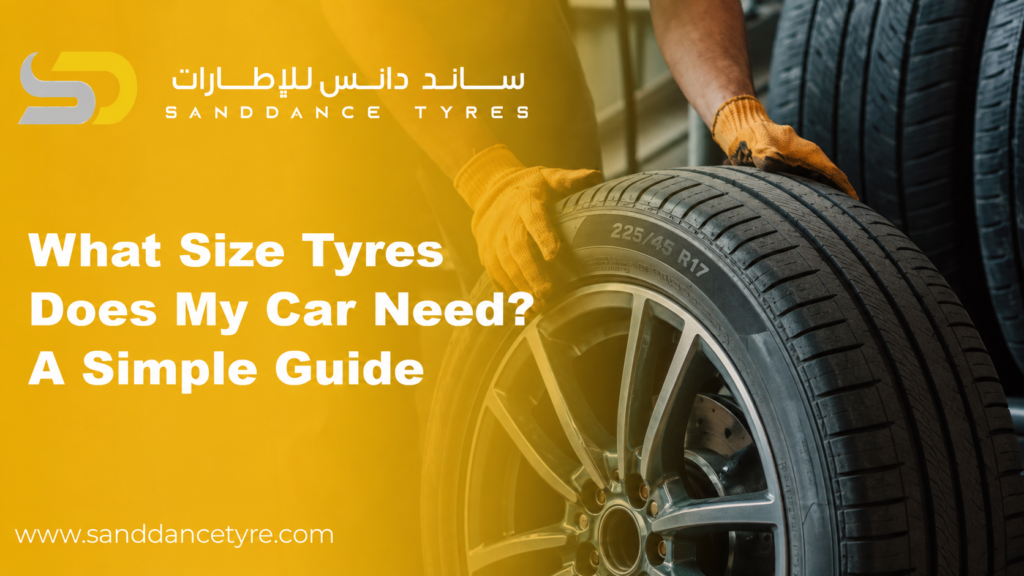
You can also look at the sidewall of your existing tyre. You should see a code similar to 195/65 R15 or 225/45 R17.
However, don’t automatically assume that the existing tyre is the correct size. If the vehicle has previously been modified or fitted with the wrong tyres, the sidewall information may not represent the manufacturer’s original recommendation.
Why Is the Correct Tyre Size Important?
Tyre size affects more than whether the tyre physically fits your wheel.
The correct specification helps maintain the handling, ride comfort, braking characteristics, and overall behaviour the vehicle was designed to provide.
Installing an unsuitable tyre size can potentially affect steering response, ground clearance, suspension clearance, fuel consumption, speedometer readings, and ride quality.
For example, moving to a much wider tyre may change steering feel and rolling resistance. Choosing a much lower-profile tyre can also make the ride feel firmer because there is less sidewall to absorb road impacts.
This is why choosing the biggest tyre that fits the wheel is not necessarily the best approach.
Can I Put a Different Size Tyre on My Car?
Sometimes a vehicle can safely use more than one tyre size. Manufacturers may offer different wheel and tyre combinations depending on the model, trim level, or optional equipment.
However, you should not change tyre size simply because another size looks better or is cheaper.
If you want to upsize or downsize your tyres, check the vehicle manufacturer’s approved specifications and make sure the replacement tyre has suitable load and speed ratings. A professional tyre specialist can also check wheel width, clearance, overall diameter, and compatibility.
The goal is to maintain a suitable overall combination rather than changing only one measurement.
What Are Load Index and Speed Rating?
Many drivers focus on the first part of the tyre code and overlook the numbers and letters that follow it.
For example, in 205/55 R16 91V, 91 is the load index and V is the speed rating.
The load index tells you the tyre’s rated load-carrying capacity. The speed rating represents the tyre’s rated speed capability under specified conditions.
These ratings matter because two tyres can have the same physical size but different load and speed ratings. Therefore, matching only the width, aspect ratio, and rim diameter isn’t always enough.
When replacing tyres, use ratings that meet the vehicle manufacturer’s requirements rather than selecting a tyre based only on price.
Should All Four Tyres Be the Same Size?
For many standard passenger vehicles, the four tyres are the same size. However, some cars, particularly performance vehicles, may use different front and rear tyre sizes.
Never assume that all four wheels should have identical dimensions.
Check your vehicle’s specifications before ordering tyres. If the vehicle uses different front and rear sizes, fitting the wrong combination can affect handling and vehicle systems.
When replacing tyres, it is also important to consider the vehicle’s drivetrain and manufacturer recommendations.
What Happens If You Choose the Wrong Tyre Size?
Installing the wrong tyre size can create several problems.
A tyre that is too wide may have clearance issues and could potentially contact suspension or body components. A tyre that is too tall can alter the vehicle’s ride height and speedometer readings.
A tyre with a significantly different overall diameter can also affect vehicle behaviour and, on some modern cars, systems that rely on wheel-speed information.
An unsuitable tyre can also change the balance between comfort, handling, road noise, and fuel efficiency.
For these reasons, tyre selection should start with the manufacturer’s recommended specification rather than appearance.
What Tyre Size Is Best for My Car?
The best tyre size for your car is generally the size recommended by the vehicle manufacturer for your particular model, year, and variant.
There isn’t one universal “best” tyre size for every vehicle. A tyre that works well on a small hatchback may be completely unsuitable for a large SUV.
Your driving conditions also matter when choosing the actual tyre. Once you have confirmed the correct size, you can compare different tyre brands and tread patterns based on factors such as wet grip, comfort, mileage, road noise, and driving conditions.
The first priority, however, should always be correct fitment.
How to Read a Tyre Size Example
Let’s take another example:
195/65 R15 91H
Here, 195 is the tyre width in millimetres.
65 means the sidewall height is 65% of the tyre width.
R indicates radial construction.
15 means the tyre is designed for a 15-inch wheel.
91 represents the load index.
H represents the speed rating.
Once you understand this format, you can quickly identify the key information printed on your tyre’s sidewall.
Should I Replace All Four Tyres at Once?
Replacing all four tyres together can provide a more consistent level of grip and handling, but it isn’t always necessary.
If only one tyre is damaged, replacement options depend on the condition and tread depth of the other tyres, the location of the damage, the vehicle’s drivetrain, and the manufacturer’s recommendations.
In some situations, replacing a pair on the same axle may be more appropriate than replacing only one tyre. A tyre professional can assess the existing tyres and recommend the safest option.
Avoid mixing significantly different tyre types or specifications without checking whether they are suitable for your vehicle.
Common Mistakes When Buying Tyres
One common mistake is choosing a tyre based only on its price.
Another is assuming that a wider tyre automatically provides better performance. Wider tyres can have advantages in certain applications, but they can also change steering feel, rolling resistance, comfort, and clearance.
Some drivers also check only the tyre width and rim size while ignoring the load index and speed rating.
Another mistake is copying the tyre size from a friend’s car. Even vehicles that look similar can have different tyre specifications depending on the model year and variant.
Always verify your own vehicle’s recommended specification before purchasing.
Frequently Asked Questions
How do I know what size tyres my car needs?
Check the tyre information sticker inside the driver’s door frame, your owner’s manual, or the existing tyre sidewall. The manufacturer’s recommended specification should take priority if the current tyre differs.
Can I use a wider tyre on my car?
Possibly, but only if the alternative size is compatible with your vehicle, wheel, suspension, and manufacturer’s specifications. Don’t choose a wider tyre simply for appearance.
Does tyre size affect fuel economy?
Yes. Changing tyre width, diameter, construction, or other characteristics can influence rolling resistance and vehicle efficiency. The effect depends on the specific tyre and vehicle.
What does R mean on a tyre?
The R means radial construction. Most modern passenger-car tyres use radial construction.
Which number on a tyre indicates the rim size?
In a size such as 205/55 R16, the 16 indicates the wheel or rim diameter in inches.
Can I change my tyre size without changing the wheels?
It depends on the alternative tyre size. The tyre must be compatible with the wheel width and diameter, while the overall combination must remain suitable for the vehicle.
Final Thoughts
If you’re asking, “What size tyres does my car need?”, start with the manufacturer’s recommendation rather than guessing from the appearance of your existing tyres.
Check the driver’s door-jamb sticker and owner’s manual, then compare the information with the markings on your current tyre. Pay attention to the complete specification, including width, aspect ratio, construction, rim diameter, load index, and speed rating.
Once you know the correct size, you can focus on choosing a tyre that suits your driving conditions, budget, comfort preferences, and performance requirements.