

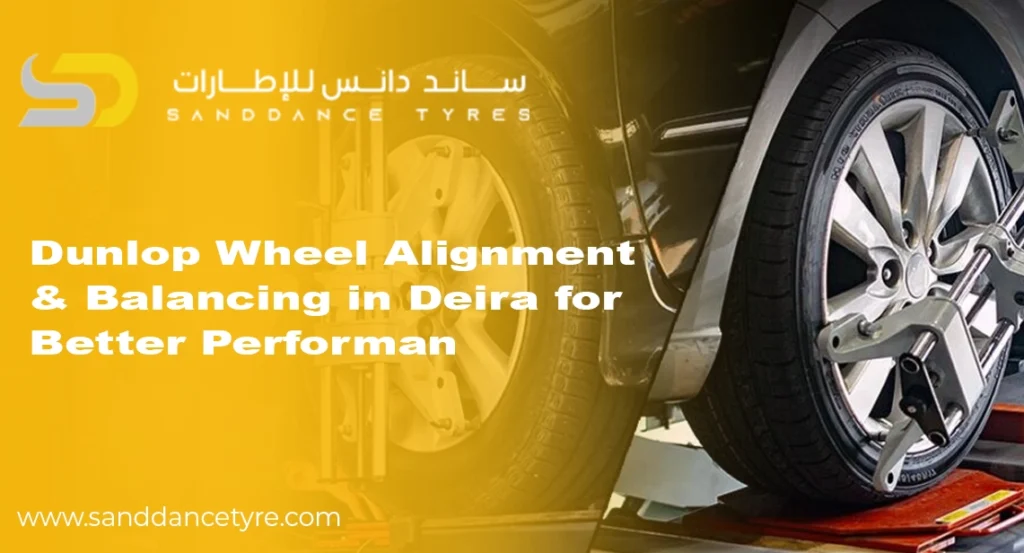
Proper wheel alignment and balancing play an important role in maintaining a smooth, stable, and comfortable driving experience. Even high-quality tyres can wear unevenly or perform poorly when your vehicle’s wheels are not correctly aligned or balanced. For drivers using Dunlop tyres, regular maintenance can help preserve handling, improve tyre longevity, and support safer driving.
Choosing Dunlop Wheel Alignment & Balancing in Deira can be a practical solution when you notice steering problems, uneven tyre wear, vibrations, or changes in your vehicle’s handling. Professional wheel service ensures that your tyres and wheels work together properly while helping your vehicle maintain better contact with the road.
What Is Wheel Alignment?
Wheel alignment is the process of adjusting the angles of your vehicle’s wheels according to the manufacturer’s recommended specifications. These angles affect how the tyres contact the road and how the vehicle responds when you steer.
A proper alignment generally focuses on three important measurements:
- Camber: The inward or outward angle of the wheel when viewed from the front.
- Caster: The angle of the steering axis when viewed from the side.
- Toe: The direction in which the tyres point compared with each other.
When these settings are incorrect, your vehicle may pull toward one side, the steering wheel may sit off-centre, or your tyres may wear unevenly.
For Dunlop tyres, correct alignment is especially important because it helps the tread maintain more consistent contact with the road.
What Is Wheel Balancing?
Wheel balancing is different from wheel alignment. Balancing addresses the distribution of weight around the wheel and tyre assembly.
When a wheel and tyre are mounted together, their weight may not be perfectly distributed. A technician uses balancing equipment to identify weight differences and installs small balancing weights where required.
Properly balanced wheels can help reduce:
- Steering-wheel vibration
- Vehicle vibration
- Uneven tyre wear
- Unnecessary suspension stress
- Driving discomfort
If you experience noticeable vibration at certain speeds, wheel balancing should be one of the checks performed by a qualified technician.
Why Dunlop Tyres Need Proper Alignment and Balancing
Dunlop tyres are designed to provide reliable road contact, handling, and braking performance. However, tyre performance depends on more than the tyre itself.
The vehicle’s suspension, steering components, wheel condition, tyre pressure, alignment settings, and balance can all influence how the tyres perform.
Incorrect alignment may cause certain parts of the tread to wear faster than others. Similarly, an unbalanced wheel can create vibrations that become more noticeable as speed increases.
Regular maintenance helps you identify these problems before they develop into larger tyre or suspension issues.
Signs Your Vehicle Needs Wheel Alignment
You do not always need to wait for a major handling problem before checking your alignment. Several common signs can indicate that your wheels need professional inspection.
1. Your Vehicle Pulls to One Side
If your car tends to move toward the left or right when you are driving on a reasonably level road, incorrect alignment could be one possible cause.
However, tyre pressure differences and road surface conditions can also influence vehicle direction, so a professional inspection is useful.
2. Uneven Tyre Wear
Check the tread across the width of your Dunlop tyres. If one side appears significantly more worn than the other, incorrect alignment may be contributing to the problem.
Early inspection can help prevent unnecessary tyre wear.
3. Steering Wheel Is Off-Centre
After alignment, the steering wheel should normally remain appropriately centred when the vehicle is travelling straight.
If the steering wheel remains noticeably tilted while the car moves straight, an alignment inspection may be required.
4. Vehicle Handling Feels Different
Changes in steering response, stability, or cornering behaviour can indicate that your vehicle needs inspection.
Because several mechanical issues can produce similar symptoms, technicians should inspect the complete steering and suspension system rather than assuming alignment is the only cause.
Signs Your Wheels Need Balancing
Wheel balancing problems often have different symptoms from alignment problems.
Common signs include:
- Vibration through the steering wheel
- Vibration through the seats or floor
- Increasing vibration at certain speeds
- Uneven tread wear
- Recent tyre installation
- A wheel or tyre being repaired
- A balancing weight becoming detached
If vibration appears after installing new Dunlop tyres, checking wheel balance is a sensible part of the diagnostic process.
Dunlop Wheel Alignment & Balancing in Deira
Drivers looking for Dunlop Wheel Alignment & Balancing in Deira should choose a workshop with suitable alignment and balancing equipment and trained technicians.
A professional service typically involves inspecting the tyres and wheels before performing the required adjustments.
Typical Alignment Process
A technician may:
- Inspect tyre condition and pressure.
- Check steering and suspension components.
- Mount the vehicle on alignment equipment.
- Measure the current wheel angles.
- Compare measurements with recommended specifications.
- Make necessary adjustments.
- Recheck the alignment.
- Perform a road test when appropriate.
Typical Wheel Balancing Process
Wheel balancing generally includes:
- Removing the wheel from the vehicle.
- Mounting the wheel on a balancing machine.
- Measuring weight distribution.
- Identifying imbalance.
- Installing appropriate balancing weights.
- Rechecking the wheel.
- Refitting the wheel correctly.
The exact process can vary depending on the vehicle and wheel assembly.
Benefits of Proper Wheel Alignment
Correct alignment can provide several practical benefits.
Better Steering Response
Correct wheel angles help your vehicle respond more predictably to steering inputs.
More Even Tyre Wear
Proper alignment can reduce irregular tread wear and help you get more consistent use from your tyres.
Improved Driving Stability
A properly aligned vehicle can feel more stable during normal driving and cornering.
Reduced Unnecessary Stress
Incorrect alignment can place additional stress on certain steering, suspension, and tyre components. Addressing the issue early can help reduce unnecessary wear.
Benefits of Proper Wheel Balancing
Wheel balancing can also improve the overall driving experience.
Smoother Driving
Correctly balanced wheels reduce unwanted vibration caused by uneven weight distribution.
Better Tyre Wear
Excessive vibration can contribute to irregular wear. Proper balancing helps the wheel and tyre assembly rotate more smoothly.
Improved Comfort
Balanced wheels can make a noticeable difference in steering and cabin comfort, particularly at higher speeds.
Support for Suspension Components
Reducing unnecessary vibration can help minimise avoidable stress on related components.
When Should You Get Your Dunlop Tyres Checked?
There is no single interval that applies to every vehicle because driving conditions, tyre type, vehicle specifications, and road conditions vary.
Consider having your tyres and wheels inspected when:
- You install new Dunlop tyres.
- You notice steering vibration.
- Your vehicle pulls to one side.
- You hit a major pothole or kerb.
- You notice uneven tread wear.
- You remove and reinstall wheels.
- Steering feels different from normal.
- Your vehicle has recently had suspension or steering work.
After hitting a significant road hazard, an inspection can help identify potential wheel, tyre, alignment, or suspension problems.
Deira Driving Conditions and Tyre Maintenance
Driving in Dubai exposes vehicles to demanding conditions. Frequent urban driving, traffic, road construction, speed changes, and road imperfections can all affect tyres and wheels over time.
Dubai’s hot climate also makes regular tyre inspection important. Drivers should regularly check tyre pressure and inspect the tread for signs of damage or unusual wear.
Proper tyre inflation should always follow the vehicle manufacturer’s recommended pressure rather than an arbitrary number printed on the tyre itself.
Alignment vs. Balancing: What’s the Difference?
Many drivers use the terms alignment and balancing interchangeably, but they solve different problems.
| Wheel Alignment | Wheel Balancing |
|---|---|
| Corrects wheel angles | Corrects weight distribution |
| Helps address pulling | Helps address vibration |
| Focuses on steering geometry | Focuses on wheel and tyre assembly |
| Can reduce uneven tread wear | Can reduce vibration-related wear |
| Uses alignment equipment | Uses wheel balancing equipment |
In some cases, a vehicle may require both services. A professional inspection can determine what is actually needed.
Why Choose Professional Wheel Service?
Wheel alignment and balancing require appropriate equipment and accurate measurements. Attempting to diagnose the problem based only on visual inspection may not identify the underlying issue.
A professional workshop can check:
- Tyre condition
- Wheel condition
- Alignment angles
- Wheel balance
- Steering components
- Suspension components
- Tyre pressure
This broader inspection is useful because similar symptoms can sometimes come from completely different mechanical problems.
How Proper Alignment Can Help Extend Tyre Life
Tyres are designed to wear gradually across the tread. When alignment is incorrect, excessive pressure can be placed on specific areas of the tread.
For example, incorrect toe settings may contribute to irregular tread wear. Camber problems can also cause one side of the tyre to wear more quickly.
Correcting alignment does not reverse existing tyre damage, but it can help prevent the same problem from continuing.
For drivers investing in Dunlop tyres, maintaining correct alignment is therefore an important part of responsible tyre care.
How Wheel Balancing Supports Smooth Performance
A wheel that is not properly balanced can create rotational vibration. The problem may become more noticeable as vehicle speed increases.
If you feel vibration through the steering wheel or vehicle cabin, do not automatically assume that balancing is the cause. Tyre damage, wheel deformation, suspension problems, and other mechanical issues can produce similar symptoms.
A proper inspection can identify the actual cause before unnecessary work is performed.
Choosing a Wheel Service Centre in Deira
When searching for wheel alignment and balancing services in Deira, consider the workshop’s equipment, technician experience, inspection process, and ability to work with your specific vehicle.
Look for a service centre that:
- Uses modern wheel alignment equipment
- Has professional balancing machinery
- Checks tyres before making adjustments
- Inspects steering and suspension components
- Uses appropriate vehicle specifications
- Rechecks measurements after adjustments
- Explains any additional repairs that may be required
Transparent communication is particularly useful when alignment or balancing problems are accompanied by other mechanical issues.
Frequently Asked Questions
1. How often should Dunlop tyres be balanced?
Wheel balancing should be checked when installing tyres and whenever vibration or irregular wear appears. It may also be required after certain wheel or tyre repairs.
2. How do I know if my car needs wheel alignment?
Common signs include pulling to one side, an off-centre steering wheel, uneven tyre wear, and changes in handling. A professional inspection can confirm whether alignment is actually required.
3. Can wheel alignment improve tyre life?
Correct alignment can help reduce irregular tyre wear. However, tyre lifespan also depends on inflation pressure, driving habits, road conditions, vehicle condition, and tyre maintenance.
4. Is wheel balancing the same as alignment?
No. Alignment adjusts wheel angles, while balancing corrects uneven weight distribution in the wheel and tyre assembly.
5. Should I get alignment after installing new Dunlop tyres?
It is sensible to check alignment when installing new tyres, particularly if the previous tyres showed uneven wear or the vehicle has steering or handling symptoms.
6. Where can I get Dunlop wheel alignment and balancing in Deira?
Look for a professional Deira workshop with suitable alignment and wheel-balancing equipment. The workshop should also be able to inspect the tyres, wheels, steering, and suspension before recommending any service.
Final Thoughts
Maintaining your vehicle’s wheels and tyres is an important part of safe and comfortable driving. Dunlop Wheel Alignment & Balancing in Deira can help address common issues such as uneven tyre wear, steering irregularities, and wheel vibration.
Regular inspection is particularly useful after fitting new tyres, hitting potholes, experiencing steering changes, or noticing unusual vibration. By combining proper tyre pressure, routine inspections, accurate alignment, and correct wheel balancing, drivers can help maintain consistent tyre performance and a smoother driving experience on Dubai roads.