
R134a vs R1234yf: Which Car AC Gas Type Is Best for Your Vehicle?
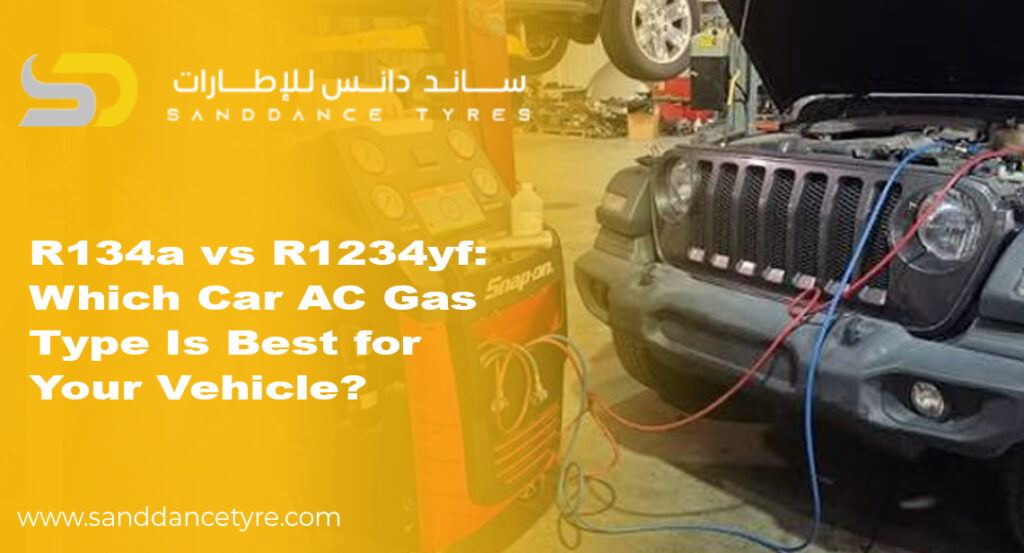
If your car was made before around 2015, it almost certainly runs on R134a, and that’s the refrigerant it should stay on unless your mechanic recommends a full system retrofit. If your car is newer, there’s a good chance it already uses R1234yf, which is the industry’s move toward a lower-emission refrigerant. So when people ask R134a vs R1234yf, which car AC gas type is best?” the honest answer is it depends on what your manufacturer designed your AC system to use, not which gas is “better” in the abstract. Get it wrong, and you risk poor cooling, damaged components, or a system that won’t hold pressure at all. That’s the short version. Now let’s actually unpack why these two gases exist, how they’re different under the hood, and how to figure out which one your car needs. Why Are There Two Types of Car AC Gas? For decades, R134a was the standard refrigerant used in almost every car on the road. It replaced the older R12 gas back in the 1990s after R12 was found to be harmful to the ozone layer. R134a did a decent job cooling cars for over twenty years, but it turned out to have its own environmental downside: a high global warming potential. In simple terms, if it leaks into the atmosphere, it traps heat far more effectively than carbon dioxide does. That’s where R1234yf comes in. Automakers and regulators, especially in Europe, pushed for a refrigerant with a much smaller environmental footprint. R1234yf was developed as that replacement, and since around 2015 it has become standard equipment in most new vehicles, including many sold in the Gulf region. So the split between R134a and R1234yf isn’t really a performance rivalry. It’s a generational shift, similar to how cars moved from carburetors to fuel injection. The newer gas isn’t there because it cools better; it’s there because it’s kinder to the environment. R134a vs R1234yf: The Core Differences When people compare R134a vs R1234yf, which car AC gas type is best, they’re usually asking about three things: cooling performance, safety, and cost. Here’s how they stack up. Cooling Performance Both refrigerants do a solid job of cooling a properly maintained car interior. In real-world driving, most people wouldn’t notice a dramatic difference in how cold the air blows. R1234yf systems are engineered with slightly different compressor pressures and component tolerances to get comparable performance, so as long as the system is designed for it, cooling output is not the deciding factor. Environmental Impact This is where the two gases genuinely differ. R134a has a global warming potential of roughly 1,430, meaning a leak has a much larger climate impact than the same amount of R1234yf, which sits at under 1. This is the entire reason the automotive industry shifted in the first place, and it’s why many countries have started phasing out R134a in new vehicle production. Flammability and Safety R1234yf is mildly flammable under specific high-heat conditions, which caused some early controversy when it was introduced. Extensive testing by independent safety bodies and manufacturers has since shown that, when installed correctly in a factory-designed system, the risk is very low. Still, it’s a detail worth knowing, and it’s one more reason why swapping refrigerants without proper engineering knowledge is not something to attempt casually. Cost Here’s the part that surprises most drivers: R1234yf is considerably more expensive than R134a, sometimes several times the price per kilogram. That’s due to a more complex manufacturing process and patent licensing. So while R1234yf is the “newer and better for the planet” option, it does come with a higher price tag when it’s time for a refill or a repair. How Do You Know Which Gas Your Car Uses? This is the most practical question, and thankfully it’s easy to check. Every car sold with an AC system has a label, usually located under the hood near the front of the engine bay, sometimes on the AC compressor itself or inside the bonnet. This label specifies the refrigerant type and the exact charge amount in grams. A few general guidelines: If you’re ever unsure, it’s worth having a technician confirm it before any AC work is carried out. Using the wrong refrigerant, even briefly, can contaminate the system and lead to costly repairs. Can You Switch a Car From R134a to R1234yf? Technically, retrofitting is possible, but it’s rarely straightforward or cheap. The compressor, hoses, seals, and expansion valve in an R134a system are not built to handle R1234yf’s slightly different pressure and chemical properties long-term. A proper retrofit usually means replacing several components, not just swapping the gas, which can end up costing more than simply maintaining the original system. Unless a manufacturer explicitly approves a retrofit kit for a specific model, most experienced technicians will recommend sticking with the refrigerant your car was designed for. This is a decision best made with professional guidance rather than guesswork, especially since a mismatched system can fail to cool properly or leak refrigerant that damages the compressor over time. Signs Your Car’s AC System Needs Attention Regardless of which gas your car runs on, the warning signs of a struggling AC system look pretty similar: If any of these sound familiar, it’s worth getting the system checked before a small issue turns into a compressor replacement. This is exactly the kind of job where getting the right diagnosis matters more than a quick top-up. A trustworthy car AC repair service will start by confirming which refrigerant your vehicle uses, checking for leaks with proper detection equipment, and then recharging with the correct gas and the correct amount, rather than just guessing and hoping for the best. So, Which Car AC Gas Type Is Best? If you’re weighing R134a vs R1234yf, which car AC gas type is best for your own vehicle, the honest, unglamorous truth is that the “best” gas is whichever one your car was engineered to run on. Neither refrigerant is universally superior; they’re suited
UAE Petrol and Diesel Prices for June 2026 Announced: Here’s What Motorists Need to Know
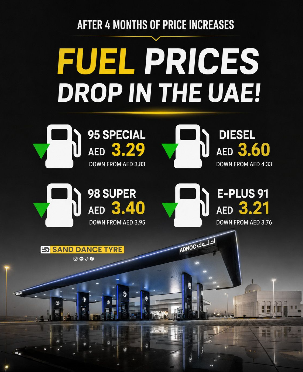
The UAE Fuel Price Committee has officially announced the petrol and diesel prices for June 2026, with motorists experiencing another increase in petrol prices while diesel has become more affordable. The revised fuel rates came into effect on June 1, 2026, and apply across all emirates, including Dubai, Abu Dhabi, Sharjah, Ajman, Ras Al Khaimah, Fujairah, and Umm Al Quwain. UAE Fuel Prices for June 2026 The updated fuel prices are: Fuel Type June 2026 Price (AED/Litre) May 2026 Price (AED/Litre) Super 98 AED 3.95 AED 3.66 Special 95 AED 3.83 AED 3.55 E-Plus 91 AED 3.76 AED 3.48 Diesel AED 4.33 AED 4.69 The latest revision marks a significant increase of approximately 28 to 29 fils per litre across all petrol grades, while diesel has decreased by 36 fils per litre, offering some relief for commercial transport operators and logistics companies. Why Have Petrol Prices Increased? The rise in petrol prices reflects ongoing volatility in the global oil market. During May, international crude oil prices experienced upward pressure due to geopolitical tensions in the Middle East and concerns over energy supply routes. Since the UAE deregulated fuel prices in 2015, domestic fuel rates have been adjusted monthly in line with global market conditions. Diesel Prices Offer Relief While petrol prices have climbed for the fourth consecutive month, diesel prices have moved in the opposite direction. The reduction in diesel costs is expected to benefit sectors heavily dependent on transportation, including logistics, construction, freight, and commercial delivery services. Lower diesel prices may also help reduce operating expenses for businesses relying on heavy vehicles and industrial equipment. Impact on UAE Motorists The higher petrol prices will increase monthly fuel expenses for residents who commute daily. For drivers covering long distances, even a small increase per litre can noticeably affect monthly transportation costs. Motorists can reduce fuel consumption by: How Are UAE Fuel Prices Determined? Every month, the UAE Fuel Price Committee reviews international crude oil prices, refining costs, operating expenses, and distribution charges before announcing new fuel rates. The updated prices become effective on the first day of each month, ensuring domestic fuel costs remain aligned with global market trends. Final Thoughts June 2026 brings another rise in petrol prices across the UAE, while diesel users benefit from a notable price reduction. Whether you’re a daily commuter or a business managing a fleet, staying informed about monthly fuel price updates can help you better manage transportation expenses and budget effectively. Motorists should continue monitoring monthly announcements from the UAE Fuel Price Committee, as fuel prices remain closely linked to international oil market movements.
Nankang Tyres in Dubai: Complete Buying Guide, Benefits & Best Deals
If you’re looking for reliable, affordable tyres that won’t leave your wallet empty, Nankang Tyres in Dubai might be exactly what you need. Whether you’re driving through the scorching Dubai heat or navigating pothole-filled roads, choosing the right tyres matters more than you might think. We’ve put together this complete guide to help you understand why Nankang has become a trusted choice for thousands of Dubai drivers, what makes them special, and most importantly, where to find the best deals without compromising on quality. Here’s the thing: tyre shopping shouldn’t be stressful. You probably have a thousand other things on your mind, and the last thing you want is to spend hours comparing specifications. That’s why we’re breaking everything down into bite-sized, actionable information. By the end of this guide, you’ll know exactly what Nankang Tyres offer and whether they’re the right fit for your vehicle. Why Nankang Tyres Are Gaining Trust in Dubai Dubai’s roads are unique. Between the intense heat that can reach 50°C, the sandy terrain that can damage your rubber, and the demanding driving conditions, your tyres need to handle a lot. That’s where Nankang steps in. Founded back in 1979 and headquartered in Taiwan, Nankang has spent over four decades perfecting tyre manufacturing. They’re not the flashiest brand on the market, but they’re quietly efficient—kind of like that coworker who always gets the job done without making a fuss about it. What makes Nankang Tyres in Dubai particularly appealing is their philosophy: deliver performance without the premium price tag. They’ve invested heavily in research and development, and it shows. Their tyres are engineered to withstand high temperatures, offer excellent grip on various surfaces, and maintain consistent performance throughout their lifespan. Many Dubai residents have discovered that Nankang delivers solid performance at a fraction of what you’d pay for other well-known brands. That’s not cutting corners—that’s smart manufacturing and efficient operations passing savings directly to you. Understanding Nankang’s Tyre Range for Dubai Drivers All-Season Comfort Tyres If you want versatility, Nankang’s comfort-focused range is worth exploring. These tyres are designed for drivers who prioritize a smooth, quiet ride over aggressive performance. They handle Dubai’s varied conditions decently, though they’re better suited if you’re mostly commuting on well-maintained roads. Nankang Tyres in this category offer: High-Performance Options For drivers who demand more—whether that’s handling, responsiveness, or precision—Nankang offers performance-oriented alternatives. These tyres bite harder into the road, giving you better control during spirited driving. They’re particularly useful if you’re navigating Dubai’s traffic during peak hours when quick reactions matter. Winter and Seasonal Solutions While Dubai doesn’t get snow, cooler months still see temperature drops. Nankang’s seasonal offerings account for this, ensuring your tyres remain responsive even when temperatures dip. Benefits of Choosing Nankang Tyres in Dubai Climate Heat Resistance You Actually Need Dubai’s summer heat isn’t just uncomfortable—it’s brutal on tyres. Standard rubber compounds can degrade faster in extreme temperatures. Nankang has engineered their compounds specifically to resist heat-related wear. This means: When your tyres are properly designed for heat, you’re not just getting longer life—you’re getting safer driving. Exceptional Grip on Hot Asphalt Here’s something most people don’t think about: hot asphalt behaves differently than cool asphalt. Nankang’s tread designs have been refined to maintain excellent grip even when the road surface is sun-heated. This translates to better braking performance and more confidence during emergency maneuvers. Fuel Efficiency That Actually Matters With fuel prices fluctuating and everyone watching their budgets, every bit counts. Nankang Tyres are engineered with low rolling resistance, which means your engine doesn’t have to work as hard to keep your vehicle moving. Over time, this adds up to measurable savings at the pump. We’re talking about 3-5% better fuel economy compared to older tyre designs—not revolutionary, but certainly noticeable if you’re a high-mileage driver. Sand and Dust Durability Dubai isn’t just about manicured streets. Sandstorms and dusty conditions are part of life here. Nankang’s tyre construction includes protective compounds that resist sand particle erosion, keeping your rubber healthier for longer. Finding the Best Nankang Tyre Deals in Dubai Where to Shop Smart Finding affordable Nankang Tyres in Dubai isn’t complicated if you know where to look. Established tyre retailers across the emirate stock Nankang, and prices can vary significantly between shops. When you’re shopping around, don’t just compare the base tyre price. Look at what’s included: alignment services, balancing, disposal of old tyres, and warranty coverage. A seemingly cheaper tyre might come with hidden costs, while a slightly higher price might include valuable add-ons. Online vs. Physical Stores Online retailers often offer competitive pricing because their overhead is lower. However, make sure you factor in installation costs. Many online sellers can arrange installation at a local garage, though you’ll need to coordinate separately. Sometimes the convenience of buying and getting your tyres fitted in one location is worth paying a few dirhams extra. Physical tyre shops in Dubai are increasingly competitive. Places like Sanddance Tyre stock a range of brands and can often match or beat online prices, especially if you’re willing to discuss bulk purchases or seasonal deals. Seasonal Promotions and Deals Dubai’s tyre shops run regular promotions, particularly during: Subscribe to tyre shop newsletters or follow them on social media. That’s often where the best deals are announced before they hit mainstream advertising. Installation and Maintenance: Getting Maximum Value Professional Installation Matters Here’s something worth emphasizing: the quality of your tyres is only half the equation. Proper installation and balancing are crucial. When Nankang Tyres are professionally fitted by someone who knows what they’re doing, you get: Skimping on installation to save a few dirhams is false economy. Regular Rotation and Alignment Front tyres wear differently than rear tyres, especially if you drive a lot in the city. Regular rotation—ideally every 10,000-15,000 kilometers—keeps wear even and extends tyre life significantly. Dubai’s roads, while generally good, can still develop imperfections that throw your alignment off. Unaligned wheels accelerate tyre wear dramatically. Many garages offer alignment services, and it’s worth getting
Car AC Repair Service: Complete Guide to Keeping Your Car Cool Year-Round
If your car’s air conditioning is blowing warm air, making strange noises, or barely working at all, you need a reliable car AC repair service to diagnose the problem before it turns into a bigger, costlier issue. A proper AC repair service checks refrigerant levels, inspects the compressor, and fixes leaks so your system runs efficiently and keeps you cool no matter how hot it gets outside. Anyone who has driven through a scorching afternoon with a broken AC knows it’s not just uncomfortable — it’s genuinely draining. And yet, car air conditioning is one of those systems people tend to ignore until it completely stops working. By then, what could have been a simple fix often turns into a full compressor replacement. This guide walks you through everything you need to know about keeping your car’s AC in top shape, from common warning signs to what actually happens during a professional repair. Why Your Car’s AC System Deserves More Attention Than It Gets Car air conditioning isn’t just about comfort. It plays a role in defogging your windshield, maintaining air quality inside the cabin, and even protecting the engine from certain types of strain. A neglected AC system doesn’t just leave you sweating — it can lead to compressor seizures, refrigerant leaks that harm the environment, and electrical issues that spread to other parts of the vehicle. Most drivers only think about AC repair service when the air stops being cold. But like brakes or tyres, the air conditioning system benefits from regular checks. Catching a small leak early is far cheaper than replacing a compressor that’s seized up because it ran low on refrigerant for months. Common Signs Your Car Needs AC Repair You don’t need to be a mechanic to notice when something’s off. Here are the signals that usually mean it’s time to book a car AC repair service. Warm Air Instead of Cold This is the most obvious sign. If you crank the AC to its coldest setting and still feel warm or lukewarm air, there’s likely a refrigerant leak, a failing compressor, or a blocked expansion valve. It rarely fixes itself, and driving around hoping it improves usually just delays a repair that was inevitable anyway. Strange Noises When the AC Is On Squealing, grinding, or rattling noises when you switch on the AC often point to a worn-out compressor clutch or a failing belt. These noises tend to get louder over time, so it’s worth having a technician listen to it sooner rather than later. Musty or Unpleasant Smells A musty smell when the AC kicks in usually means mold or mildew has built up in the evaporator core, often due to trapped moisture. It’s not dangerous, but it’s unpleasant, and it can be a sign that the cabin air filter needs replacing. Weak Airflow If the air is cold but barely reaches you, the issue might be a clogged cabin filter, a failing blower motor, or a blocked ventilation system. This is one of the easier issues to diagnose during a routine AC repair service visit. Cycling On and Off Rapidly If your compressor keeps switching on and off in short bursts, it could indicate low refrigerant or an electrical fault. This puts extra strain on the compressor and can shorten its lifespan if left unaddressed. What Happens During a Professional Car AC Repair Service? Understanding what a technician actually does can help you feel more confident about the process — and know what questions to ask. Initial Diagnosis A thorough car AC repair service starts with a diagnostic check. Technicians use pressure gauges to measure refrigerant levels and inspect for visible leaks, damaged hoses, or corrosion around fittings. Modern shops often use UV dye tests to pinpoint exactly where refrigerant is escaping, since even a pinhole leak can drain a system over several months. Refrigerant Recharge If refrigerant levels are low, the system gets recharged to the manufacturer’s specified amount. It’s worth noting that overfilling or underfilling can both cause performance issues, so this step should always be handled by someone with the right equipment and experience rather than attempted with a store-bought recharge kit. Compressor and Component Inspection The compressor is the heart of the AC system, and a good technician will check its clutch, pulley, and overall condition. They’ll also look at the condenser, evaporator, expansion valve, and receiver-drier, since a fault in any one of these components can affect the whole system’s performance. Belt and Hose Check Worn belts and cracked hoses are common culprits behind sudden AC failure. Part of a comprehensive AC repair service includes checking these for wear and replacing them if they show signs of cracking, fraying, or leaking. Final Performance Test Once repairs are complete, the technician runs the system again to confirm it’s blowing consistently cold air and that pressures are within normal range. This step matters because a repair isn’t really finished until it’s been tested under real operating conditions. How Often Should You Get Your Car AC Checked? Most manufacturers recommend having your air conditioning system inspected at least once a year, ideally before the hot season begins. Refrigerant naturally leaks out at a very slow rate over time, even without a specific fault, so an annual top-up and inspection can prevent bigger problems down the line. If you’ve noticed any of the warning signs mentioned earlier, don’t wait for the annual check — get it looked at as soon as possible. DIY vs. Professional AC Repair Service There’s a lot of temptation to grab a refrigerant recharge can from an auto parts store and handle it yourself. For very minor top-ups, this can work temporarily. But it comes with real risks: A professional car AC repair service uses proper diagnostic tools, follows manufacturer specifications, and can spot underlying issues that a quick DIY fix would miss entirely. What looks like a simple low-refrigerant problem might actually be a slow leak that will just come back in a few
Car AC Repair Service: Common AC Problems, Warning Signs & Expert Solutions
If your car’s air conditioning is blowing warm air, making strange noises, or barely working at all, you need a reliable car AC repair service before the next heatwave catches you off guard. The most common causes are low refrigerant from a leak, a failing compressor, a clogged cabin filter, or electrical faults in the cooling system—and most of these can be diagnosed and fixed within a single visit by an experienced technician. In a climate where the AC isn’t a luxury but a survival tool, knowing what’s actually wrong (and what it’ll take to fix it) can save you both money and a very uncomfortable commute. We’ve all been there. You hop into your car after a long day, crank the AC, and… nothing. Or worse, it’s running, but the air coming out feels more like a hot exhale than a cool breeze. It’s frustrating, it’s hot, and honestly, it’s the kind of problem that tends to get ignored until it becomes a much bigger (and pricier) headache. This guide walks you through the most common AC problems, the warning signs you shouldn’t brush off, and what real solutions look like—no jargon, no scare tactics, just straight answers. Why Car AC Problems Happen More Often Than You’d Think Car air conditioning systems are a closed loop of refrigerant, compressors, condensers, and electrical components, all working together under the hood—which also means there are a lot of small parts that can wear out, leak, or fail over time. Add in heat, dust, vibration, and the occasional pothole, and it’s no surprise that AC issues are one of the most common reasons drivers book a car AC repair appointment. What makes things trickier is that AC problems don’t always show up the same way. Sometimes it’s a sudden total failure. Other times, it’s a slow decline—the air gets a little less cold every week until one day you realize it hasn’t actually been “cold” in a month. Catching the early signs makes a real difference, both for your comfort and your wallet. Common Car AC Problems You’re Likely to Run Into 1. Refrigerant Leaks This is, by a wide margin, the number one reason cars lose cooling power. Refrigerant doesn’t just “run out” on its own — if your levels are low, there’s almost always a leak somewhere in the system, whether that’s a hose, a seal, or the condenser itself. Driving around with low refrigerant doesn’t just mean weaker cooling; it can also put extra strain on the compressor, which is a far more expensive part to replace. 2. A Failing Compressor Think of the compressor as the heart of your AC system — it pressurizes the refrigerant and keeps it circulating. When it starts to fail, you’ll usually notice loud clunking or grinding noises when the AC is switched on, inconsistent cooling, or the AC clutch not engaging at all. Compressors don’t usually fail overnight; there’s typically a buildup of small warning signs before a full breakdown. 3. Clogged or Dirty Cabin Air Filter This one’s easy to overlook because it has nothing to do with refrigerant or mechanical parts—it’s just airflow. A clogged cabin filter restricts the amount of air moving through the system, which means weaker airflow from your vents even if everything else is technically working fine. It’s also one of the cheapest and fastest fixes on this list, which makes it worth checking first. 4. Electrical and Sensor Issues Modern cars rely on a network of sensors and relays to manage the AC system, including the climate control module, pressure switches, and blower motor resistors. When one of these goes faulty, you might get inconsistent temperatures, an AC that only works on certain fan speeds, or a system that simply won’t turn on. These issues can be tricky to diagnose without proper scan tools, which is why DIY troubleshooting often hits a wall here. 5. Condenser Damage The condenser sits at the front of your car, right behind the grille, which makes it vulnerable to damage from road debris, stone chips, and accident impacts. A damaged condenser can leak refrigerant or block proper airflow, leading to poor cooling performance even when the rest of the system is healthy. 6. Mold, Mildew, and Bad Odors If your AC smells musty or sour when you turn it on, that’s usually moisture buildup in the evaporator core creating the perfect environment for mold and bacteria. It’s not just unpleasant—for people with allergies or respiratory sensitivities, it can actually be uncomfortable to drive with the AC running. Warning Signs You Shouldn’t Ignore Most AC failures give you a heads-up before they fully break down. Here’s what to watch for: If you notice even one or two of these, it’s worth getting it looked at sooner rather than later. AC systems rarely fix themselves, and a small leak today can mean a compressor replacement in a few months. How a Professional Car AC Repair Service Diagnoses the Problem A proper diagnosis goes well beyond just checking refrigerant levels. Here’s generally what a thorough inspection looks like: Pressure Testing Technicians connect gauges to the high and low-pressure sides of the AC system to check whether refrigerant levels and pressure are within the correct range. Abnormal readings often point directly to a leak or a failing compressor. Leak Detection Using UV dye or electronic leak detectors, technicians can pinpoint exactly where refrigerant is escaping — whether that’s a hose connection, a seal, or a crack in the condenser — without having to guess or replace parts unnecessarily. Component Inspection This includes a visual and functional check of the compressor, condenser, evaporator, expansion valve, and blower motor, along with the electrical connections and relays tied to the AC system. Performance Testing Once repairs are made, the system gets tested under real operating conditions to confirm the vents are actually producing the temperature drop you’d expect—not just that the parts are technically working. If you’re dealing with any of these symptoms in Dubai’s
TPMS Service Dubai, UAE: Everything You Need to Know for Safer Driving
If you’ve ever seen that little tire-shaped warning light pop up on your dashboard, you already know how unsettling it feels. TPMS service in Dubai isn’t just a technical checkbox — it’s one of the simplest things you can do to keep yourself, your passengers, and everyone else on the road a lot safer. Whether you’re cruising down Sheikh Zayed Road or navigating the tighter streets of Deira, your tire pressure monitoring system is quietly working in the background. And when it stops working properly? That’s when things can go wrong fast. What Exactly Is TPMS — and Why Should You Care? TPMS stands for Tire Pressure Monitoring System. It’s a built-in safety feature that monitors the air pressure inside your tires in real time and alerts you when pressure drops to an unsafe level — typically 25% below the recommended PSI. Most modern vehicles sold in the UAE come equipped with TPMS as standard. But here’s the thing: the system itself needs maintenance. Sensors wear out, batteries die (yes, TPMS sensors have batteries), and recalibration is sometimes needed after tire changes or rotations. Think of it this way — your TPMS is only as good as the last time someone checked it properly. Why TPMS Service Matters More in Dubai’s Climate The Heat Factor Is Real Dubai’s climate is genuinely brutal on tires. Summer temperatures regularly exceed 45°C on the road surface, and that heat alone causes significant tire pressure fluctuations. What reads as normal pressure in the morning can spike dangerously by noon — and drop again at night. Your TPMS helps you track those changes in real time. But if the sensor is faulty, you’re essentially flying blind. That’s not a risk worth taking. Highway Driving at High Speed The UAE has some of the highest speed limits in the world. Under-inflated tires at high speed generate excessive heat and can lead to blowouts. A functioning TPMS gives you early warning before a small pressure drop becomes a serious incident. How TPMS Works — The Basics There are two types of TPMS systems you’ll encounter: Direct TPMS uses physical sensors mounted inside each wheel. These sensors measure actual air pressure and transmit the data to your car’s computer. They’re more accurate but require battery replacements and sensor replacements over time. Indirect TPMS works through your ABS wheel speed sensors. It detects pressure loss by measuring how fast each wheel rotates — a slightly deflated tire spins faster. It doesn’t give you an actual PSI reading, but it does alert you when something’s off. Most newer vehicles in Dubai use direct TPMS, which is generally the more reliable of the two. Common TPMS Problems We See in the UAE Sensor Battery Death TPMS sensors run on small lithium batteries that typically last 5–10 years. Once the battery dies, the sensor stops transmitting. You’ll usually get a warning light, but it won’t tell you your actual pressure anymore. At that point, the system is essentially useless. Sensor Damage from Potholes or Rim Changes This is common in the UAE — sensors can get damaged during tire mounting, especially if the technician isn’t careful. A knocked sensor might still show as active but give inaccurate readings. Worse, it might fail silently. Recalibration Needed After Tire Rotation or Replacement Every time your tires are rotated, changed, or replaced, your TPMS should be recalibrated. Without proper recalibration, the system may display pressure from the wrong wheel position, which defeats the whole purpose. When Should You Book a TPMS Service in Dubai? Here are the clear signs it’s time to get your TPMS checked: Don’t ignore any of these. A blinking TPMS light especially needs attention quickly. What Does a TPMS Service Actually Include? H3: At a Professional Tyre Centre When you take your car to a specialist for TPMS service in the UAE, here’s what a proper service should cover: Sensor Inspection and Testing — Each sensor is individually tested to confirm it’s transmitting correctly and that the battery is within acceptable range. Pressure Verification — Technicians manually verify tire pressures against manufacturer recommendations for your specific vehicle. System Reset and Recalibration — The TPMS control unit is reset and recalibrated, especially important after tire work. This is often done using a dedicated TPMS diagnostic tool that communicates with each sensor individually. Sensor Replacement (if needed) — If a sensor has a dead battery or is physically damaged, it needs to be replaced. This is a relatively straightforward job but needs to be done with the right tools so the valve stem isn’t damaged. Warning Light Diagnosis — If your dashboard light is on, a proper diagnostic scan identifies exactly which sensor is triggering it and why. For a complete and transparent TPMS service in Dubai, Sand Dance Tyre handles all of this with the kind of attention that keeps your car safe on UAE roads. Can You Ignore the TPMS Warning Light? Honestly? A lot of drivers do. They assume it’s a minor issue, pump up the tires, and move on. Sometimes that’s fine. But here’s the reality: If the light comes back on within a few days, or if it blinks rather than stays solid, that’s your car telling you there’s a deeper problem. Ignoring a faulty TPMS doesn’t just mean you might be driving on low pressure without knowing it — it means you’ve lost one of your primary early-warning systems for tire failure. In a country where road speeds are high and temperatures push tires to their limits, that’s a meaningful risk. TPMS and Your Tyre Choice: They Work Together Here’s something a lot of drivers don’t think about — your tire type affects how your TPMS behaves. High-performance tires, run-flat tires, and specialty tires all have different pressure requirements and behave differently in UAE heat. If you’re upgrading your tires, it’s worth pairing that with a TPMS check and recalibration. For example, Bridgestone tyres are a popular choice in Dubai because of their heat resistance and
Top Benefits of Getting a Tyre Balancing Service in Dubai
Most Dubai drivers think about their tyres only when something goes visibly wrong — a puncture, a blowout, or a tyre that looks noticeably flat. But some of the most damaging tyre problems are completely invisible until they have already done their harm. Tyre imbalance is exactly this kind of silent issue — and it is one of the most common problems affecting vehicles on Dubai’s roads today. Getting a professional tyre balancing service in Dubai is not just about fixing a wobble or a vibration. It protects your tyres, your suspension, your fuel efficiency, and most importantly, your safety every time you drive. This guide explains what tyre balancing actually does, why Dubai’s roads and climate make it especially important, and what benefits you gain from keeping your tyres properly balanced. What Is Tyre Balancing and How Does It Work? Tyre balancing is the process of equalising the weight distribution around each tyre and wheel assembly. Even brand-new tyres are not perfectly uniform in weight — small variations in the rubber and the wheel itself create imbalances that become more pronounced as the tyre rotates at speed. During a professional tyre balancing service, a technician mounts each wheel on a specialised balancing machine that spins it and identifies exactly where the weight is uneven. Small counterweights — typically made from steel or lead — are then attached to the rim at precise points to compensate for these variations. The result is a tyre and wheel assembly that rotates evenly at all speeds, without vibration or uneven wear. This is different from wheel alignment, which adjusts the angles at which your tyres meet the road. Both services are important, but they solve different problems. Balancing addresses weight distribution; alignment addresses directional geometry. Why Tyre Balancing Matters More in Dubai Dubai’s driving environment places unusual demands on tyres compared to most other markets globally. Understanding these local factors explains why a regular tyre balancing service in Dubai is not just a recommended maintenance item — it is a genuine necessity. Extreme heat accelerates imbalance effects. Dubai’s summer temperatures regularly exceed 45 degrees Celsius, and road surface temperatures go considerably higher. Heat causes rubber to expand and behave differently, and it accelerates the uneven wear patterns that develop from imbalanced tyres. What might be a minor imbalance in a cooler climate becomes a faster-developing problem in UAE heat. High-speed highway driving amplifies vibration. The speed limits on Dubai’s major highways — Sheikh Zayed Road, Emirates Road, the Abu Dhabi-Dubai expressway — mean vehicles regularly cruise at 120 to 140 km/h. Tyre imbalance that barely registers at 60 km/h becomes clearly noticeable as a steering wheel vibration or cabin shake at motorway speeds. More importantly, the mechanical stress on wheel bearings, suspension components, and the tyre itself compounds dramatically at higher speeds. Stop-and-go urban traffic creates uneven wear patterns. Dubai’s city driving — particularly on routes around Business Bay, Deira, and Bur Dubai during peak hours — involves frequent acceleration and braking cycles that contribute to uneven tyre contact with the road, worsening existing imbalances over time. Sand and dust contamination. Dubai’s environment means wheels accumulate fine dust and sand in ways that drivers in cleaner-air environments do not experience. This debris can add weight to specific points on the wheel, creating imbalance even in tyres that were recently balanced. Routine balancing checks after significant dust events or off-road driving makes practical sense. Top Benefits of a Tyre Balancing Service in Dubai 1. Eliminates Steering Wheel Vibration The most immediately noticeable symptom of unbalanced tyres is a vibration through the steering wheel — a rhythmic shaking that increases with speed. At typical motorway speeds in Dubai, this vibration is not just uncomfortable — it reduces your feel for the road, increases driver fatigue on longer journeys, and in severe cases, can affect steering precision. A professional tyre balancing service eliminates this vibration entirely, restoring a smooth, confident steering feel that makes Dubai’s highways significantly more comfortable and controlled. 2. Extends Tyre Life Significantly Unbalanced tyres develop uneven wear patterns — often appearing as scalloped or cupped sections on the tread surface that become visible when you know what to look for. These irregular wear patterns mean you lose tread in patches rather than gradually and evenly across the full surface. In Dubai’s heat, where tyre compounds are already working harder than in cooler climates, uneven wear accelerates dramatically. A tyre that might last 40,000 to 50,000 km with proper balancing can wear out in 25,000 km or less when persistently imbalanced. Regular balancing is one of the highest-return tyre maintenance investments you can make — the cost of a balancing service is a fraction of the cost of a premature tyre replacement. 3. Protects Suspension and Wheel Bearing Components Tyre imbalance creates a constant, repetitive impact every time the heavy spot on the tyre contacts the road surface. At motorway speeds, this happens hundreds of times per minute — and every contact event transmits a small shock through the wheel hub, bearing, and suspension components. Over time, this continuous vibration causes premature wear in wheel bearings, shock absorbers, and suspension joints. These are significantly more expensive repairs than a tyre balance. Keeping tyres balanced is a proactive way to protect these components and avoid costly suspension repairs down the line. 4. Improves Fuel Efficiency An unbalanced tyre creates rolling resistance — the wheel does not rotate as smoothly and consistently as it should, requiring the engine to work harder to maintain speed. In a city like Dubai where air conditioning is running at full capacity for most of the year and engines are already under thermal load, any additional source of fuel consumption adds up quickly. Studies consistently show that properly balanced and inflated tyres can improve fuel efficiency by a measurable percentage. For fleet operators in Dubai — trucks, delivery vans, company cars — the cumulative fuel saving across a balanced fleet over 12 months is significant. 5. Improves Driving Safety
Tyre Balancing Service in Dubai: Improve Safety, Comfort & Tyre Life
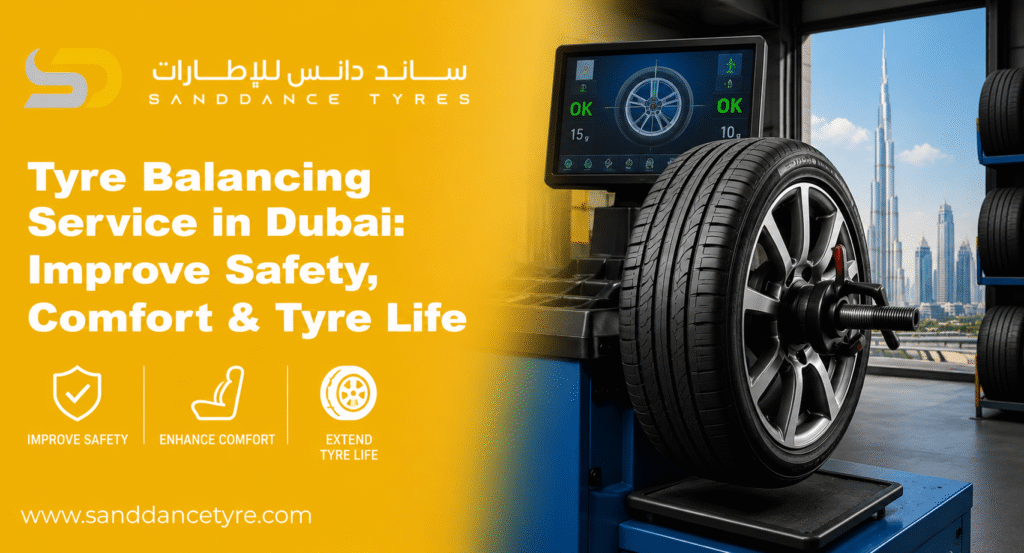
If your car has been shaking at highway speeds, pulling slightly to one side, or wearing down tyres unevenly — there’s a good chance your wheels are out of balance. A professional tyre balancing service in Dubai fixes exactly that. It’s one of the most straightforward maintenance jobs you can do, and the impact on your safety, your comfort behind the wheel, and the lifespan of your tyres is significant. This article walks you through why it matters, when to get it done, and what to expect from a quality service here in Dubai. What Is Tyre Balancing and Why Does It Matter? Most people mix up tyre balancing with wheel alignment — they’re different things. Wheel alignment is about the angle of your tyres relative to the road and each other. Tyre balancing is about making sure the weight of each wheel-and-tyre assembly is evenly distributed around the axle. When you buy a new tyre and get it fitted onto a rim, the combined weight isn’t perfectly even all the way around. There are tiny variations — sometimes due to the tyre itself, sometimes the rim, sometimes both. When that imbalance spins at 80, 100, or 120 km/h, it causes vibration. That vibration travels up through your steering wheel, through your seat, and eventually through your suspension components. A tyre balancing service uses a precision machine to detect where the weight is uneven and applies small counterweights to the rim to correct it. The whole process takes about 15–30 minutes per vehicle, and the difference you feel afterward is usually immediate. In a city like Dubai — where highway driving at high speeds is everyday life and road temperatures regularly push above 45°C — unbalanced tyres don’t just create discomfort. They accelerate tyre wear dramatically and put unnecessary stress on your car’s suspension. Getting this right isn’t optional maintenance. It’s genuinely important. Signs Your Tyres Need Balancing Vibration in the Steering Wheel or Seat This is the most common symptom. If you feel a noticeable vibration at certain speeds — often between 80 and 110 km/h — and it smooths out when you slow down or disappear when you go faster, that’s a classic imbalance signal. The vibration can sometimes feel like it’s coming from the front (steering wheel) or the back (seat and floor), depending on which axle is out of balance. Uneven Tyre Wear Take a look at your tyres. If one section of the tread is wearing faster than the rest, or if you’re seeing scalloped or cupped patterns on the tread surface, that’s often caused by an imbalance. The tyre essentially bounces slightly as it rolls, hitting the road unevenly. Over time, that creates wear patterns that shorten tyre life considerably. Poor Fuel Efficiency This one surprises people. When your tyres aren’t balanced, your engine works harder to maintain speed against the resistance created by that vibration. It’s subtle, but over thousands of kilometers, the difference in fuel consumption adds up. Getting a proper tyre balancing service can actually help recover some of that lost efficiency. Pulling or Drifting While Driving If your car drifts to one side when you’re driving straight on a flat road, the cause could be alignment — but it can also be an imbalance issue, especially if it started recently. It’s worth having both checked together. How Often Should You Get Tyre Balancing in Dubai? There’s no single answer that fits everyone, but here are some practical guidelines that work well for Dubai driving conditions: Every 10,000 to 15,000 km is a solid rule of thumb for routine balancing checks. Many service centres include it as part of a standard tyre rotation, which is sensible since you’re already taking the wheels off anyway. After any tyre repair or replacement. Any time a tyre is removed from the rim and refitted — whether for a puncture repair or a full replacement — it should be balanced before it goes back on your car. When you buy new tyres. Always. New tyres should always be balanced at fitting, not assumed to be perfectly balanced from the factory. When you start feeling vibration. Don’t wait for your next scheduled service. If something feels off, it probably is. Getting it checked early prevents the kind of wear damage that costs significantly more to fix later. Dubai roads are generally well-maintained, but the heat cycles, speed bumps, and the occasional rough patch do take a toll. Building tyre balancing into your regular maintenance routine is just smart motoring in this climate. The Tyre Balancing Process: What Actually Happens Step 1 — The Wheels Come Off Each wheel is removed from the vehicle individually. This lets the technician inspect the tyre and rim for visible damage, embedded objects, or uneven wear before anything else happens. Step 2 — Mounting on the Balancing Machine The wheel and tyre assembly is mounted onto a computerised spin balancer. The machine spins the wheel at speed and uses sensors to detect exactly where the weight is concentrated and by how much. Step 3 — Weight Application Small counterweights — usually made from steel or zinc — are clipped or adhered to the rim at the points identified by the machine. Modern balancing machines are precise to within fractions of a gram, so this isn’t guesswork. It’s a measured correction. Step 4 — Verification Spin After the weights are applied, the machine does another spin to confirm the balance is correct. If it is, the wheel goes back on the car. If there’s still an issue — sometimes there is if the tyre has a manufacturing defect in its structure — the technician will flag it. Step 5 — Back on the Vehicle Wheels are refitted, torqued to the manufacturer’s specification, and the vehicle is ready to drive. Some workshops will do a quick road test to confirm everything feels right before handing the keys back. This whole process — done properly, with the right equipment — is what separates
How Dunlop SP Sport Maxx Tyres in Dubai Improve Safety and Handling
If you’re driving in Dubai and wondering whether your tyres are actually built for this kind of heat, traffic, and speed, the honest answer is: not all of them are. Dunlop SP Sport Maxx tyres in Dubai have become one of the most trusted choices for drivers who refuse to compromise on safety or performance. Whether you’re cruising down Sheikh Zayed Road or navigating the stop-and-go of downtown traffic, these tyres are engineered to keep you in control—and that’s not marketing fluff; that’s physics. Why Tyre Choice Actually Matters in Dubai’s Conditions Let’s be real for a second. Dubai isn’t like driving in Europe or North America. The roads here get brutally hot—summer asphalt temperatures can climb past 70°C—and most tyres simply weren’t designed for that. They wear faster, grip less, and can become genuinely dangerous if they’re not rated for the conditions. That’s exactly why so many drivers in the UAE have turned to performance-focused options. The roads are smooth, the speeds are high, and the stakes are real. Getting the right tyre isn’t just about performance—it’s about knowing that the rubber between you and the road is doing its job every single time. For drivers looking for a reliable, heat-resistant, and high-grip option, Dunlop tyres in Dubai consistently come up as a top recommendation—and for good reason. What Makes Dunlop SP Sport Maxx Stand Out The Technology Behind the Tread The Dunlop SP Sport Maxx range was developed specifically for ultra-high-performance driving. It uses an asymmetric tread pattern, which means the inside and outside of the tyre do different jobs. This isn’t just design for design’s sake. Every element has a purpose, and you feel it in how the car responds. Heat Resistance — The UAE Factor Standard tyres start to degrade when sustained heat builds up in the tyre compound. Dunlop SP Sport Maxx tyres use a specially developed rubber compound that resists heat build-up far better than average tyres. For Dubai drivers, this means: If you’ve ever felt your car handle slightly differently after a long summer drive, compound degradation from heat is a likely culprit. Switching to a tyre built for high-temperature environments changes that experience noticeably. How Dunlop SP Sport Maxx Improves Handling Cornering Confidence One of the most immediate things drivers notice when switching to Dunlop SP Sport Maxx tyres is the improvement in cornering. The stiff outer shoulder combined with a precise contact patch gives you genuine confidence when taking bends — whether that’s a roundabout at 40 km/h or a sweeping highway interchange at higher speeds. The feedback through the steering wheel is clearer too. You know exactly what the tyre is doing, which means you can make quicker, more confident corrections when needed. That’s not a small thing in busy city traffic. Straight-Line Stability At highway speeds, some tyres feel vague — like the car is floating rather than tracking. The SP Sport Maxx’s central rib design combats this directly. It maintains consistent contact with the road surface and resists the kind of wandering that can make high-speed driving feel tiring or unsafe. For commuters who spend time on the Emirates Road or Dubai-Abu Dhabi highway, this kind of straight-line precision genuinely reduces driver fatigue over a long drive. Wet Weather Performance in a Desert City You might be thinking — wet weather? In Dubai? But here’s the thing: when it does rain in the UAE, drivers often aren’t prepared for it, and the roads — polished smooth by years of dry-weather traffic — become genuinely slippery. The SP Sport Maxx’s water evacuation channels handle surface water efficiently, reducing the risk of aquaplaning. It’s one of those features you hope you never need to test, but you’ll be very glad you have if you do. Dunlop SP Sport Maxx for Dubai’s Performance Cars Dubai has one of the highest concentrations of performance and luxury vehicles in the world. Ferraris, Porsches, high-spec BMWs, and modified sedans are everyday sights — and these cars need tyres that match their capabilities. The SP Sport Maxx range is available in the specific wide, low-profile sizes that performance cars require. It’s been tested and approved as Original Equipment by several major manufacturers, which is a strong indicator of genuine engineering quality — not just branding. If you’re running a performance car and currently on budget tyres, you’re leaving a significant amount of your car’s capability on the table. The tyre is the only thing connecting your car to the road. It deserves serious consideration. For comprehensive tyre services and expert advice, the team at Sand Dance Tyre has hands-on experience fitting and recommending tyres for all vehicle types across Dubai. Installation, Balancing, and Ongoing Care Getting Your Tyres Fitted Properly Even the best tyre performs badly if it’s fitted incorrectly. Proper mounting, inflation, and balancing are non-negotiable steps. Incorrect tyre pressure alone can reduce fuel efficiency, increase wear, and compromise grip — all problems that negate the benefit of choosing a quality tyre in the first place. When getting Dunlop SP Sport Maxx tyres fitted, make sure: Mobile Fitting — Convenient for Dubai’s Busy Life One thing many Dubai drivers appreciate is not having to spend their Friday afternoon at a garage. If convenience matters to you, a mobile van service can bring tyre fitting to your location — your home, office, or even a car park. For a city that moves as fast as Dubai, that kind of flexibility makes a real difference. Don’t Overlook Your Car’s AC System This might seem unrelated to tyres, but bear with us. Driving in Dubai’s heat with a struggling air conditioning system isn’t just uncomfortable — it can lead to driver fatigue and distraction, which directly affects safety. If your AC isn’t performing as it should, a professional car AC repair service is worth scheduling alongside your tyre check. A well-maintained vehicle performs holistically better, and your comfort behind the wheel is part of that. What Dubai Drivers Are Saying Here’s what real customers have shared
Best Tyres for Electric Vehicles (EVs) in UAE 2026
Electric vehicles are becoming a familiar sight across the UAE. From daily commutes in Dubai to longer drives between emirates, more people are choosing EVs because they are quiet, efficient, and cheaper to run than many traditional vehicles. One thing that often gets overlooked is the tyres. Most buyers spend a lot of time comparing battery range, charging speed, and vehicle features. Tyres usually come much later in the decision making process. The reality is that the right tyres can affect range, comfort, handling, and even how often you need a replacement. That’s why finding the Best Tyres for Electric Vehicles (EVs) in UAE 2026 is about more than choosing a well known brand. The tyre needs to cope with high temperatures, support the extra weight of the battery, and deliver reliable performance every day. At Sanddance Tyre, we regularly speak with EV owners who are surprised by how much difference the right tyre can make. A quieter ride, better efficiency, and more consistent handling are some of the benefits drivers often mention after switching to EV suitable tyres. Why EVs Need Different Tyres Electric vehicles put different demands on tyres compared to petrol or diesel cars. The battery pack adds weight. In many cases, an EV weighs several hundred kilograms more than a similar fuel powered vehicle. Add instant torque into the mix, and the tyres have to work harder every time the vehicle accelerates. Many drivers only notice this when their first set of tyres wears out sooner than expected. Tyre manufacturers recognised this challenge years ago. As a result, many modern EV tyres are built with stronger construction, lower rolling resistance, and technology that helps reduce road noise. What Should You Look for in an EV Tyre? Every driver has different priorities, but a few things matter to almost everyone. Low Rolling Resistance Rolling resistance affects how much energy is needed to keep the vehicle moving. A tyre with lower rolling resistance can help the battery work more efficiently. For drivers who cover long distances each week, even a small improvement can make a noticeable difference over time. Performance in Hot Weather UAE summers are tough on tyres. Road surfaces can become extremely hot during the day. A tyre that performs well in cooler countries may not deliver the same results here. Heat resistant compounds help tyres maintain their performance and wear more evenly in local conditions. A Quieter Ride One of the reasons people enjoy driving electric vehicles is the silence. Without engine noise, sounds from the road become more noticeable. Some EV tyres are designed to reduce this noise, making long journeys more comfortable. Load Carrying Ability EV batteries are heavy, so tyres need enough strength to support that extra weight. A tyre with the correct load rating helps maintain stability, especially when carrying passengers or luggage. Grip and Safety Good grip remains essential, whether you’re driving through city traffic or travelling on highways. The best EV tyres balance efficiency with dependable traction, helping drivers stay in control during braking and cornering. Popular EV Tyre Brands in the UAE Several tyre brands have earned a strong reputation among electric vehicle owners. Michelin is often mentioned by drivers who want a balance of efficiency, comfort, and handling. Many EV owners explore Michelin Tyres when looking for premium options. Bridgestone is another popular choice. Its EV focused products are known for delivering reliable performance while helping maintain energy efficiency. Drivers looking for a combination of comfort and value often consider Continental Tyres. The brand offers several options that work well in UAE driving conditions. Pirelli remains a favourite among owners of premium and performance focused electric vehicles. Many drivers also compare Goodyear Tyres when searching for a tyre that delivers comfort, durability, and everyday usability. Choosing the Right EV Tyre for Your Driving Style Not every driver wants the same thing from a tyre. Someone who spends most of their time on highways may focus on comfort and low noise. A performance EV owner may care more about grip and handling. Drivers who travel long distances between charges often pay closer attention to efficiency and rolling resistance. Understanding how you use your vehicle makes the decision much easier. Common Mistakes EV Owners Make Tyre shopping can be confusing, especially for first time EV owners. A few mistakes appear again and again: These small details can affect tyre life, comfort, and battery efficiency. How Long Do EV Tyres Last? There isn’t a single answer because every driver uses their vehicle differently. A person who accelerates aggressively will usually see faster tyre wear than someone with a smoother driving style. Tyre pressure, road conditions, vehicle weight, and regular maintenance also play a role. Many EV owners find that routine checks and proper tyre care have a bigger impact on tyre life than they expected. Are EV Specific Tyres Worth the Money? For many drivers, they are. You may not notice a dramatic change on the first day. Over the months that follow, the benefits become easier to appreciate. Drivers often notice things such as: Considering the conditions tyres face in the UAE, these benefits can make a real difference. What UAE Drivers Care About Most in 2026 Talk to EV owners and a few priorities come up repeatedly. People want tyres that last longer. They want a comfortable ride on highways. They want good value for money.They also want tyres that can handle the heat without wearing out too quickly. The good news is that tyre manufacturers are paying closer attention to these needs than ever before. Final Thoughts There is no single tyre that works perfectly for every electric vehicle.The best choice depends on your vehicle, driving habits, and expectations. A tyre that works well for a performance EV may not be the ideal option for a family SUV. The Best Tyres for Electric Vehicles (EVs) in UAE 2026 are the ones that suit your everyday driving needs while providing the right mix of efficiency, comfort, durability,