
Why Does My Steering Wheel Vibrate at High Speed?
You merge onto the highway, the speedometer climbs past 90 km/h (about 55 mph), and suddenly the steering wheel starts to shake in your hands. It can be a faint buzz or a hard shudder, and either way it makes a drive feel unsafe. The good news: a vibrating steering wheel is one of the most common car complaints, and the cause is usually simple and affordable to fix. The key is understanding what the vibration is telling you. This guide covers the most likely causes, how to narrow them down yourself, and when you should stop driving and get help. Why vibrations show up at high speed Every rotating part of your car, including the wheels, tires, brake rotors, axles and driveshaft, spins faster as you speed up. A tiny imbalance or looseness that you can’t feel at 40 km/h gets amplified at highway speed. The front wheels connect directly to the steering wheel through the steering rack and column, so that is where you feel it first. In short: the faster the part spins, the more any flaw in it shakes the car. The most common causes 1. Unbalanced wheels (the number one culprit) When a tire is fitted to a wheel, small differences in weight around the circumference create a heavy spot. As the wheel spins, that heavy spot tugs the wheel up and down. Technicians fix this by clamping small weights to the rim so the weight is distributed evenly. Typical signs: Why it happens: wheel weights fall off, tires wear unevenly, or you recently hit a pothole or curb. The fix: a wheel balancing, which is quick and usually inexpensive. 2. Wheel alignment problems If your alignment is off, the tires don’t point exactly where they should. Alignment issues more often cause the car to pull to one side and wear tires unevenly, but badly misaligned wheels can also contribute to shaking, especially when combined with worn tires. Typical signs: The fix: a four-wheel alignment. It is worth doing after any suspension work or a hard impact. 3. Damaged, worn or deformed tires A tire doesn’t have to be flat to cause trouble. Several tire defects create vibration: A bulging or separating tire is a safety hazard. If you see a bulge, replace the tire immediately. 4. Bent or damaged wheels Potholes, curbs and road debris can bend a rim, even if the tire still holds air. A bent wheel can’t spin true, so it wobbles. Balancing can’t fully correct this because the problem is the shape of the wheel itself. The fix: a shop can check the wheel on a balancing machine and often straighten minor bends, but a badly damaged wheel needs replacing. 5. Loose lug nuts If the nuts holding a wheel on are loose, the wheel can wobble on the hub. This often happens after a recent tire change that wasn’t torqued correctly. This one is dangerous. A wheel can come off completely. If you’ve had tires changed recently and notice new vibration, pull over safely and check that the lug nuts are tight, or have them checked right away. 6. Worn suspension and steering components Parts such as tie rod ends, ball joints, control arm bushings and wheel bearings hold your wheels in position. When they wear out, there is play in the system, and the wheels can shake as speed rises. Typical signs: The fix: a mechanic needs to inspect these parts. Worn steering and suspension components are a safety issue and shouldn’t be ignored. 7. Warped brake rotors (only when braking) If the steering wheel shakes only when you press the brake pedal, especially from highway speeds, warped or unevenly worn brake rotors are the likely cause. You may also feel the brake pedal pulse under your foot. The fix: resurfacing or replacing the rotors, usually along with new brake pads. 8. Axle or driveshaft issues A bent axle, a worn CV joint, or a damaged driveshaft can cause vibration that appears during acceleration. If the shaking gets worse when you press the gas and eases when you coast, this is a strong clue. A quick way to narrow down the cause Pay attention to when the vibration happens. It tells you a lot. When you feel it Most likely cause Steady shaking between about 80 and 110 km/h Unbalanced front wheels Shaking only when braking Warped brake rotors Shaking when accelerating Axle, CV joint or driveshaft problem Shaking plus pulling to one side Alignment or a tire problem Shaking plus clunking over bumps Worn suspension or steering parts Sudden new shaking after a tire change Loose lug nuts, so check immediately Vibration felt in the seat rather than the wheel Rear wheel or tire issue Simple checks you can do yourself Before heading to the shop, a few minutes of inspection can help: Is it safe to keep driving? A mild vibration from unbalanced wheels is mostly an annoyance, but it still wears out tires and suspension parts faster, so don’t put off the fix. Stop driving and get help right away if: What will it cost? Costs vary a lot by country, car model and shop, so treat this as a rough guide rather than a quote: Ask for a written estimate and a clear explanation of what was found. How to prevent steering wheel vibration Frequently asked questions Why does my steering wheel shake only at certain speeds? Every wheel and tire assembly has a speed range at which an imbalance matches the natural vibration of the car’s suspension. That is why shaking often appears at one speed range and then smooths out. Can bad alignment cause steering wheel vibration? It can contribute, but alignment issues are more often linked to pulling and uneven tire wear. Wheel imbalance is a more common cause of shaking. Will new tires fix the vibration? Only if the tires are the problem. New tires still need to be balanced properly, and they won’t help if the real cause
Flat Tyre Repair vs Tyre Replacement: Which Do You Need?
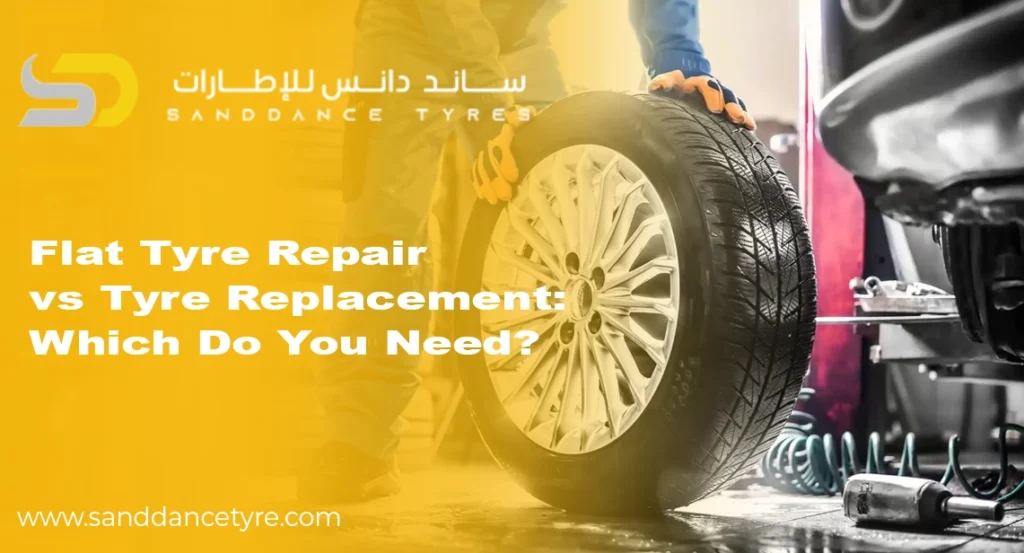
A flat tyre can happen at any time, whether you are driving to work, travelling on a highway, or navigating busy roads in Dubai. When it happens, one important question comes to mind: should you repair the damaged tyre or replace it with a new one? Understanding the difference between flat tyre repair vs tyre replacement can help you make a safer decision, avoid unnecessary expenses, and keep your vehicle roadworthy. While some punctures can be repaired by a professional, other types of tyre damage require complete replacement. In this guide, we will explain when tyre repair is suitable, when replacement is necessary, and how to choose the right option for your vehicle. What Is Flat Tyre Repair? Flat tyre repair is the process of fixing a puncture or air leak so the tyre can safely hold air again. It is generally suitable when the damage is minor, located in the repairable tread area, and the tyre’s internal structure remains in good condition. For example, if a small nail penetrates the centre of your tyre’s tread, a qualified technician may be able to repair it without replacing the entire tyre. A professional tyre repair typically involves: A proper inspection is essential because damage inside the tyre may not be visible from the outside. A simple plug inserted from the outside should not be treated as a permanent repair without the required inspection and repair procedure. What Is Tyre Replacement? Tyre replacement involves removing a damaged or worn tyre and installing a suitable new one. This is necessary when the existing tyre can no longer provide reliable performance or cannot be safely repaired. Replacement may be recommended if your tyre has a sidewall cut, a bulge, severe internal damage, or a puncture that exceeds the manufacturer’s repair limits. Common reasons for tyre replacement include: Although replacing a tyre may cost more initially, it is often the safer and more economical choice when a repair would be unreliable. Flat Tyre Repair vs Tyre Replacement: Key Differences Understanding the main differences can help you decide what to expect when visiting a tyre service centre. Factor Flat Tyre Repair Tyre Replacement Best for Minor, repairable punctures Severe or unsafe tyre damage Typical example Small nail in the central tread Sidewall cut or bulge Cost Usually lower Usually higher Time required Depends on inspection and repair Depends on tyre availability and fitting Tyre condition Structure and tread remain suitable Existing tyre is unsafe or worn out Long-term reliability Good when properly repaired and approved Good when the correct tyre is installed The right choice depends on the location, size, and nature of the damage, as well as the tyre’s overall condition. When Should You Choose Flat Tyre Repair? Tyre repair may be the right option if the puncture is small and the tyre has not suffered structural damage. 1. The Puncture Is in the Centre of the Tread The tread is the part of the tyre that contacts the road. Small punctures in its central area are often repairable if they meet the manufacturer’s requirements. For many standard passenger-car tyres, the puncture must be no larger than approximately 6 mm. However, the permitted size depends on the tyre and its manufacturer’s specifications. 2. The Tyre Has Not Been Driven on While Flat Driving on a completely flat or severely underinflated tyre can damage its internal structure. If you notice a flat tyre, stop somewhere safe rather than continuing to drive to a workshop. A technician should inspect the tyre internally before deciding whether a repair is possible. 3. The Tread Is Still in Good Condition A puncture repair will not solve the problem of a tyre that is already excessively worn. If the tread is in good condition and the tyre has no other serious damage, repair may be a reasonable option. 4. The Damage Meets Professional Repair Standards A qualified technician must confirm that the puncture location, size, and condition meet applicable repair guidelines. If the tyre passes the inspection, a suitable professional repair may restore its serviceability. When Do You Need Tyre Replacement? Some types of tyre damage make replacement the safer choice, even when the tyre appears repairable at first glance. 1. Sidewall Damage The sidewall flexes continuously as the tyre rotates. A puncture, deep cut, or tear in this area can compromise the tyre’s structure. Sidewall and shoulder damage generally cannot be repaired using standard passenger-tyre puncture repair methods. Replacement is usually necessary. 2. A Bulge or Bubble Appears A bulge on the sidewall can indicate that the internal reinforcing cords have been damaged. This creates a risk of sudden tyre failure. Do not attempt to repair or continue driving on a tyre with a bulge. Arrange a safe replacement. 3. You Have Driven on a Flat Tyre Even a short distance driven on a flat tyre can cause internal damage that is difficult to identify externally. If the tyre has been driven without sufficient air pressure, a professional must inspect it before reuse. If its internal structure is compromised, replacement is required. 4. The Tyre Tread Is Excessively Worn Worn tyres provide less grip, particularly on wet roads. If the tread has reached the manufacturer’s wear limit or the applicable legal limit, replacing the tyre is the appropriate solution. 5. The Tyre Has Multiple Punctures or Severe Damage Several punctures, particularly those close together, can weaken a tyre and make safe repair impossible. Deep cuts, bead damage, and deterioration from age or heat can also require replacement. For these reasons, a visual inspection alone is not enough to determine whether a damaged tyre is safe to use. How Dubai’s Driving Conditions Affect Tyre Safety Driving conditions in Dubai and the wider UAE make tyre maintenance particularly important. High summer temperatures, hot road surfaces, heavy traffic, and long journeys can increase the demands placed on tyres. High Temperatures Hot weather increases the importance of maintaining the correct tyre pressure and checking for signs of deterioration. Underinflation can cause excessive heat
Best Tyres for UAE Summer Heat: What Should You Buy?
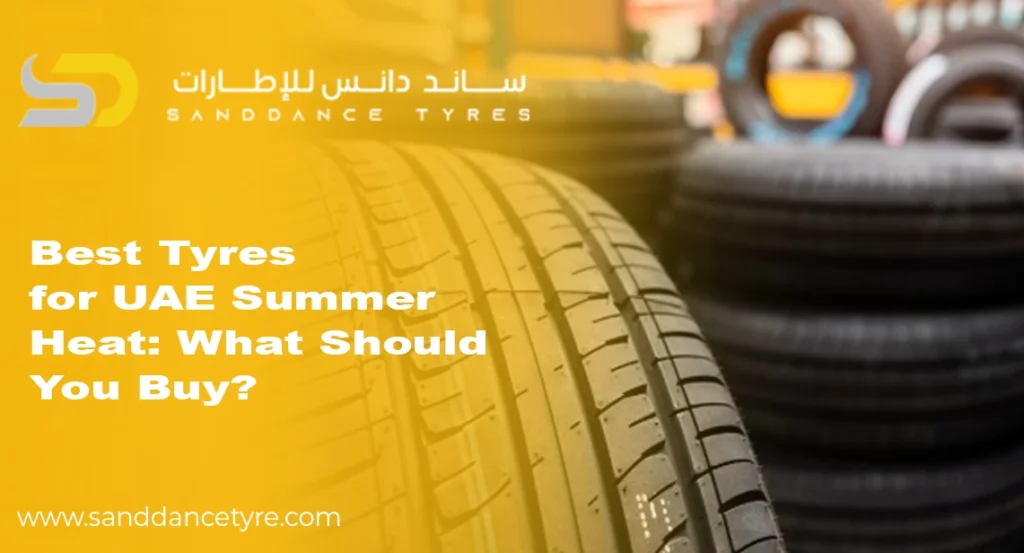
The UAE’s summer heat can put considerable stress on car tyres, especially during long highway journeys, daily commutes, and extended periods of driving in heavy traffic. Choosing the best tyres for UAE summer heat is essential for maintaining road grip, braking performance, driving comfort, and tyre durability. With temperatures rising sharply during summer, drivers need tyres that suit the local climate and their vehicle’s requirements. Whether you drive a sedan, SUV, sports car, or family vehicle, selecting the right tyres can help you drive more confidently on Dubai, Abu Dhabi, Sharjah, and other UAE roads. In this guide, we explain which tyre brands and types to consider, what features to check before buying, and how to maintain your tyres during the hottest months. Why Is Choosing the Right Tyres Important in UAE Summer? High temperatures can increase tyre stress, particularly when combined with high speeds, heavy vehicle loads, incorrect inflation pressure, and long driving distances. Tyres naturally generate heat as they roll, and hot road surfaces add to the challenge. Using unsuitable, worn, or ageing tyres can increase the risk of tyre damage and reduce handling performance. The right tyres, combined with regular maintenance, help support safer driving in demanding weather conditions. Here are the main factors to consider: Which Tyre Brands Are Best for UAE Summer Heat? Several established tyre manufacturers offer products suitable for different driving conditions. However, the best choice depends on the specific tyre model, size, vehicle, and manufacturer recommendations rather than the brand name alone. 1. Michelin Tyres for Comfort and Durability Michelin is worth considering if you want a combination of driving comfort, road grip, and durability. Its touring ranges, such as Michelin Primacy, are designed for everyday driving, while the Pilot Sport family caters to compatible performance vehicles. Michelin tyres may suit drivers who regularly travel between Dubai, Abu Dhabi, and other emirates. Before purchasing, compare the exact model’s performance characteristics and ensure the specification matches your car. Best for: Daily commuting, family sedans, and compatible premium vehicles. 2. Bridgestone Tyres for Everyday and Highway Driving Bridgestone offers touring, performance, and SUV tyre ranges for different driving needs. Depending on the model, these tyres can provide a useful balance of handling, comfort, and braking performance. For UAE drivers who frequently use motorways, a suitable Bridgestone touring tyre can be a practical option. SUV owners should also consider the vehicle’s weight, expected load, and whether their driving is mainly on paved roads or includes off-road routes. Best for: Daily commuting, highway journeys, and compatible SUVs. 3. Continental Tyres for Grip and Handling Continental is another option for drivers who prioritise predictable handling and braking performance. Its PremiumContact range focuses on everyday road use, while SportContact models are designed for performance-oriented vehicles. When comparing Continental tyres, check the specific model’s wet and dry performance, comfort characteristics, and approved fitment for your vehicle. Best for: Sedans, premium cars, and drivers who value responsive handling. 4. Pirelli Tyres for Performance Vehicles Pirelli offers tyres for sports cars, luxury vehicles, and SUVs. Its P Zero range is aimed at performance-focused applications, while other Pirelli families serve different everyday and touring requirements. If you drive a powerful car, select a tyre that meets its original equipment specifications. High-performance tyres should not be chosen solely for their appearance or brand reputation. Best for: Compatible sports cars, luxury vehicles, and performance-focused driving. 5. Dunlop Tyres for Daily Driving Dunlop offers a variety of tyres for passenger cars and SUVs. Depending on the model, drivers can find options suited to everyday commuting, highway travel, and different handling preferences. When choosing Dunlop tyres for UAE summers, check that the specific model is suitable for your vehicle and local operating conditions. Compare its tread design, load rating, speed rating, and warranty terms before making a purchase. Best for: Drivers looking for suitable everyday and highway tyre options across different vehicle categories. What Type of Tyres Should You Buy for UAE Summer? Choosing the right tyre type is just as important as choosing a brand. Consider how you normally use your vehicle. Summer Tyres for Hot, Dry Roads Summer tyres are designed to deliver performance in warm conditions. Depending on the model, they can offer responsive handling and reliable braking on dry roads. They can be a suitable option for drivers who spend most of their time on city streets and highways. However, wet-weather performance varies between models, so check independent test results and manufacturer specifications where available. Touring Tyres for Daily Commuting Touring tyres are designed to balance comfort, durability, and everyday road performance. Many models prioritise a quieter ride, making them suitable for family cars and regular commuting. If you travel long distances between emirates, compare touring tyres that meet your car’s specifications and driving needs. SUV Tyres for Larger Vehicles SUVs often require tyres with specific load capacities and dimensions. A suitable SUV tyre should support the vehicle’s weight while providing the grip and stability needed for your usual routes. For mainly urban and highway driving, consider road-focused SUV tyres. If you frequently drive on sand or unpaved surfaces, an appropriate all-terrain tyre may be more suitable, although it can produce more road noise and affect fuel efficiency. Performance Tyres for Sports Cars Performance tyres are designed for vehicles that require responsive steering and strong grip. They can be a good choice for compatible sports and luxury cars, provided their specifications meet the vehicle manufacturer’s requirements. Remember that performance tyres are not automatically the best option for every driver. Comfort, tread life, road conditions, and replacement expenses should also influence your decision. Important Features to Check Before Buying Summer Tyres Before purchasing new tyres, review the following specifications carefully. 1. Correct Tyre Size Check your owner’s manual, vehicle placard, or approved fitment information for the correct tyre size. The size printed on the sidewall includes information about width, aspect ratio, construction, and wheel diameter. For example, a tyre marked 225/55 R17 has a nominal width of 225 mm, an aspect ratio
How Professional Tyre Fitting Improves Road Safety
Tyres play a vital role in keeping your vehicle safe on the road. They provide grip, support braking, improve handling, and help maintain stability in different driving conditions. However, even high-quality tyres may not perform properly if they are installed incorrectly. This is why professional tyre fitting is an important part of vehicle maintenance, especially for drivers who regularly travel on busy roads and highways. Professional tyre fitting involves more than simply removing an old tyre and installing a new one. It includes checking tyre compatibility, mounting the tyre correctly, balancing the wheel, and ensuring that everything is secure before the vehicle returns to the road. These steps help reduce avoidable risks and improve the overall driving experience. In this guide, we explain how professional tyre fitting improves road safety, what the service includes, and why choosing an experienced tyre technician matters. Why Professional Tyre Fitting Is Important Correct tyre installation helps your vehicle maintain proper contact with the road. When tyres are fitted incorrectly, you may experience vibration, uneven tyre wear, reduced handling performance, or problems maintaining control of the vehicle. A professional technician follows the correct procedures and uses appropriate equipment to ensure that each tyre is installed according to the vehicle manufacturer’s specifications. Professional tyre fitting helps drivers by: Regular tyre inspections and proper installation are particularly important for vehicles driven frequently in hot weather, heavy traffic, and demanding road conditions. 1. Improves Tyre Grip and Road Traction Tyre grip is essential for safe driving. It allows your vehicle to accelerate, turn, and stop while maintaining contact with the road surface. During professional tyre fitting, technicians check the tyre size, specifications, directional markings, and other relevant details. They also inspect the tyre and wheel assembly for visible damage that could affect performance. Incorrect tyre installation or the use of unsuitable tyres can compromise vehicle handling. Professional fitting helps ensure the tyres are mounted in the correct direction and are compatible with the vehicle. Good traction is especially important when driving on wet roads, navigating sharp turns, or making sudden stops. Drivers should also maintain the recommended tyre pressure and replace tyres when their tread becomes excessively worn. 2. Supports Better Braking Performance Your tyres are directly involved in bringing your vehicle to a stop. Even an efficient braking system cannot provide its best performance if the tyres have insufficient grip or are unsuitable for the vehicle. Professional tyre fitting supports braking performance by ensuring that the tyres are correctly installed and that the wheels are properly balanced. Technicians can also identify visible tread damage, uneven wear, or other concerns that may require further inspection. Correctly fitted tyres, combined with appropriate tread depth and inflation pressure, help maintain consistent contact with the road. Drivers should remember that stopping distance also depends on vehicle speed, road conditions, tyre condition, brake maintenance, and the distance between vehicles. Professional tyre fitting supports safety, but it cannot eliminate every braking risk. 3. Reduces Wheel Vibration and Improves Vehicle Stability Have you ever noticed your steering wheel vibrating while driving at higher speeds? One possible cause is an imbalanced wheel and tyre assembly. Professional tyre fitting commonly includes wheel balancing. During this process, technicians use a balancing machine to identify uneven weight distribution and apply suitable balancing weights where necessary. Proper wheel balancing helps reduce unwanted vibration and supports smoother driving. It can also help prevent irregular tyre wear and reduce unnecessary stress on certain suspension and steering components. However, vibration can also result from bent rims, damaged tyres, alignment problems, or worn suspension parts. If the problem continues after balancing, a more detailed inspection may be necessary. 4. Helps Prevent Uneven Tyre Wear Uneven tyre wear can reduce tyre lifespan and affect handling. It may develop because of incorrect tyre pressure, poor wheel alignment, unbalanced wheels, worn suspension components, or unsuitable driving habits. During a professional tyre fitting service, technicians can inspect the condition of the existing tyres and look for signs of abnormal wear. If the inspection reveals a potential problem, they may recommend wheel alignment, balancing, pressure correction, or further mechanical checks. Correct installation alone will not resolve every tyre wear issue. However, identifying related problems early can help drivers take appropriate action before the tyres deteriorate further. For better results, check tyre pressure regularly and rotate tyres according to the vehicle manufacturer’s recommendations. 5. Ensures Correct Tyre Pressure and Fitment Tyre pressure has a significant effect on vehicle safety, fuel efficiency, and tyre durability. Underinflated tyres can generate excessive heat and may increase rolling resistance. Overinflated tyres can reduce the contact area with the road and affect ride comfort and grip. During professional tyre fitting, technicians can inflate tyres to the recommended pressure and check that the tyre is seated correctly on the rim. The correct pressure depends on the vehicle and its load. Drivers should follow the manufacturer’s recommendations, usually displayed on a label inside the driver’s door area or in the owner’s manual, rather than relying only on the maximum pressure printed on the tyre. Checking tyre pressure when the tyres are cold generally provides the most useful reading. 6. Protects Tyres and Rims During Installation Incorrect installation techniques can damage both tyres and wheels. For example, improper use of mounting equipment may damage the tyre bead or scratch the rim. Professional technicians use appropriate tyre-changing equipment and follow suitable mounting procedures to reduce these risks. They also check the condition of the rim and inspect relevant components before completing the installation. If a wheel is cracked, bent, or otherwise damaged, it may require repair or replacement before it can be used safely. After fitting, the wheel fasteners must be tightened according to the vehicle manufacturer’s specifications. Correct tightening is essential because improperly secured wheels can create a serious safety hazard. 7. Improves Safety When Driving in Hot Weather Hot weather can place additional demands on tyres, particularly during long journeys and high-speed driving. Road temperatures, vehicle loads, driving speed, and tyre pressure all influence tyre
Why Does My Car Pull to One Side? Tyre and Alignment Problems Explained
Have you ever noticed your car drifting to the left or right while driving on a straight road? This problem can make driving uncomfortable and force you to keep correcting the steering wheel. In some cases, it also indicates a tyre, wheel alignment, brake, or suspension issue that needs attention. If you are wondering why my car pulls to one side, the first step is to identify when the problem occurs. Your car might drift continuously, pull during braking, or become difficult to control after hitting a pothole. Understanding these warning signs can help you find the right solution before the problem causes further damage. 1. Incorrect Wheel Alignment Wheel alignment is one of the common reasons a car pulls to one side. It refers to the angles of your vehicle’s wheels in relation to the road and the manufacturer’s specifications. When these angles are incorrect, your tyres may not point in the right direction. This can cause the vehicle to drift, make the steering wheel sit off-centre, and create uneven tyre wear. Wheel alignment problems can develop after hitting a pothole, striking a kerb, or driving regularly on rough roads. Worn steering and suspension components can also affect alignment. What should you do? Visit a professional workshop for a wheel alignment inspection. A technician can measure the wheel angles and adjust them according to your vehicle’s specifications. Correct alignment helps improve handling and supports even tyre wear. 2. Uneven Tyre Pressure Uneven tyre pressure is another possible cause of a car pulling to one side. When one tyre has less air pressure than the other tyres on the same axle, the difference in rolling resistance can affect how your vehicle moves. For example, if your front-left tyre is underinflated, your car may drift towards the left. However, the exact behaviour depends on the vehicle and the underlying issue. Driving with incorrect tyre pressure can also increase tyre wear, affect fuel efficiency, and reduce handling performance. How to prevent this problem: In the UAE, high temperatures can affect tyre pressure readings. Check pressure regularly rather than relying on a visual inspection alone. 3. Uneven or Damaged Tyres Your tyres play an important role in keeping your vehicle stable on the road. If one tyre has uneven tread wear, internal damage, or a different level of grip from the others, your car may start pulling to one side. Look for signs such as worn inner or outer edges, cracks, bulges, cuts, or irregular tread patterns. These issues can develop because of incorrect inflation, poor alignment, damaged suspension components, or normal wear over time. Sometimes, a tyre can also cause pulling because of an internal construction issue that is not visible from the outside. The solution: Have your tyres inspected by a qualified technician. Depending on their condition, the appropriate action may involve correcting the pressure, rotating compatible tyres, or replacing a damaged tyre. Never continue driving on a tyre with a dangerous bulge or suspected structural damage. 4. Brake Problems Can Make Your Car Pull Does your car pull to the left or right mainly when you apply the brakes? If so, the problem may be related to the braking system rather than wheel alignment. A sticking brake caliper, uneven braking force, or another brake fault can cause one side of the vehicle to slow down more than the other. This can make the car move away from its intended direction during braking. Other warning signs include unusual noises, a burning smell, reduced braking performance, or a wheel that becomes unusually hot. Brake-related pulling should never be ignored. Arrange a professional brake inspection as soon as possible. If the vehicle becomes difficult to control, braking performance changes significantly, or you notice smoke or a strong burning smell, stop safely and arrange roadside assistance instead of continuing to drive. 5. Worn Steering and Suspension Components Your vehicle’s steering and suspension systems help maintain stability, support the wheels, and keep the tyres in proper contact with the road. When components such as tie rods, ball joints, control arm bushings, or suspension parts become worn or damaged, the wheels may not maintain their correct position. As a result, your car might pull to one side, feel unstable, or produce knocking sounds over bumps. This issue may become more noticeable after driving over rough roads or hitting a deep pothole. A technician should inspect the steering and suspension before adjusting the alignment. If damaged components remain in place, an alignment adjustment alone may not resolve the problem. 6. How to Know If Your Car Needs Wheel Alignment Recognising early warning signs can help you address alignment problems before they lead to unnecessary tyre replacement. Look out for these symptoms: A slight drift can sometimes result from the slope of the road. However, a persistent pull on different road surfaces should be investigated. If you have recently replaced your tyres and the vehicle still pulls, ask the technician to inspect tyre condition, pressure, alignment, brakes, and suspension rather than assuming alignment is the only cause. 7. How to Prevent Tyre and Alignment Problems Regular maintenance can help reduce the risk of uneven tyre wear and steering problems. You do not have to wait until your car becomes difficult to control before arranging an inspection. Follow these simple practices: Check tyre pressure: Maintain the pressure recommended by your vehicle manufacturer. Inspect tyre condition: Look for cracks, bulges, cuts, and uneven tread wear. Schedule alignment checks: Have your wheel alignment checked when you notice pulling, uneven wear, or steering changes. Avoid potholes where possible: Reduce speed safely when approaching damaged road surfaces. Maintain your suspension and brakes: Address unusual noises, vibrations, and braking problems promptly. These checks are particularly useful for drivers in the UAE who regularly travel long distances or drive in demanding road and temperature conditions. Conclusion If your car pulls to one side, the cause could be incorrect wheel alignment, uneven tyre pressure, damaged tyres, brake problems, or worn suspension components. Identifying the correct
How to Find a Reliable Tyre Shop Near Me in Dubai
Finding a reliable tyre shop near me in Dubai is essential for maintaining your vehicle’s safety, performance, and comfort. Whether you need new tyres, a quick puncture repair, wheel alignment, or emergency tyre replacement, choosing the right workshop can save you time and money. However, with so many tyre shops available across Dubai, it is important to know which factors matter before booking a service. Dubai’s hot climate, busy roads, and frequent long-distance journeys make regular tyre maintenance especially important. A trustworthy tyre shop should offer quality products, experienced technicians, transparent pricing, and professional installation. By checking a few important details, you can find a service provider that meets your needs without compromising safety. Why Choosing a Reliable Tyre Shop in Dubai Matters Your car’s tyres are the only parts of the vehicle that maintain direct contact with the road. Their condition affects braking, steering, handling, and overall driving stability. Worn, damaged, or incorrectly fitted tyres can increase safety risks, particularly during high-speed driving or sudden braking. A professional tyre shop helps you identify tyre damage, choose suitable replacements, and maintain the correct tyre pressure. Experienced technicians can also identify uneven tread wear and other problems that may indicate alignment or suspension issues. Choosing a reliable workshop also helps you avoid unnecessary expenses. Instead of replacing tyres prematurely, a qualified technician can inspect their condition and recommend the appropriate repair or replacement when safe and suitable. 1. Check Online Reviews and Customer Feedback One of the easiest ways to find a reliable tyre shop near you is to check Google Maps and other online review platforms. Customer feedback can help you understand how a workshop treats its customers and whether it consistently delivers good service. When reading reviews, look for comments about: Do not rely on star ratings alone. Read recent positive and negative reviews to identify recurring patterns. For example, repeated complaints about unexpected charges or poor communication may indicate potential problems. You can also ask friends, colleagues, and family members in Dubai for recommendations based on their own experiences. 2. Compare Tyre Prices Before Booking Price is an important consideration when choosing a tyre shop, but the cheapest option is not always the best value. Different shops may offer different tyre brands, manufacturing dates, warranties, and installation packages. Before making a decision, request quotations from two or three tyre shops. Make sure each quotation covers comparable products and services. Ask whether the total price includes: A reliable tyre shop should explain its pricing clearly before beginning work. Request a written quotation so you understand exactly what you are paying for. Comparing complete quotations rather than advertised tyre prices helps you choose a service that fits your budget without sacrificing quality. 3. Choose a Shop That Sells Quality Tyres When searching for a tyre shop in Dubai, check whether the business offers reputable tyre brands and suitable options for your vehicle. The right tyre depends on your car manufacturer’s specifications, driving habits, road conditions, and budget. Depending on your requirements, you may consider brands such as Michelin, Bridgestone, Dunlop, Continental, and other suitable manufacturers. Before purchasing, confirm the following details: Tyre age matters even when the tread looks new. Ask the retailer to show you the manufacturing-date code and explain the warranty and service-life recommendations for the specific product. Avoid choosing tyres based only on their appearance or low price. A suitable, quality tyre is a better investment in long-term driving safety. 4. Look for Professional Tyre Fitting Services Buying good tyres is only part of the process. Correct installation is equally important because improper fitting can affect handling, tyre wear, and driving comfort. A professional tyre shop should have appropriate fitting equipment and trained technicians who understand your vehicle’s requirements. During installation, technicians should inspect the wheels and tyres, fit the tyres correctly, balance the wheels where required, and tighten wheel fasteners to the vehicle manufacturer’s specifications. If you notice vibration in the steering wheel after fitting new tyres, have the vehicle checked. Wheel imbalance, tyre defects, or other mechanical issues may be responsible. Choosing a workshop that follows proper fitting procedures helps you get the best performance from your new tyres. 5. Check Wheel Alignment and Balancing Services Wheel alignment and wheel balancing are different services, but both can be important for maintaining tyre performance. Wheel alignment involves checking and adjusting wheel angles according to the vehicle manufacturer’s specifications. Incorrect alignment can contribute to uneven tyre wear and steering problems. Wheel balancing distributes the wheel-and-tyre assembly’s weight more evenly to help reduce vibration while driving. Consider having your vehicle inspected if you notice: A reliable tyre shop should inspect the vehicle and explain whether alignment, balancing, or another repair is actually needed. These services should not be recommended automatically without considering the vehicle’s condition. 6. Find a Tyre Shop Near Your Location in Dubai Convenience is another important factor when choosing a tyre service provider. Searching online for a reliable tyre shop near me in Dubai can help you discover nearby workshops and compare their locations, services, and opening hours. Depending on where you live or work, you may find tyre service providers in areas such as Al Quoz, Deira, Al Barsha, Ras Al Khor, Al Qusais, and other parts of Dubai. Choose a workshop that is convenient to reach and offers the services you need. If you are replacing tyres, confirm that the shop stocks the correct size and model before visiting. Check the business’s location, contact details, operating hours, and recent customer reviews before travelling. Calling ahead can also help you confirm availability and reduce waiting time. Remember that the closest workshop is not necessarily the most reliable. Compare service quality, pricing, and expertise before making your choice. 7. Ask About Warranty and After-Sales Support A dependable tyre shop should clearly explain the warranty available for the tyres it sells. Warranty coverage can vary by manufacturer, product, retailer, and type of damage. Before purchasing, ask about: Keep your invoice and warranty documents in a
Automechanika Dubai 2026: What to Expect at the World’s Leading Automotive Aftermarket Event
The automotive industry is changing rapidly, and Automechanika Dubai 2026 is set to bring many of these developments together under one roof. The 23rd edition of the event will take place from 10–12 November 2026 at Dubai Exhibition Centre (DEC), Expo City Dubai. The exhibition is expected to attract more than 1,200 exhibitors from over 50 countries, with the official event programme covering products, technologies, training, networking, and industry insights across the automotive aftermarket. For manufacturers, distributors, workshop owners, fleet operators, technicians, automotive professionals, and businesses involved in vehicle maintenance, the event provides an opportunity to discover new products and understand where the automotive aftermarket is heading. A New Chapter for Automechanika Dubai One of the biggest changes for Automechanika Dubai 2026 is the venue. After 22 editions at Dubai World Trade Centre, the exhibition is moving to the Dubai Exhibition Centre at Expo City Dubai for the first time. The new venue offers direct Metro access through Expo 2020 Station, more than 10,000 parking spaces, and convenient connections to major transport and logistics locations. The organisers describe the move as an important step in supporting the continued growth of the event and the wider automotive aftermarket industry. For visitors, the new location should also make it easier to navigate the exhibition, with a linear hall layout and direct access to Expo City Dubai. What Will You Find at Automechanika Dubai 2026? The exhibition will cover a broad range of automotive aftermarket products and services. According to the organisers, the 2026 edition will feature 11 product sections and more than 3,000 products. Visitors can expect to see areas covering: This broad product range makes the event particularly valuable for garages and workshops looking to compare technologies, equipment, suppliers, and aftermarket solutions. Focus on Electric, Hybrid and Connected Vehicles The automotive aftermarket is no longer focused only on traditional petrol and diesel vehicles. Electric vehicles, hybrids, connected cars, advanced electronics, and digital systems are changing the skills and equipment required by modern workshops. Automechanika Dubai 2026 is expected to place significant attention on this transformation. The organisers have identified electrification and digitalisation among the event’s key themes, alongside sustainability, innovation, training, and safety. For workshop professionals, this means the exhibition can be an opportunity to learn about new diagnostic equipment, electronic systems, battery technologies, EV-related services, and other technologies that may become increasingly important in the Middle East. Modern Workshop Solutions One of the most interesting areas for garage owners and technicians will be the focus on the Modern Workshop. Today’s workshops need more than experienced mechanics. They increasingly require advanced diagnostic tools, efficient workshop management systems, specialist equipment, training, and the ability to work with increasingly complex vehicle technology. The Modern Workshop programme is designed to help workshops become more future-ready. Live demonstrations, technical discussions, training activities, and new equipment can provide practical insights that workshop professionals can apply to their businesses. For independent garages, this can be particularly useful because investing in the right technology can improve diagnostic accuracy, repair efficiency, customer satisfaction, and overall workshop productivity. Innovation4Mobility and the Future of Automotive Technology Another major attraction will be Innovation4Mobility, which focuses on the future of mobility. The automotive sector is moving towards connected vehicles, alternative powertrains, intelligent systems, automation, and data-driven services. Events such as Automechanika Dubai provide manufacturers and technology companies with a platform to demonstrate how these developments could affect vehicle ownership, repair, maintenance, and fleet operations. Visitors interested in the future of the automotive industry can expect discussions and demonstrations focused on emerging technologies and changing mobility requirements. Networking With Global Automotive Companies Automechanika Dubai is not simply a product exhibition. It is also an important business networking platform connecting manufacturers, suppliers, distributors, wholesalers, workshops, fleet operators, and other automotive professionals. The organisers expect more than 1,500 exhibitors for the 2026 edition, while the official event website highlights access to more than 30,000 trade buyers from across the MEA region and beyond. This makes the exhibition particularly useful for businesses looking to: For companies operating in the UAE, the event can also provide an opportunity to understand what competitors and international suppliers are bringing to the regional market. A Major Opportunity for Dubai’s Automotive Industry Dubai has become an important automotive business hub because of its strategic location between major markets in Asia, Europe, Africa, and the Middle East. Automechanika Dubai strengthens this position by bringing international automotive companies and regional buyers together in one location. The event serves as a trading link connecting the Middle East, Africa, Asia, and key CIS markets. The wider Middle East and Africa automotive aftermarket is also expected to experience substantial growth. Organisers have cited forecasts indicating that the regional aftermarket could reach approximately US$87 billion by 2034, with growth of up to 7% annually. This growth creates opportunities for garages, parts suppliers, distributors, automotive technology companies, and other businesses throughout the aftermarket. Training and Knowledge Sharing One of the strongest reasons for automotive professionals to attend is the educational programme. Automechanika Dubai 2026 will feature conferences, training sessions, demonstrations, networking activities, competitions, and other content-led features. The official programme includes Aftermarket Central, Innovation4Mobility, Modern Workshop, LABX Conference, Fleet FWD, CV Evolution, AfriConnections, and the Automechanika Dubai Awards. These programmes can help attendees stay informed about: For professionals who want to stay competitive, this knowledge can be just as valuable as discovering new products. Fleet Technology and Artificial Intelligence Fleet operators are another important audience for Automechanika Dubai 2026. The Fleet FWD programme will examine how technologies such as telematics and artificial intelligence are influencing fleet, logistics, and automotive operations. Fleet businesses are increasingly using technology to monitor vehicles, improve maintenance schedules, reduce downtime, manage drivers, and optimise operating costs. As these technologies become more sophisticated, fleet maintenance providers and workshops will also need to understand how connected vehicles and digital fleet systems affect traditional repair and servicing. Sustainability and the Changing Aftermarket Sustainability is becoming increasingly important across the automotive sector. Vehicle manufacturers, parts suppliers, workshops, and
Dunlop Wheel Alignment & Balancing in Deira for Better Performance
Driving in Dubai requires tyres that can handle busy roads, frequent stops, high temperatures, and long-distance journeys. Even premium tyres such as Dunlop can lose performance when the wheels are not properly aligned or balanced. Incorrect alignment may cause uneven tyre wear, while unbalanced wheels can create uncomfortable vibrations. For drivers searching for Dunlop wheel alignment & balancing in Deira, professional wheel care can help maintain smoother handling, better tyre wear, and a more comfortable driving experience. Regular inspections are particularly important when you notice steering problems, vibrations, or unusual tyre wear. What Is Wheel Alignment? Wheel alignment is the process of adjusting the angles of your vehicle’s wheels according to the manufacturer’s recommended specifications. Proper alignment ensures that the tyres make consistent contact with the road and work correctly with the steering and suspension systems. The main alignment angles include: When these angles are incorrect, your car may pull to one side, the steering wheel may become off-centre, or the tyre tread may wear unevenly. What Is Wheel Balancing? Wheel balancing is different from alignment. It corrects uneven weight distribution in the tyre and wheel assembly. When a tyre is installed on a wheel, its weight may not be distributed perfectly around the entire assembly. A balancing machine identifies the imbalance, and small weights are installed at specific locations to help the wheel rotate smoothly. Proper wheel balancing can help reduce: If your vehicle vibrates at certain speeds, wheel balancing should be one of the checks performed by a qualified technician. Why Dunlop Tyres Need Proper Alignment and Balancing Buying quality tyres is only part of maintaining good vehicle performance. The condition of the wheels, suspension, steering system, tyre pressure, and alignment settings can all affect how your Dunlop tyres perform. Incorrect wheel alignment can cause certain sections of the tread to wear faster than others. An unbalanced wheel, meanwhile, can produce vibrations that become more noticeable as vehicle speed increases. Keeping your wheels correctly aligned and balanced helps your Dunlop tyres maintain more consistent road contact and can support longer, more even tread wear. Signs Your Car Needs Wheel Alignment Knowing the warning signs can help you address alignment problems before they cause excessive tyre wear. 1. Your Car Pulls to One Side If your vehicle consistently moves toward the left or right when you are driving on a reasonably level road, the alignment should be inspected. 2. Uneven Tyre Wear Check the tread of your Dunlop tyres regularly. If one side of a tyre is wearing significantly faster than the other, incorrect alignment could be one possible cause. 3. Steering Wheel Is Off-Centre Your steering wheel should normally remain reasonably centred when driving straight. An off-centre steering wheel may indicate an alignment issue. 4. Changes in Handling If your vehicle does not feel as stable or predictable as usual, have the tyres, steering, suspension, and alignment checked. 5. After Hitting a Pothole or Kerb A strong impact with a pothole or kerb can potentially affect wheel alignment or damage a wheel or suspension component. An inspection is recommended after a significant impact. Signs Your Wheels Need Balancing Wheel balancing problems often produce different symptoms from alignment problems. Common signs include: If you recently installed new Dunlop tyres and notice vibration while driving, having the wheel balance checked is a sensible first step. Dunlop Wheel Alignment & Balancing in Deira Drivers looking for Dunlop wheel alignment & balancing in Deira should choose a workshop with suitable alignment and balancing equipment and trained technicians. A professional service normally starts with an inspection rather than immediately adjusting the wheels. Typical Wheel Alignment Process A technician may: This process helps ensure that the alignment is corrected according to the vehicle’s requirements. Typical Wheel Balancing Process Wheel balancing generally involves: The exact process may vary depending on the vehicle, wheel and tyre combination. Benefits of Proper Wheel Alignment Correct wheel alignment provides several benefits for everyday driving. Better Steering Response Correct wheel angles allow the vehicle to respond more predictably when you steer. More Even Tyre Wear Alignment can help reduce irregular tread wear and allow your Dunlop tyres to wear more consistently. Improved Stability A correctly aligned vehicle can feel more stable during normal driving and cornering. Better Tyre Performance When tyres maintain appropriate contact with the road, their designed handling and braking characteristics can be supported more effectively. Reduced Unnecessary Wear Incorrect alignment can place additional stress on tyres and certain steering or suspension components. Correcting the issue early can help minimise unnecessary wear. Benefits of Wheel Balancing Wheel balancing is equally important for maintaining a smooth driving experience. Smoother Driving Balanced wheels rotate more smoothly and can reduce unwanted vibration. Improved Comfort Reducing wheel vibration can make driving more comfortable, particularly at higher speeds. More Consistent Tyre Wear Excessive vibration can contribute to irregular wear. Proper balancing helps the wheel and tyre assembly rotate more evenly. Support for Suspension Components Reducing unnecessary vibration may help minimise avoidable stress on related vehicle components. Alignment vs. Balancing: What’s the Difference? Many drivers assume wheel alignment and balancing are the same service, but they solve different problems. Wheel Alignment Wheel Balancing Adjusts wheel angles Corrects weight distribution Focuses on steering geometry Focuses on the tyre and wheel assembly Can address vehicle pulling Can address wheel vibration Helps prevent irregular tyre wear Helps reduce vibration-related wear Uses alignment equipment Uses balancing equipment In some situations, your vehicle may require both services. A professional inspection can determine which service is actually necessary. How Deira Driving Conditions Can Affect Tyres Deira is a busy part of Dubai with frequent traffic, stop-and-go driving, tight turns, and a variety of road conditions. These factors can gradually affect tyres, wheels, steering and suspension components. Dubai’s hot climate also makes tyre maintenance important. Drivers should regularly check tyre pressure and inspect the tread for cuts, cracks, abnormal wear, or other visible damage. Always follow the vehicle manufacturer’s recommended tyre pressure rather than relying on a general pressure figure.
Dunlop Tyres in Abu Dhabi: Heavy-Duty & Passenger Tyres Available
If you are looking for dependable tyres for daily driving, long highway journeys, SUVs, pickups, vans, or commercial vehicles, Dunlop tyres in Abu Dhabi offer a range of options for different driving requirements. Dunlop’s UAE range covers passenger cars, SUVs, light commercial vehicles, trucks, and buses, giving drivers and fleet operators several choices based on vehicle type and usage. Abu Dhabi’s roads can involve everything from city traffic and highways to demanding commercial applications. Choosing the right tyre therefore means considering more than just the brand. Tyre size, load rating, driving conditions, vehicle type, tread pattern, and expected mileage should all be considered before making a purchase. Why Choose Dunlop Tyres in Abu Dhabi? Dunlop is an established tyre brand with a long history of tyre engineering and a product range designed for different vehicle categories. Dunlop Tyre Middle East states that its regional portfolio covers passenger cars, SUVs, and commercial vehicles, with an emphasis on safety, reliability, comfort, and performance. For Abu Dhabi motorists, some of the potential benefits of selecting the right Dunlop tyre include: The important point is that not every Dunlop tyre is designed for the same purpose. A family sedan requires a different tyre specification from a loaded pickup or commercial van. Dunlop Passenger Tyres for Everyday Driving Passenger tyres are designed for cars used primarily for commuting, family transportation, business travel, and highway driving. Drivers in Abu Dhabi may spend considerable time on major roads and highways, so tyre stability and predictable handling are important. A suitable passenger tyre should match the vehicle manufacturer’s recommended size and specifications. When choosing Dunlop passenger tyres, check: A properly matched tyre can help maintain the handling characteristics intended for your vehicle. Dunlop Tyres for SUVs SUVs are popular in the UAE because they combine passenger capacity with higher ground clearance and versatility. However, SUV tyres should be selected according to how the vehicle is actually used. For example, an SUV used mainly around Abu Dhabi city and on highways may require a different tyre specification from one regularly used for long-distance travel or more demanding terrain. Dunlop’s UAE range includes products for cars and SUVs, while its commercial range includes tyres for specific light-truck and other applications. Before purchasing, confirm the exact tyre size recommended for your SUV. Heavy-Duty Dunlop Tyres for Pickups and Commercial Vehicles For businesses and drivers who regularly carry loads, tyre durability and load-carrying capability become especially important. One example in Dunlop’s UAE commercial range is the SP LT5, which is designed for utility pickups such as the Mitsubishi Triton, Nissan Navara, and Toyota Hilux. Dunlop describes it as a light-truck tyre developed for durability, reliable traction, stable handling, and load-carrying requirements. This type of tyre can be particularly relevant for: The correct load rating remains essential. A heavy-duty tyre should never be selected simply because it sounds stronger; it must be appropriate for the vehicle and its approved specifications. Dunlop Van Tyres for Commercial Use Businesses that operate vans need tyres capable of handling frequent driving, loads, and repeated stops. Dunlop’s SP VAN01 is designed for vans and light commercial vehicles. The manufacturer highlights durability, wet-road performance, stable handling under load, and long-lasting wear. This makes commercial van tyres an important consideration for companies involved in: For commercial fleets, choosing tyres based on the vehicle’s workload rather than simply the lowest purchase price can be a better long-term approach. Dunlop Truck and Bus Tyres Dunlop’s UAE commercial tyre range also includes products designed for truck and bus applications. The available range can be categorized according to applications such as long haul, regional haul, on/off-road, and off-road use, as well as axle positions including steer, drive, and trailer. This is important because commercial vehicles can operate under very different conditions. For example: Long-haul vehicles need tyres suited to extended highway operation. Regional-haul vehicles may need a balance between mileage, durability, and handling. On/off-road vehicles require tyres designed for mixed operating conditions. Drive-axle tyres have different requirements from steer or trailer tyres. Fleet operators should therefore discuss the application with a qualified tyre supplier before selecting a commercial tyre. How to Choose the Right Dunlop Tyre in Abu Dhabi Buying tyres should start with your vehicle’s specifications. 1. Check the Tyre Size Look at the tyre sidewall or vehicle information to identify the correct size. A typical tyre specification may look like: 225/65 R17 Each part represents a specific tyre measurement and construction detail. 2. Check the Load Index The load index indicates the tyre’s approved load-carrying capacity. This becomes particularly important for SUVs, pickups, vans, and commercial vehicles. 3. Check the Speed Rating The speed rating indicates the tyre’s rated maximum speed under specified conditions. Always follow your vehicle manufacturer’s recommendations. 4. Consider Your Driving Pattern Think about where you drive most often: Your driving pattern can help determine which tyre category is most appropriate. 5. Consider Vehicle Weight and Loads A family sedan and a heavily loaded commercial pickup have completely different tyre requirements. Make sure the selected tyre can safely support your vehicle’s operating requirements. Where Can You Find Dunlop Tyres in Abu Dhabi? Abu Dhabi has several tyre service businesses, particularly around Musaffah, where drivers can compare tyre options and access fitting and related services. For example, Dunlop Service Center BY ALMHEIRI GENERAL TRADING SP L.L.C is located in Musaffah Industrial, Abu Dhabi. Other tyre service locations include TYREPLUS Jabal Al Noor in Musaffah and TYREPLUS CME – Central Motor Equipment – Al Bateen in Al Bateen. For the most accurate information about authorized Dunlop dealers and current availability, Dunlop provides an official UAE dealer locator. Dunlop Tyre Fitting and Maintenance Buying a quality tyre is only part of maintaining good tyre performance. Professional fitting is also important. A tyre service should normally include appropriate installation and, where required: Wheel alignment is particularly worth checking if your vehicle pulls to one side, the steering wheel is off-center, or tyres are wearing unevenly. Regular tyre pressure checks are also important.
Dunlop Tyres in Al Quoz: Best Deals, Installation & Expert Fitting
Finding the right tyres is essential for safe, comfortable and reliable driving in Dubai. If you are searching for Dunlop Tyres in Al Quoz, you have access to several tyre centres and professional fitting services where you can purchase and install your tyres and access professional tyre maintenance services. Dunlop offers a wide range of tyres for passenger cars, SUVs and performance vehicles, making it easier to find an option that suits your vehicle and driving needs. Al Quoz is one of Dubai’s major automotive service areas, with tyre shops, garages and specialist workshops offering tyre replacement, wheel balancing, alignment and other vehicle services. Choosing the right Dunlop tyre is only the first step; professional installation and correct wheel setup are equally important for getting the best performance from your tyres. Why Choose Dunlop Tyres in Al Quoz? Dunlop is an established tyre brand with products designed for different driving requirements. Depending on the specific model, Dunlop tyres can focus on handling, braking performance, comfort, durability or high-speed stability. For Dubai drivers, tyre selection should take into account the vehicle type, driving style, tyre size and the conditions in which the car is normally driven. Some advantages of choosing Dunlop tyres include: Instead of choosing a tyre based only on price, check the vehicle manufacturer’s recommended size, load index and speed rating before making a purchase. Where to Buy Dunlop Tyres in Al Quoz Al Quoz is a convenient destination for drivers looking for professional tyre services. The official Dunlop UAE store locator lists a Dunlop ProShop behind Gold and Diamond Park on 4th Street in Al Quoz Industrial Area 3 as part of its authorised network. It also lists another ProShop on Umm Suqeim Street in the Al Quoz-Al Barsha area. For example, Dunlop ProShop is located in the Al Quoz area and provides a dedicated option for motorists looking for Dunlop-related tyre services. Drivers can also find several other tyre centres throughout Al Quoz, making it possible to compare tyre availability, installation services and after-sales support. When selecting a tyre centre, look beyond the advertised tyre price. Ask whether the quoted amount includes fitting, balancing, valve replacement, alignment and any applicable warranty or after-sales support. What Makes Dunlop Tyres Suitable for Dubai Driving? Dubai presents a combination of hot weather, highways, heavy traffic and frequent stop-and-go driving. These conditions make tyre quality and maintenance particularly important. A good tyre should provide dependable contact with the road while supporting braking, steering and vehicle stability. However, the ideal Dunlop model will depend on your vehicle and driving requirements. For example, a driver who mainly uses the car for city commuting may prioritise comfort and long-term usability, while someone who frequently drives on highways may place greater importance on handling and stability. Always compare the specifications of different Dunlop models before purchasing. Dunlop Tyre Installation in Al Quoz Buying new tyres is only part of the replacement process. Correct installation is essential for safe and predictable vehicle handling. A professional tyre installation normally involves several steps: 1. Removing the Old Tyres The technician safely removes the existing tyres from the wheels while checking the rims for visible damage. 2. Inspecting the Wheels Before installing new tyres, the wheels should be inspected for bends, cracks or other problems that could affect tyre performance. 3. Installing the New Dunlop Tyres The new tyres are mounted onto the correct wheels using suitable professional equipment. 4. Wheel Balancing Newly installed tyres should be balanced to help minimise vibration and uneven tyre wear. 5. Checking Tyre Pressure The tyres are inflated according to the recommended pressure for the vehicle. Correct pressure can improve handling, comfort and tyre life. 6. Wheel Alignment Alignment should be checked when appropriate, particularly if the vehicle has uneven tyre wear, steering issues or has recently experienced an impact. 7. Final Inspection The technician should inspect the installation and confirm that the tyres are properly fitted before the vehicle leaves the workshop. Why Professional Tyre Fitting Matters Even a high-quality tyre can perform poorly if it is incorrectly installed. Professional fitting helps ensure that the tyre is properly seated on the wheel and that the wheels are correctly balanced. Incorrect fitting can contribute to vibration, irregular tread wear and handling problems. A professional tyre centre can also identify issues that may not be obvious to the driver, such as damaged valves, wheel imbalance or alignment problems. This is why choosing a reliable tyre fitting centre in Al Quoz is just as important as selecting the right Dunlop tyre. Dunlop Tyre Deals in Al Quoz Tyre prices and promotions can vary according to tyre size, model, vehicle type and current offers. Instead of looking for the cheapest tyre alone, compare the complete package. Some tyre promotions may include additional services such as: For example, a current 2026 Emirates Islamic card promotion at ProShop advertises discounts on selected Dunlop, Falken and Blackhawk tyre purchases, along with complimentary fitting and balancing under specified conditions. The promotion is listed as valid through December 31, 2026. Because promotions can change, customers should confirm the current offer, tyre model and terms before purchasing. How Much Do Dunlop Tyres Cost in Al Quoz? There is no single price for Dunlop tyres because the cost depends on several factors. The main factors include: For this reason, it is better to request a complete quotation rather than comparing tyre prices alone. Ask the tyre shop whether the quotation includes fitting and balancing. You should also clarify whether wheel alignment, valves, nitrogen filling or other services are included. How to Choose the Right Dunlop Tyres Choosing the correct tyre starts with your vehicle’s specifications. Check the Tyre Size Your existing tyre sidewall will show the tyre size, such as 225/55 R17. However, it is better to confirm the recommended specification in your vehicle owner’s manual or manufacturer’s information. Check the Load Index The load index indicates how much weight the tyre is designed to carry. It should meet your vehicle manufacturer’s