
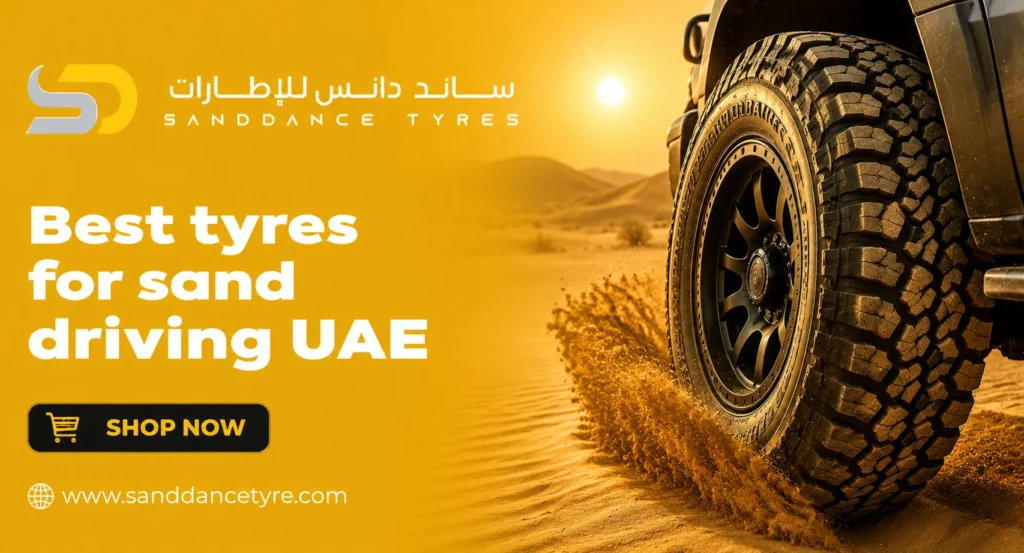
If you’ve ever found yourself stuck axle-deep in a dune with spinning wheels and a sinking feeling, you already know: not all tyres are built for the UAE’s sand. The desert here isn’t just “off-road terrain.” It’s a specific, unforgiving environment—loose, shifting, scorching hot, and completely unforgiving of the wrong tyre choice. Finding the best tyres for sand driving UAE isn’t just about buying the most expensive rubber on the shelf. It’s about understanding what the sand actually demands and then matching the right tyre to that demand.
This guide is written for UAE drivers who go off-road regularly — whether you’re a weekend dune basher in the Liwa mega-dunes, a convoy driver exploring Al Qudra, or someone who simply needs confidence when the tarmac ends. Let’s talk about what works, what doesn’t, and why.
Why Sand Driving in the UAE Is a Different Beast
Most people assume “off-road” knowledge is transferable — if a tyre handles rocky trails in Jordan or muddy tracks in the UK, it’ll be fine in the Emirates. That assumption costs recovery fees every weekend.
UAE desert sand is exceptionally fine and dry. It offers almost no traction resistance — tyres that dig aggressively actually make things worse by creating a “dig-and-sink” effect. What you need is a tyre that floats, paddles lightly, and manages heat buildup without degrading under sustained pressure.
The Key Factors for Sand-Specific Tyre Performance
Tread pattern is the first thing to look at. Wide, open-tread designs with large, chunky blocks perform well on sand because they shed the fine particles rather than trapping them. Narrow grooves pack with sand fast, and a packed tyre is essentially a slick.
Sidewall strength is equally critical. When you air down (which you should, almost always, before hitting soft sand), sidewall flexibility is what creates that wider contact footprint. A stiff, low-profile tyre aired down simply buckles. A reinforced, taller sidewall balloons out beautifully and spreads your vehicle’s weight over more surface area.
Heat resistance matters more than most drivers realize. Ground temperatures in the UAE can exceed 70°C in summer. Sustained sand driving—climbing dune after dune—generates serious heat in your rubber. Compound quality and heat dissipation directly affect whether your tyres stay consistent or start getting dangerously soft and unpredictable.
Best Tyre Types for Sand Driving in the UAE
There are broadly three categories worth considering for tyres for sand driving UAE: All-Terrain (AT), Mud-Terrain (MT), and dedicated sand/desert tyres. Here’s an honest breakdown.
All-Terrain Tyres — The Practical Middle Ground
All-terrain tyres are the most popular choice among UAE desert drivers, and for good reason. They perform respectably on sand when aired down properly, they’re daily drivable on the highway without the noise and wear penalty of mud terrains, and they’re widely available.
The best ATs for UAE sand have:
- Open shoulder lugs for sand ejection
- Reinforced sidewalls (look for 3-ply or higher)
- Void ratios of 30–40%
- Heat-resistant compounds rated for high ambient temperatures
One of the most trusted names in this space is BFGoodrich—their AT and KO2 lines have earned genuine loyalty among UAE off-roaders. The BFGoodrich KO2 in particular handles the transition from dune sand to gravel tracks and back to highway remarkably well, which is the reality of most UAE off-road trips. You can explore the full range of BFGoodrich Tyres to find the right size and spec for your vehicle.
Mud-Terrain Tyres — More Aggressive, More Nuanced
MTs are often the go-to recommendation for “serious” off-roading, but they need a caveat for UAE sand specifically. The aggressive lugs and deep voids that make mud tyres exceptional in clay and wet terrain can actually work against you in fine desert sand — they dig rather than float.
That said, experienced drivers who air down correctly and understand the limitations of their MT setup perform excellently in UAE dunes. If you choose a mud-terrain tyre for desert use, prioritize ones with well-spaced lugs (not a spiked pattern), and commit to proper pressure management.
Dedicated Sand/Desert Tyres
Purpose-built sand tyres exist — paddle-style designs primarily used in competitive dune racing. For most recreational drivers, these are overkill and frankly impractical (they’re miserable on tarmac). But if your weekend involves serious dune bashing in Liwa or Empty Quarter expeditions, they’re worth knowing about.
Top Tyre Recommendations for UAE Sand Driving
Here are the tyres that consistently come up when you talk to experienced UAE desert drivers—not influencers, but mechanics, convoy leaders, and off-road guides who’ve seen how tyres actually behave over hundreds of dune hours.
BFGoodrich All-Terrain T/A KO2
The KO2 is genuinely earned its reputation. The interlocking tread design handles sand float well when aired down to 18–22 psi, the 3-ply sidewall holds up without ballooning dangerously, and the compound resists the heat that UAE summers throw at it. It also holds up on the highway drive home—a real consideration when your off-road adventure ends with 100+ km on Sheikh Zayed Road.
Toyo Open Country AT III
A solid competitor to the KO2, the Toyo AT III has improved significantly in recent generations. It has an aggressive look with AT performance, and UAE drivers report good sand behavior when properly aired down. Wear life is excellent for mixed on/off-road use.
Nitto Terra Grappler G2
The Terra Grappler splits the gap between AT and MT performance. Its staggered shoulder design helps with sand ejection, and it’s a relatively quiet tyre on the highway—important if your daily commute precedes your weekend dune trip. Sidewall strength is good, and it takes airing down well.
Falken Wildpeak AT3W
Often overlooked, the Wildpeak AT3W performs remarkably well in hot climates. The heat dissipation tech in the compound is genuinely effective, and UAE drivers who’ve used them in summer report consistent performance even after extended desert sessions. Also one of the more affordable quality options in this class.
Tyre Pressure for Sand Driving — Getting It Right
Even the best tyres for sand driving in UAE will fail you if you ignore pressure. This is the most common mistake — drivers air down to 25–28 psi and wonder why they’re still getting stuck.
For soft sand and dune climbing:
- Light vehicles (sedans/small SUVs): 18–22 psi
- Mid-size SUVs (Prado, FJ Cruiser, Patrol): 16–20 psi
- Heavy 4x4s (Land Cruiser 200/300, Nissan Patrol 6cyl): 14–18 psi
Don’t forget to carry a quality compressor and air up before returning to tarmac. Driving at highway speed on significantly aired-down tyres is dangerous and accelerates tread wear dramatically.
Tyre Maintenance After Desert Driving
Sand is abrasive and fine enough to work into places you wouldn’t expect. After every desert trip:
Inspect the beads. Sand accumulates between the bead and rim, and over multiple trips can create slow leaks or compromise the bead seal. A good rinse and inspection is worth the five minutes.
Check sidewall cuts. Even with the right tyres, rocks hiding under sand can nick sidewalls. Catch these early — a small sidewall cut that gets ignored becomes a blowout on the next trip.
Rotation and balancing. Off-road use wears tyres unevenly, particularly on front-axle vehicles. Stick to a rotation schedule and don’t skip the balance — a slightly out-of-balance tyre that’s fine at 80 km/h becomes a vibration nightmare at 120 km/h on the highway.
If your desert adventures are also stressing your cooling system — sand driving means slow speeds and high engine load — it might be worth scheduling a car AC repair service while you’re already looking after your vehicle. A failing AC in UAE summer heat is more than uncomfortable; it’s a safety issue.
Where to Buy Tyres for Sand Driving in the UAE
This matters more than most people think. The UAE market has a significant number of counterfeit and grey-market tyres — repackaged used imports or outright fakes that look genuine until they fail spectacularly. Buying from authorised dealers with verifiable stock is non-negotiable when your safety on a remote dune depends on the rubber under you.
You can buy tyre online dubai from trusted sources that carry verified stock, provide proper installation, and offer genuine warranties. The convenience of online ordering combined with professional fitting means there’s no good reason to take the risk on unverified tyres.
When purchasing, always:
- Verify the DOT date code (tyres older than 5 years, even unused, degrade significantly)
- Confirm the load and speed rating match your vehicle specifications
- Ask specifically about heat rating if you’re buying for summer use
Quick Summary—Choosing the Right Tyres for Sand Driving in the UAE
| Tyre Type | Best For | Sand Performance | Highway Usability |
| All-Terrain (e.g., BFGoodrich KO2) | Mixed use drivers | Excellent (aired down) | Very Good |
| Mud-Terrain | Serious off-road focus | Good (requires skill) | Moderate |
| Dedicated Sand | Competition/expeditions | Best | Poor |
For most UAE drivers, a quality all-terrain tyre from a reputable brand, properly maintained and correctly aired for conditions, is the right answer. Save the MTs for when AT performance genuinely isn’t enough for your use case.
Frequently Asked Questions
Q1: What PSI should I run for sand driving in the UAE?
For most mid-size to large SUVs, 16–20 psi is the effective range for soft sand and dune driving. Lighter vehicles can go to 18–22 psi. Always air back up before driving on tarmac—driving at highway speeds on aired-down tyres is dangerous.
Q2: Are mud-terrain tyres better than all-terrain tyres for UAE dunes?
Not necessarily. UAE sand is very fine and dry, which means overly aggressive MT treads can dig and sink rather than float. Well-selected all-terrain tyres, properly aired down, perform excellently for most desert driving in the Emirates. MTs are worth considering if you also do rocky terrain or wadi driving regularly.
Q3: How often should I replace tyres if I do regular desert driving?
More frequently than highway-only drivers. Desert driving — especially airing down and back up repeatedly, navigating rocks hidden under sand, and operating in high heat — accelerates wear and stress. Inspect after every trip and replace at or before 50–60% tread depth for off-road use (rather than waiting until the legal minimum).
Q4: Does tyre brand really matter for sand driving?
Yes, significantly. Compound quality, construction consistency, and heat resistance vary enormously between budget and quality brands. For desert driving where failure can leave you stranded kilometres from help, this is not an area to cut corners. Brands like BFGoodrich, Toyo, Nitto, and Falken have demonstrated consistent performance in UAE conditions.
Q5: Can I use normal road tyres for occasional light desert driving?
Occasionally, on packed sand tracks or mild surfaces — yes. For actual dune driving with loose, deep sand, road tyres lack the sidewall strength, tread design, and heat tolerance for safe use. If you’re venturing into genuine dune terrain, the right tyre is important safety equipment.
Q6: What’s the best way to check if a tyre is genuine and not counterfeit in the UAE?
Buy from authorised dealers and verify the DOT code on the sidewall. Genuine tyres have clean, clearly moulded markings. Be wary of unusually cheap prices on premium brands, and always ask for the original manufacturer’s documentation. Purchasing from established outlets with a physical presence and professional fitting service is the safest approach.