

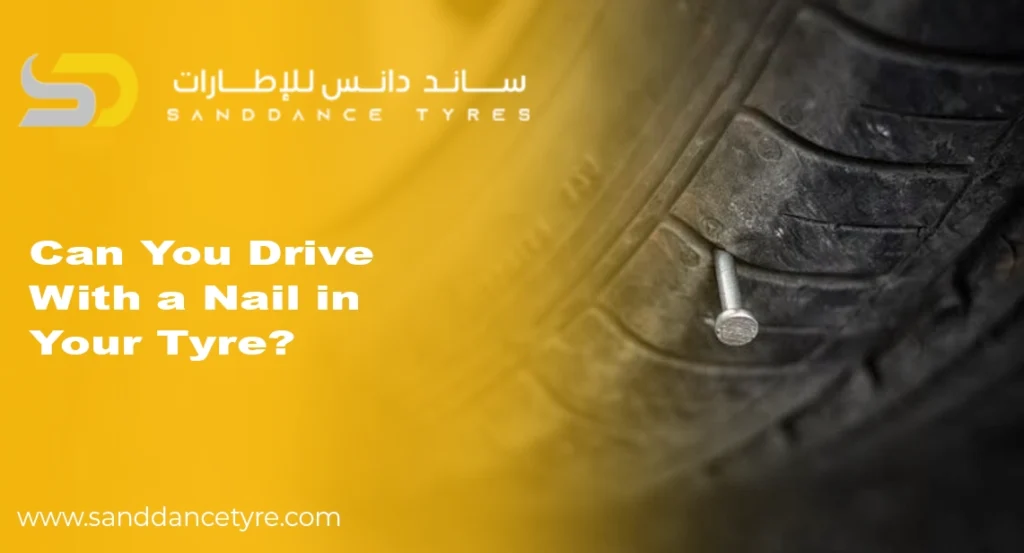
Finding a nail lodged in your tyre is one of those small moments that can cause a big wave of anxiety, especially if you are about to head out on a long drive or you are already running late. The honest answer is that it depends on where the nail is, how deep it has gone, and whether the tyre is already losing air. Understanding the risks involved can help you make a safer decision instead of just hoping for the best.
Is It Safe to Drive With a Nail in Your Tyre?
In some cases, a tyre with a nail in it can hold air for hours or even days, especially if the nail is small and positioned in the centre of the tread where the rubber is thickest. This does not mean it is truly safe, though. The puncture is still compromising the structure of the tyre, and the seal created by the nail itself is unpredictable. It can shift, fall out, or widen at any moment, leading to a sudden loss of pressure.
If the nail has punctured the sidewall rather than the tread, the situation is far more serious. Sidewalls are thinner and flex constantly as the tyre rotates, so a puncture there is much more likely to fail suddenly and without warning, even at low speeds.
Signs Your Tyre Has a Nail in It
Many drivers only discover a nail during a routine walk-around, but there are warning signs that can alert you sooner. A hissing sound when the vehicle is parked, a dashboard warning light for low tyre pressure, a faint vibration at speed, or the car pulling slightly to one side can all indicate a slow puncture. A visual check of all four tyres, including the inner sidewalls, is the quickest way to confirm what is going on.
What Happens If You Keep Driving
Continuing to drive on a punctured tyre allows air to escape gradually, and as pressure drops, the tyre flexes more than it is designed to. This generates heat, which weakens the internal structure further and increases the risk of a blowout. Driving on a nearly flat tyre can also damage the wheel rim and, in some cases, affect the suspension or alignment, turning a simple puncture repair into a much costlier repair bill.
What to Do If You Find a Nail in Your Tyre
If you notice a nail while the car is parked and the tyre still looks properly inflated, the safest approach is to avoid driving on it and arrange for an inspection as soon as possible. Do not attempt to pull the nail out yourself, since it may be the only thing preventing rapid air loss. If you are already on the road and suspect a puncture, reduce your speed, avoid harsh braking or sharp turns, and find a safe place to stop and assess the tyre rather than pushing on to your original destination.
Can a Nail in the Tyre Be Repaired?
Some punctures in the central tread area may be repairable after a professional inspection. A qualified technician should check the puncture’s location, size, and the tyre’s overall condition before deciding whether repair is appropriate. However, repairs are generally not recommended for punctures in the shoulder or sidewall, for damage larger than a small hole, or for tyres that already have significant wear. A qualified technician can assess the exact location and size of the damage and advise whether a repair is appropriate or whether replacement is the safer option.
Conclusion
A nail in your tyre should never be treated as a minor inconvenience to deal with later. Even if the tyre seems to be holding air, the safest course of action is to have it inspected promptly, avoid unnecessary driving on it, and let a professional determine whether it can be repaired or needs replacing. Taking a cautious approach now can prevent a much more dangerous situation on the road.