
If you’re searching for car AC repair Ajman drivers can rely on, chances are your air conditioner is already giving you trouble. In the UAE’s brutal summer heat, a failing AC hose is one of the most common, and most overlooked, reasons a car’s air conditioning stops blowing cold. This guide walks you through the warning signs, replacement costs, and how to pick the right car AC repair Ajman workshop before your next drive turns into a sauna. Before booking a repair, it’s helpful to understand how your vehicle’s cooling system works in our complete guide to car AC repair.
What Is an AC Hose and Why It Matters
What is an AC hose?
The AC hose is the flexible line that carries pressurized refrigerant between your compressor, condenser, and evaporator. Over time, especially under Ajman’s extreme heat, which regularly crosses 45°C in summer, the rubber and metal fittings degrade, crack, or corrode. Once that happens, refrigerant leaks out, your cooling power drops, and you’re left needing urgent car AC repair Ajman technicians can complete the same day.
7 Warning Signs You Need Car AC Repair in Ajman
Here are the clearest signals that your AC hose, not just your gas, needs attention.
1. Warm Air Instead of Cold
If your vents blow lukewarm or hot air even on the coldest setting, refrigerant is likely leaking through a damaged hose. This is the single most common reason people search for car AC repair Ajman garages. If your AC is blowing warm air, read our guide on common car AC cooling performance issues to understand other possible causes.
2. Visible Oily Residue Near Hose Fittings
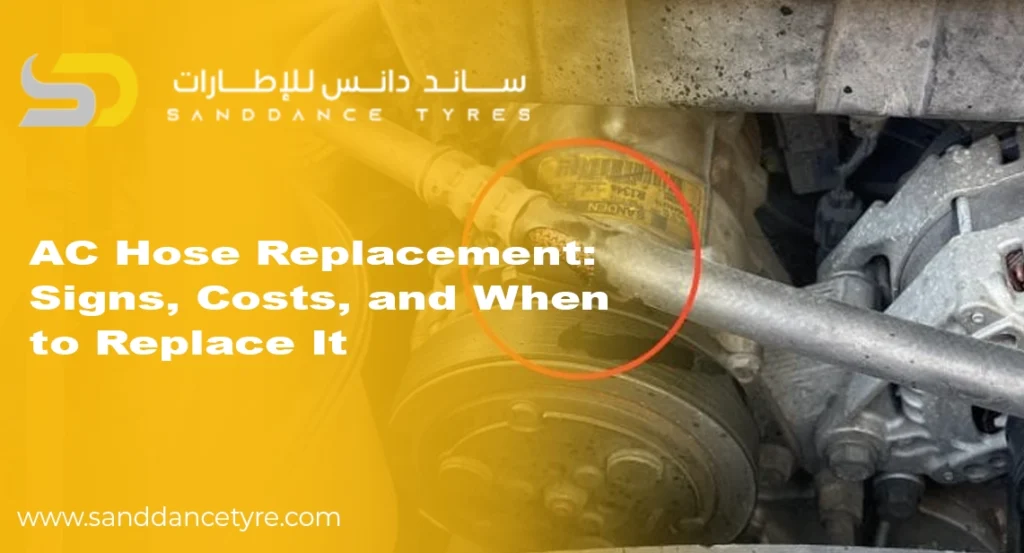
Refrigerant oil leaves a greasy film where it escapes. Check around the compressor and firewall connections; an oily patch usually means a cracked hose or worn O-ring.
3. Hissing or Whistling Noises
A hissing sound when the AC is running often points to a pressurized leak in the hose itself, not the compressor.
4. Weak Airflow From Vents
Reduced airflow, even if the air feels cool, can indicate a collapsed or kinked hose restricting refrigerant flow.
5. AC Compressor Cycling On and Off Rapidly
Short cycling happens when the system senses low refrigerant pressure caused by a leaking hose, triggering the compressor to switch off for protection.
6. Musty or Chemical Smell in the Cabin
A sharp, sweet chemical odor is often refrigerant escaping into the cabin through a perished seal, a clear sign to book car AC repair specialists in Ajman immediately.
7. Frequent Need for Refrigerant Top-Ups
If you’ve had your gas refilled more than once in a year, the hose (or a related seal) is almost certainly leaking, and a top-up alone won’t fix it. Repeated refrigerant refills usually indicate a leak. Learn how often your car AC gas should actually be refilled before paying for another top-up.
Car AC Repair Ajman: Cost Guide for Hose Replacement
Costs vary by vehicle model, hose length, and whether OEM or aftermarket parts are used. Typical car ac repair Ajman pricing looks like this:
| Service | Estimated Cost (AED) |
| AC hose inspection/diagnosis | 50 – 100 |
| Single hose replacement (economy car) | 150 – 350 |
| Full hose set replacement (SUV/luxury) | 400 – 900 |
| Refrigerant recharge after repair | 100 – 250 |
| Full AC service (labor + gas + check) | 150 – 300 |
Most reputable AC service Ajman garages will also perform a pressure test after installation to confirm there are no further leaks. Always ask for this as part of the job.
DIY vs Professional Car AC Repair Ajman
It’s tempting to buy a refrigerant can from the local auto parts shop and top it up yourself, but this rarely solves a hose leak it only delays the inevitable. Professional car AC repair Ajman technicians use vacuum pumps, UV dye leak detection, and calibrated recharge stations that DIY kits simply cannot replicate. Attempting a hose swap without the right crimping tools can also damage the fitting, leading to a bigger repair bill later.
For anyone comparing options, searching car air conditioner repair near me or car AC service near me will surface nearby workshops, but always confirm they specialize in refrigerant systems, not just general mechanical work.
How to Choose the Best Car AC Repair Ajman Service
When evaluating a car AC repair workshop in Ajman, look for:
- Refrigerant handling certification, proper R134a/R1234yf handling, protects your car and the environment.
- Transparent, itemized quotes before work begins.
- Warranty on parts and labor, typically 3–6 months on hose replacements.
- Same-day turnaround, since most hose jobs take under 2 hours.
- Genuine or reputable aftermarket parts, not generic no-name hoses that fail within months.
Reading recent customer reviews and asking whether they perform a post-repair pressure test are two simple ways to separate reliable shops from quick-fix operators.
FAQs {#faqs}
How long does an AC hose last in UAE heat?
Typically 3–5 years, though Ajman’s high ambient temperatures can shorten that lifespan if the vehicle is parked outdoors daily.
Can I drive with a damaged AC hose?
Yes, short-term, but continued driving risks compressor damage from low refrigerant, turning a small repair into an expensive one.
Is car AC repair in Ajman covered under manufacturer warranty? Only if the vehicle is still within its warranty period and the fault isn’t due to wear and tear or external damage; check your service booklet.
How do I know if it’s the hose or the compressor? A licensed technician will use a UV dye test and pressure gauge to pinpoint the exact leak source before recommending a repair.
Final Thoughts
A failing AC hose is uncomfortable at best and dangerous at worst when you’re driving in Ajman’s summer heat. Watching for these seven warning signs and booking trusted car AC repair Ajman service at the first symptom will save you money and keep your cabin cool all year round. For related reading, see our guides on AC symptoms in Ajman and common car battery problems in the UAE.
For more on how vehicle air conditioning systems work, check this technical overview from RepairPal and refrigerant safety guidance from the U.S. EPA’s Section 609 program.