Alignment Impact Tyre – How Wheel Adjustment Affects Tyre Life
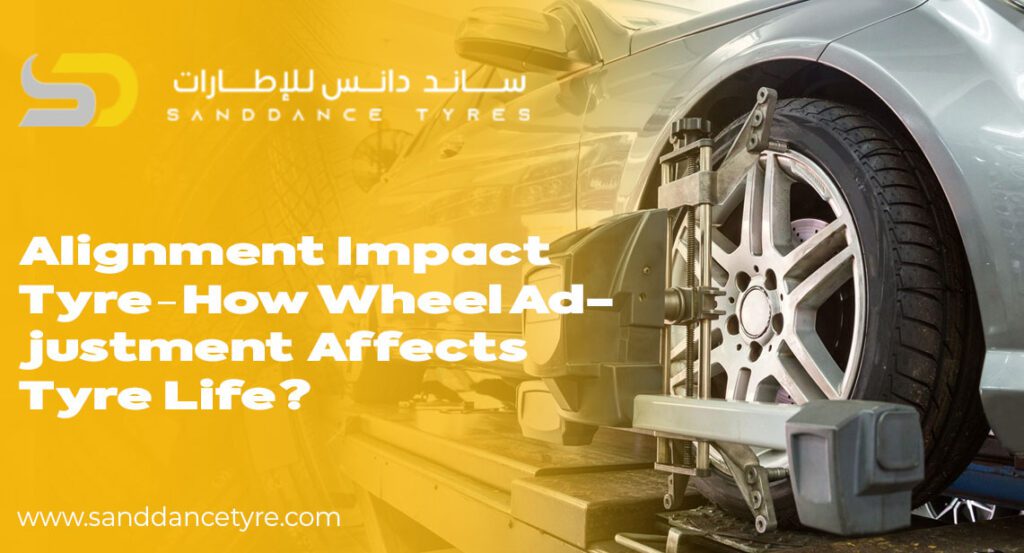
Wheel alignment impact tyre lifespan and overall vehicle performance. Many drivers ignore this element of car care, which puts all their focus on the rotation or replacement of tires. What aligners do is to put your tires’ performance at the forefront, by which I mean they influence wear patterns, handling, and fuel economy. When you have proper wheel alignment, your car runs smoother, tires wear evenly, and you get the most out of your quality tire investment. Understanding Wheel Alignment Impact Tyre Longevity Wheel alignment is a service that returns your wheels to the manufacturer’s set angles. This includes toe and camber adjustments, which in turn put your tires in the best position for contact with the road and each other. Poor alignment impact tyres and causes uneven tire wear out which in turn shortens their life and also plays a role in reduced safety. Proper alignment sees to it that your tires have better contact with the road surface, which in turn improves tire wear and helps you put off those premature replacements. The Role of Toe and Camber in Alignment Impact Tyre Performance Toe out means your tires are pointed in or out when you view them from above. Also, if the toe is not set right, your tires will scrub the road, which in turn causes fast tread wear. Camber is the in or out tilt of the tires when viewed from the front. Very high camber in either direction will see one side of the tire wear out before the other. It is important to have proper toe and camber balance to reduce irregular wear and, at the same time, increase tire life. How Misalignment Leads to Wear and Steering Issues When a car has out of alignment wheels that right away you see the effects right away in the form of uneven tire wear and poor handling. What we see with misalignment is that your car will pull to a certain side, which in turn requires you to constantly correct the steering in an attempt to keep the vehicle going straight. That which may have been a simple case of steering correction turns into a tiresome task, which at the same time puts extra stress on your steering and suspension elements. Over time, what you see is that the wear pattern, which was at first subtle, becomes more so, which in turn reduces grip and also plays a role in degrading safety, in particular in the wet or sandy road conditions which are common in the UAE. Maximising Tyre Longevity Through Regular Alignment Checks Regular maintenance of proper wheel alignment is key to long tire life and safe operation. Even small-scale misalignments can greatly affect tire wear throughout many thousands of km. Issues like hitting a pothole, going over speed bumps too fast, or having minor accidents can easily put your alignment out of whack. By attending to alignment issues at the first sign of them, you can correct wear patterns before they become serious, improve fuel efficiency, and see a smoother ride. Also, professional alignment services include checking the suspension system to see that there are no worn-out parts, which may be contributing to the misalignment issues. Conclusion The alignment for better tire wear is a fact. We see that proper toe and camber alignment not only fixes out-of-place wear patterns but also improves handling, safety, and comfort. At Sand Dance Tyre, we offer expert wheel alignment services, which we designed to extend tire life and, at the same time, improve your total driving experience. If you are seeing the car pull to one side, irregular tread wear, or want to keep your tires in the best condition, we have skilled technicians who use the best equipment to get your wheels in perfect alignment. By making wheel alignment a part of your routine maintenance, you will see your wallet grow fuller, your safety improved, and the ride smoother in the UAE. FAQs 1. How regularly do you check your wheel alignment? It is also a good idea to have your alignment checked at 10,000 km or when you see uneven tire wear or steering problems. 2. Does poor alignment impact tyres? Yes, we see that even small misalignment causes premature wear, which in turn reduces tyre life by thousands of kilometres. 3. What are the signs of being out of alignment? Common issues include your vehicle pulling to a side, unequal tire wear, and the steering wheel not sitting still while you are driving.
All‑Season vs Seasonal Tyre: Do You Need All-Season Tyres or Seasonal Swaps?
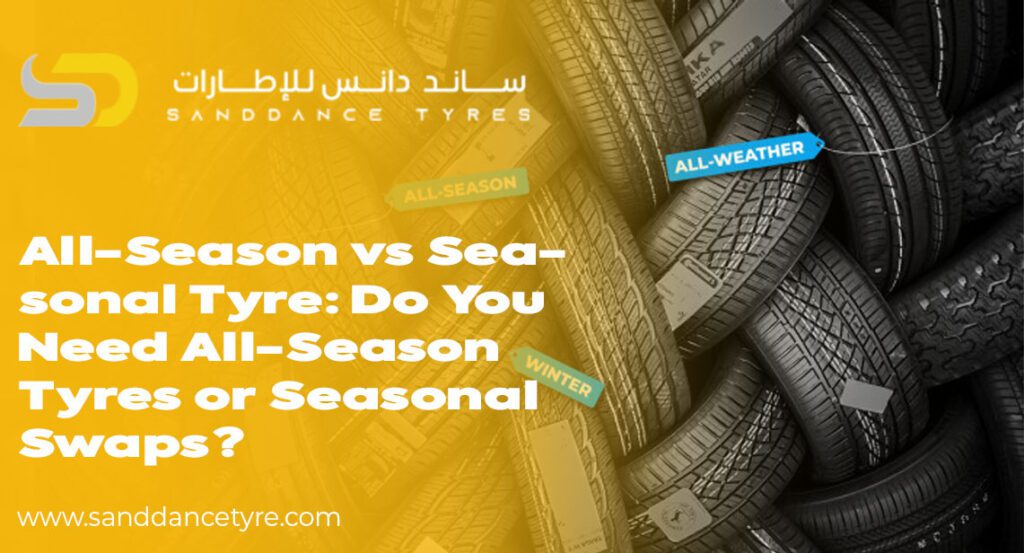
Choosing which tires to put on your car may be more complicated than you think, particularly in an area that has variable climate and road conditions. The issue of all‑season vs seasonal tyre options is usually which of performance, safety, and cost you get. By which each type performs in various weather conditions, we can make a better decision for your specific driving needs. Read More: What Makes Eco-Labelled Tyres UAE? All‑Season vs Seasonal Tyre: Understanding the Basics All-season tires are designed for broad performance in various weather conditions, which is what makes them a popular choice among those who want it all in one tire. They do a good job in mild winter, wet, and hot, dry weather, and do not require a change-out at each season. As for the seasonal tires, which are the summer and winter-specific models, they are put together to do best in their own elements. Summer tires bring out the best in hot, dry weather in terms of grip and handling; winter tires, in turn, do better at low temperatures, snow, and ice. For those who value weather adaptability all all-season tires are the choice. But in areas that see great seasonal changes, dedicated summer and winter tires may see you through in terms of safety and performance. Your summer and winter tire choice should fit what you use the car for and what the weather is like in your part of the world. Performance Differences That Matter In terms of all‑season vs seasonal tyre performance, what you will see is that there are tradeoffs. All-season tires do it all, but don’t excel at anything. They provide good grip in most weather conditions but aren’t able to match summer tires’ precision handling in hot asphalt or winter tires’ traction in deep snow. Seasonal tires are what we put in play according to the time of year. Summer tires are engineered with specific tread patterns and material composition to perform at their best when it is warm out, which is where we see the best handling and braking. In the case of winter tires, they have a different type of rubber compound and tread design to keep that grip in cold and ice, in some cases even freezing temperatures. If you go through large seasonal changes, by changing out your set of tires at the turn of the season, you will always have the best fit for the road conditions you face. Cost Benefits and Long-Term Value Many people think that doing a tire change twice a year is more expensive, which isn’t always the case. With seasonal tires, you only have a set on your car for part of the year, which in turn makes them last longer. Over time, what you put into it may equal out the price of having two sets. In that regard all all-season tires may see greater wear when put into service for which they were not intended. For instance, in very hot summer weather all all-season tires may see a reduced life span, which is the same as in very cold, ice-covered winter roads, which may also present problems. Looking at the economics as well as the performance of the vehicles’ tires needs may help you to see if the investment in dedicated seasonal tires is worth it. Making the Summer Winter Tyre Choice in the UAE In the UAE, the climate is mainly very hot and very dry, which goes on for most of the year, which in turn puts summer tires at an advantage in terms of performance. But for drivers who do at times get out of the country to colder or wetter areas all all-season tires are a good alternative. At Sand Dance Tyre, we work with our customers to analyze their driving behaviors, travel patterns, and budget, which in turn helps them choose between all‑season vs seasonal tyre options. If your travel is mostly local, a quality summer tire may be the best choice. If you value convenience and find yourself traveling to different weather conditions often, an all-season tire will pay for itself by avoiding the need for seasonal tire changes. The key is which tires you choose based on the weather you see most often. We put safety, performance, and long-term value at the front of that choice. By doing your research, you provide yourself with a better, safer ride all year round. FAQs – All‑Season vs Seasonal Tyre Q1: Are all-season tires right for the UAE climate? Yes, they do for most issues, but summer tires outperform in extreme heat. Q2: Do seasonal tires outlast all-season tires? Yes, in that each set is used at different times of the year, which in turn reduces wear. Q3: Is it a good idea to switch between summer and winter tires in a hot climate? If you are a frequent traveler to cold areas, for others, summer tires usually suffice.
What Makes Eco-Labelled Tyres UAE?
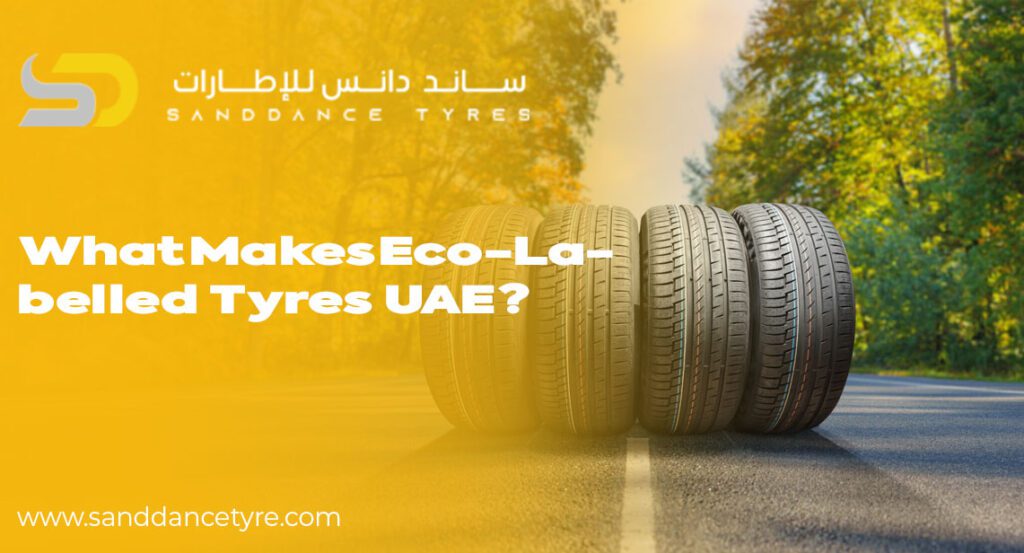
In recent times, there has been a great increase in environmental awareness in the UAE, which we are seeing play out in the automotive industry. In this transformation, we see the introduction of eco-labelled tyres UAE, which play a key role in the choices drivers make for their vehicles. An eco label on a tire means the tire meets certain environmental and performance criteria set by the authorities, which in turn means better fuel efficiency, reduced noise, and lower carbon emissions. As you research what goes into that label, you will also be able to choose products that not only do what is best for your car but also for the environment. Read More: Tyre Storage Tips: How to Store Extra Tyres Understanding Eco-Labelled Tyres UAE Eco-labelled tyres UAE have to pass an in-depth evaluation for performance, safety, and environmental impact. Also, these tires have to adhere to what are often stringent green tire certification measures that may cover such areas as fuel efficiency rating, wet grip performance, and noise emissions levels. The fuel rating, which is a main feature of this ecosystem, indicates the tire’s performance in fuel consumption. The UAE has put in place global green standards which see that require tires sold in the market to meet the standards of safety and the environment at the same time, also, as a result which is very much so that manufacturers pay attention to design, which does not sacrifice eco-friendly features for performance. When a tire has this label, consumers may be assured that it is up to the high standards we require for safety and sustainability. The Role of Sustainable Tyre Certification Sustainable tyre certification is a fact, not a marketing ploy. We see it as proof that a tyre meets very strict regulations. We look at the tyre’s rolling resistance, which in turn affects fuel efficiency as well as its performance in wet which we use to determine safety in rain. Tyres with low rolling resistance require less energy to power through movement, thus reducing fuel use, which in turn reduces CO2 emissions. In the UAE, we see that sustainable tyre certification includes evaluation of performance in the country’s tough weather, which is a factor due to high temperatures. What we put to the tires is that they must do well and safely in heat, which at the same time does not sacrifice green performance. This is to say that those who pass our certification have achieved a balance of great lasting performance and environmental responsibility. Fuel Grade Label and Green Standards The fuel performance label is what you’ll see the most of in the world of eco-labels. We know a scale that rates how well a tire does at fuel use. Here, a higher grade is given to tires that put out less energy, which in turn means better fuel economy, and that translates to the pocket of the driver. For many drivers in the UAE, that means large-scale fuel savings over a tire’s life. Green practices have gone beyond fuel efficiency to include issues like noise reduction and safe braking. We see in tires that meet these green standards a reduction in road noise, which in turn produces a quieter, more comfortable ride. Also, they are designed to reduce brake distance in wet conditions, which in turn improves overall road safety. Why Choose Eco-Labelled Tyres UAE Going for eco-labelled tyres UAE is a smart call from an environmental and practical standpoint. We have tires that are designed to reduce your vehicle’s carbon footprint, and at the same time, they provide great performance. You will see large-scale fuel savings over time, which in turn makes this an economic choice. Also, eco-labeled tyres UAE tend to last longer, which is a result of advanced design and materials used, which in turn reduces the frequency of your purchases. At Sand Dance Tyre, we present to you a variety of eco-labeled tyres UAE sustainable certification. Our team of experts will help you choose the best tyre for your car, which in turn will get you the best of green features and performance. By making the switch, you not only do your part for the environment but also experience better, safer, more efficient rides. Read More: Why UV Resistant Tyres Matter in Gulf Climates FAQs – Eco-Labelled Tyres UAE 1. In the UAE, what does an eco-label on a tire mean? It is that the tyre meets UAE’s environmental and safety standards, which also include fuel efficiency, wet grip performance, and low noise. 2. What is sustainable tyre certification? We see the which includes evaluation of tires for their rolling resistance, wet grip performance, durability, and compliance with green issues relevant to the UAE climate. 3. Does your fuel use go down with eco-labelled tyres UAE? Yes, we see that eco-labeled tyres have lower rolling resistance, which in turn reduces energy loss and improves fuel efficiency. 4. Are ecologically labeled tires appropriate for the UAE climate? Yes, we indeed test out the tires that go into production to make sure they perform at an efficient and safe level in high temperatures.
Tyre Storage Tips: How to Store Extra Tyres Without Damaging Them | Sand Dance Tyre
Storing extra tyres may seem like a no-brainer, but in fact, proper care is required, or you run the risk of reducing their life span. When you are changing out your summer tires for winter tires or just putting away your spares, it is very important to do it right. At Sand Dance Tyre, we have put together some proven tyre storage tips, which will, in turn, protect your investment as well as your safety once you go to put them back on. Tyres go out in poor storage, which includes cracking, flattening, and wear out. We see that UV exposure and high humidity are large-scale issues. By which, if you are aware of these issues and properly store your tyres, you will see an extension in their life and improved performance. Read More: Why UV Resistant Tyres Matter in Gulf Climates Why Proper Tyre Storage Tips Matters Tyres are not just simple rubber circles. We have put in engineered compounds which react to light, temperature and pressure. If you store them wrong, you compromise their structure, which in turn presents a large-scale safety issue once back on the road. Rubber degradation is real. Exposure of rubber to sunlight, moisture, and ozone causes it to harden and crack. This, in turn, may reduce traction, which in severe cases may make the tires unsafe at high speed or in bad weather. Tyre Storage Tips for Preserving Quality Every car owner needs to know what is involved in properly storing tires for short-term and long-term use. It comes down to basic care, which includes cleaning, location, position, and protection. Clean Your Tyres Before Storage Always rinse out dirt, brake dust, and road debris. Use a mild soap and water solution, then fully dry. Leaving tires to store while still dirty can cause corrosion and rubber breakdown down which may take months to appear. Choose the Right Dry Storage Space In a cool and well-ventilated environment indoors is the best for storage. Stay away from basements, which have high humidity, and sheds that see large temperature changes. For tire storage, it is also true to reduce the risk of mold, moisture buildup up and degradation. Avoiding UV Damage and Ozone Exposure UV rays and ozone are to blame for most rubber degradation. We suggest you store tires away from windows, electrical equipment, and machines that produce ozone. Also, use opaque tire covers to protect them from light and to preserve their elasticity. Off-Season Tyre Care for Long-Term Storage Off-season tyre care is not just about storing them in a garage. With each passing season, we see changes in temperature and humidity, which in turn affect your tyres. Monitor the Temperature and Airflow Season changes may cause tires to expand and contract. For proper storage, keep air flow in the area consistent and the temperature moderate. Also, do not store the tires near radiators, water heaters or in the sun. Store Vertically or Stack Safely Stacking tyres without rims is a go, but do get in the habit of rotating them out monthly to avoid pressure issues. As for tyres that are mounted do store them up on end to which in turn will reduce the chance of sidewall stress and warping. If you can get your hands on a rack to store them in, do it; also, do not put any heavy items on top of the tyres. How to Avoid Long-Term Damage Don’t Store Tyres on Wet or Dirty Surfaces Surfaces such as soil, concrete, or wet floors will cause moisture to be trapped under the tires. Use of cardboard, wood planks, or tire mats will help to create a clean barrier between the tire and the ground. Mark the Date of Storage It is a good idea to mark each tyre with the date of storage and position (for example, front left). This will help in the tire rotation schedule and also ensure that they have not sat too long. When to Replace Instead of Store Tyres that are over six years old may not be worth keeping. While tread depth may still be good, age-related wear may have set in. If you see cracks, uneven wear, or stiffness in the tires, bring in into Sand Dance Tyre before you decide to put them back into use. Trust Sand Dance Tyre for Expert Tyre Storage Guidance At Sand Dance Tyre, we are aware that proper storage is a result of the right info and care. We have professional technicians who do tire inspection, cleaning, and preparation for storage. Whether you are rotating tires seasonally or have an extra set of performance tires, by following our tire storage tips, you’ll get the most out of every kilometer. At our shop, we perform tire inspections, air pressure checks, and we also offer info on best storage. We see to it that your tires are in top shape when you need them safe, efficient and reliable. Frequently Asked Questions (FAQs) Q1: What is the safe storage time for tyres? Tyres may be stored for as long as 6 years if kept in dry, cool, dark locations and also rotated and checked regularly. Q2: Should tires be taken off pressure before storage? If tires are mounted, keep to the recommended pressure. For unmounted tires, pressure is a non-issue, but storage orientation is. Q3: Is your tire storage outside ok? Staying indoors is what we recommend for tires. UV rays, humidity, and weather changes may greatly affect tire condition. Q4: Can I stand up my tires without rims? Tyres should be stored flat and rotated regularly to avoid deformation.
Why UV Resistant Tyres Matter in Gulf Climates
In the Gulf area, which is characterized by extreme heat and unrelenting sun, these are in fact daily issues for drivers and their cars. Tyres in particular bear the brunt of the harsh environment, which includes scorching asphalt, high temperatures and direct sun. That is to say that UV resistant tyres are not a want here; they are a need. At Sand Dance Tyre, we are aware of the import of safety, performance and durability in the climate that the United Arab Emirates and Gulf states are known for. In Gulf countries, which have high levels of UV rays and very hot roads, tire rubber sees accelerated aging. Common tires that do not have UV protection become brittle, crack over time and lose their elasticity, which in turn causes dangerous blowouts or reduced performance. For both personal and commercial vehicle use that operate in intense sun, we see that investment in UV-resistant tires means better tire life, improved grip and greater safety. Read More: Wide Tyres Benefits – Are Wide Tyres Always Better? Understanding the Importance of UV Resistant Tyres Ultraviolet (UV) light is the primary natural element that damages rubber-based materials. Each day that tires are exposed to the sun causes the chemical components in the rubber to break down, which in turn leads to premature wear. This process, which is known as rubber aging, also weakens the structure of the tire and may greatly affect road safety. UV-resistant tires have special compounds and additives that protect the rubber from sun damage. These formulations act as a barrier, which in turn slows down the aging process and also protects the tire surface from cracking and hardening. In the Gulf, where daytime temperatures may go over 50°C, this added protection is key to performance and reliability. The Role of UV Resistant Tyres in Gulf Driving Conditions In Gulf countries, which have high levels of ambient and road surface heat, the tyre infrastructure is under great stress. In summer, the heat rises to a very high level, and tires that do not have what it takes for heat resistance may let you down; they will either give up their shape, blow out, or break under stress. Also, this will see grip and stability go out the window, and at the same time, the chances of a tyre failure go up. UV-resistant tires also feature enhanced heat resistance technology, which is put in to bear out high road temperatures without a trade-off in strength. They maintain consistent performance even on load or at high speed, which is typical of what you see in the UAE and desert conditions. Sand Dance Tyre presents a range of sunproof tires that do very well in the harshest heat we see. Why Sun-Proof Tyres Offer More Than Just Protection While the term “sun proof tires” may indicate a resistance to sunlight only it is not the full story. What we see is that tires which are designed for UV and heat resistance also provide better all-around wear resistance and maintain their elasticity and flex for longer. This, in turn, means a smoother ride, better brake performance, and consistent handling over the tire’s life span. Also, these tires we have designed for ozone protection, which is a feature that stops crack and weakening from ozone gas and out-of-range sun exposure. This dual protection also improves the tires’ overall structure, which in turn allows drivers to travel great distances with confidence in the desert or to remote areas that see large temperature changes. Choose UV Resistant Tyres for Safety, Longevity, and Peace of Mind At Sand Dance Tyre, we have a different approach. Prevention is key. We see no point in replacing tires that have worn out due to sun damage, which is also a very expensive issue at that, and it is avoidable. We put forward to our customers that they look into getting UV-resistant tires, which our experts are more than happy to recommend to all of our customers who drive in the Gulf region, which includes a very large group of us who are into high-speed driving. In the family SUV, sedan, commercial vehicle and off-road truck segments, we include leading tire brands that are experts in the sun-proof tires with high heat resistance. Also, we see that these tires, which we offer, extend the life of your investment and also perform better on the hot and very busy roads of the UAE. Also, you should get into the practice of checking your tires and pressure during summer, which is a season when even the best tires require attention to perform at their best. We at Sand Dance Tyre can take you through the process of choosing the right UV-resistant tire for your car make and model, your budget, and how you drive. Frequently Asked Questions 1. What is the type of tire that resists UV? UV protective tires, which are a special formulation to resist damage from sun exposure and high temperatures in Gulf climates. 2. Why do tires wear out faster in the Gulf area? Intense heat and strong UV rays speed up the rubber aging process, which in turn causes cracking, hardening and reduced performance in tires. 3. How do sun-resistant tires improve safety? They maintain structure, resist warping at high temperatures, and also improve grip, which in turn enhances braking performance, especially on hot roads. 4. Are tires resistant to UV rays tyres cost more? Slightly higher in price, but what you get is better quality, which in the end reduces the frequency of replacements and improves overall value.
Wide Tyres Benefits – Are Wide Tyres Always Better? The Truth About Width and Grip
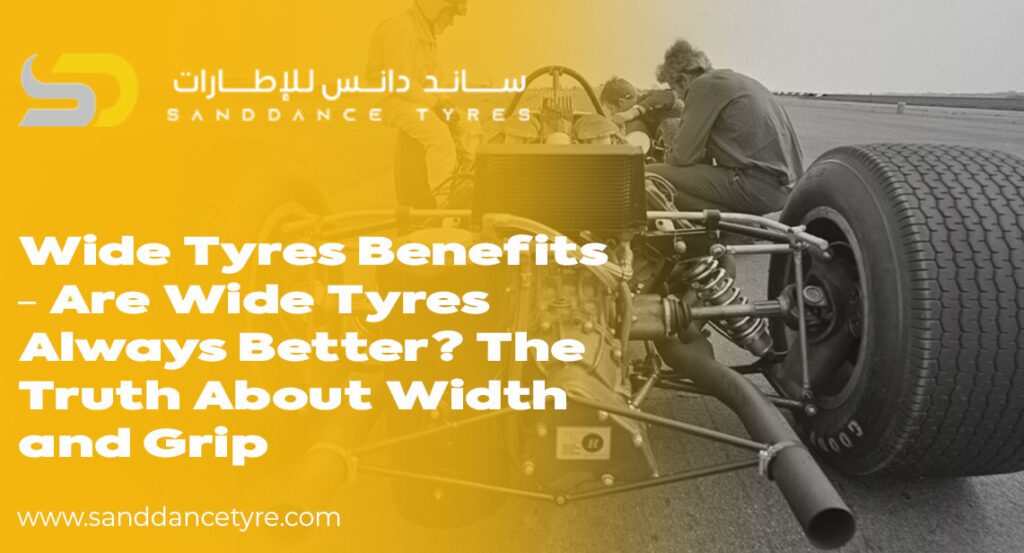
In the world of car mods and performance tweaks, what is most talked about among car fans is the use of wide tyres. Some think they are the best for performance on the road, while others note the trade-off issues that go along with them. Do wide tires outperform in all aspects? In this blog, we will get into the true wide tyres benefits as well as how tire width plays a role in your car’s grip, handling, and efficiency. Understanding Wide Tyres Benefits for Road Grip and Performance One of the top wide tyres benefits is increased surface contact with the road, which we call the tire contact patch. We see that a larger contact patch also means better grip in dry and wet conditions, which in turn makes your drive a more stable and secure one. At high speeds while negotiating sharp turns, wide tires improve your car’s performance and its ability to stay controlled and not slip or lose traction. Wider tyres are for sure a plus in dry weather performance. The wider the tire, the more friction it produces against the road surface. This said, on dry tarmac, cars that fit wider tires usually do better in brake performance and acceleration. In sports and performance cars, wide tires are almost a given for this very reason. Read More: Tyre Pressure Monitoring UAE—Should You Invest? How Wide Tyres Impact Tyre Contact Patch and Handling? The tyre contact patch is of great importance in how your car handles in different driving situations. Wide tyres have a broad, short contact patch. This which in turn, does a great job at spreading out the car’s weight more evenly; in effect, what we see is better handling in turns and improved stability at high speeds. However, we see that the handling improvement is a variable that is present depending on what you are doing. In city traffic or on light highway use, you may not see much of a difference. But in the case of sharp turns, off-road performance, or during emergency maneuvers, the better handling stands out. Also, it is reported that in performance models, drivers have more confidence and control in their cars when they are equipped with wider tyres. Rain Grip and Tyre Resistance – The Downsides of Going Wide While for sure, wide tires have their advantages, they also have tradeoffs in terms of wet weather performance, which we call rain grip, which is a very key issue. Wide tires may have trouble in standing water if they don’t have the right tread design. That which is also a large issue is hydroplaning in deep puddles or during heavy rain. Also, wide tyres see to it that we get more rolling resistance. This resistance, in turn, affects fuel economy. In city driving, which includes lots of start and stop action, vehicles with wide tires may use more fuel. Also, the extra weight of wide tyres puts more stress on the suspension and steering systems. Are Wide Tyres Always the Right Choice? Choosing different tire widths based on what you use your car for. If you drive a performance-oriented car that includes lots of twisty roads at high speeds, or you are a frequent motorway highway speedster, wide tires can greatly improve the performance and fun factor of your drive. They will also enhance dry grip, which in turn improves handling, which you will notice right away. For daily use, which includes mainly commuting in the city or to areas that see a lot of rain that which comes at the expense of performance, is often what you’ll trade in. In such which is cases, we recommend going for the moderate width or factory tread size, which still puts out great performance. At Sand Dance Tyre, we tailor our advice to each of our customers’ unique driving requirements, vehicle type, and road conditions. We don’t just go for the largest tire option out there; what we do is find the best fit for your safety, performance, and budget. Final Verdict on Wide Tyres Benefits Wide tires do indeed have great benefits in terms of performance and control, as well as look. They do transform the way your car drives and handles, and improve grip on the road. At the same time, it is important to look at the cons, which include tire contact patch, fuel efficiency in city traffic, performance in the rain, and wear-out rate. Making an informed decision will greatly affect how your car performs in the long term. For those who want wide tires for better performance or are seeking what tire is best for your lifestyle, we at Sand Dance Tyre have what you’re looking for. We have expert advice, great tire selection, and professional installation of the best products for your car. FAQs Q1: Do broad tyres reduce fuel efficiency? Yes, wider tires do increase rolling resistance, which in turn at times reduces the fuel efficiency of narrower tires. Q2: Do wide tires perform better in all weather? Not at all times. In dry weather, they do well, but in wet weather, they may not perform at their best unless they are designed for it. Q3: May I put wide tires on any car? Based on your vehicle’s specs, we see that it is up to you what you put on it, but we do advise against putting on very wide tires, which may not have enough clearance or which are not compatible with your wheel. This, in turn, may affect your suspension and steering. Q4: Do wide tires improve cornering? Sure, wider tires present a greater contact area, which in turn improves grip in corners and at high speed.
Tyre Pressure Monitoring UAE—Should You Invest?
In the UAE, what it takes to be a good driver goes beyond a smooth-running engine and a full tank; it is also about optimal tyre performance at all times. What is often ignored is that which is a very important aspect of vehicle safety, tyre pressure. That is what Tyre Pressure Monitoring Systems (TPMS) are for. As for the question of whether you should get them or not, the answer is in what they do, what benefits they bring, and how they work, in particular, in our harsh desert climate and on the fast-paced highways of the Emirates. Understanding Tyre Pressure Monitoring UAE and Its Importance Tyre pressure monitoring UAE is reported by what we see as very advanced electronics, which, in real time, measure tyre pressure in your vehicle and alert you to anything out of the ordinary. What we are seeing is an increase in the presence of these systems in today’s cars, and that is because they serve as the first layer of protection against tyre-related accidents. In the United Arab Emirates, we see road temperatures at very high levels and also a great deal of long-distance travel, which in turn puts our cars’ tires at risk of being under-inflated. They wear out more quickly, and you also see a drop in fuel efficiency and an increase in the chance of issues with brakes. Thus, what we have is a tire pressure monitoring system, which is no longer a nice-to-have feature but a very much needed safety element, which brings peace of mind to every trip. Read More: Tyre Lifecycle: From Production to Recycling with Sand Dance Tyre How TPMS Fitment Enhances Vehicle Performance In the process of TPMS, we put in tire sensors that talk to your car’s computer system. These sensors report in real time on pressure changes, which may be from a slow leak, puncture, or a sudden drop in temperature. Installing TPMS in your car will see an improvement in the handling, which is very much the case when you are on the highways or in off-road terrains, which we have in the UAE. What you get is a safety and efficiency upgrade to your car’s performance. When your tires are at the right pressure all the time, your car runs smoother, it handles curves better, and it also performs better with fuel economy. Tyre Sensor Addition and Its Long-Term Benefits Adding tyre sensors at first may seem like a minor change, but in the long term, it is very beneficial. Tyre sensors will see you with fewer premature tyre wear issues, which in turn reduces your maintenance costs. Also, drivers report fewer blowouts and unexpected flats, which are not only very dangerous but also very annoying, at when you are on a long trip in a remote area. For the residents of Dubai, Abu Dhabi, Sharjah, or any other part of the UAE, we at TPMS can determine which of your tires are performing at an optimal level during the hottest summer days. We have sensors that are constant in their report and will alert you when there is an issue, thus you no longer have to play it by ear or go to the gas station for a manual check. Why TPMS is a Must-Have Safety Device in the UAE In the UAE, which has a desert climate, high speed limits, and the issues of sandstorms at short notice, we see investment in a safety device like a TPMS as not only smart but also a requirement. Also, proper tyre inflation issues out that the chance of tyre failure, which in turn makes your ride more stable, and also we see that proper tire inflation can go a long way in reducing CO2 emissions. Also, in that regard, if you are the owner of a luxury car or an SUV, which is a very common affair in the region, we see that having a TPMS adds to the car’s resale value. Also, it is noted that buyers do go for vehicles that are fitted with the latest safety features, which in turn play to your benefit in many ways. Is Tyre Pressure Monitoring UAE Worth the Investment? In the case of Tyre Pressure Monitoring UAE, it is clear they offer much more than just real-time alerts; they also improve your family’s safety, protect your vehicle’s tires, and in the long term save you money. Also, whether it’s a factory-included TPMS or an aftermarket installation, which you put in, getting one is a forward-thinking step for any driver in the UAE. The introduction of tire sensors improves your control of your car’s performance, which is true whether you are driving on Sheikh Zayed Road or through desert trails. In terms of tough weather conditions and the issue of tire health, TPMS is not a choice; it is a requirement for responsible drivers. For experts in the field, at Sand Dance Tyre, we have what it takes for your TPMS installation, and for checking that your vehicle is equipped with a compatible system. In the UAE, we have a team of technicians at your service that will help you out with all of your vehicles’ needs. We also present to you customized recommendations for the best fit to your specific driving needs. Improve your safety now with our in-depth TPMS solutions that are tailored just for the UAE’s weather and roads. Frequently Asked Questions 1. In what way does TPMS perform in the UAE climate? TPMS sensors are built for the extreme heat and wide temperature variation we see in the UAE. In our weather, they give early warning of when the tyre pressure drops due to heat or punctures. 2. Which types of vehicles can I put the TPMS on? Yes, in most cases, TPMS can be installed into present vehicles that are not equipped with them, which includes external and internal sensors, as per what is suitable. 3. Is it compulsory to have TPMS in the UAE? In many
Tyre Lifecycle: From Production to Recycling with Sand Dance Tyre
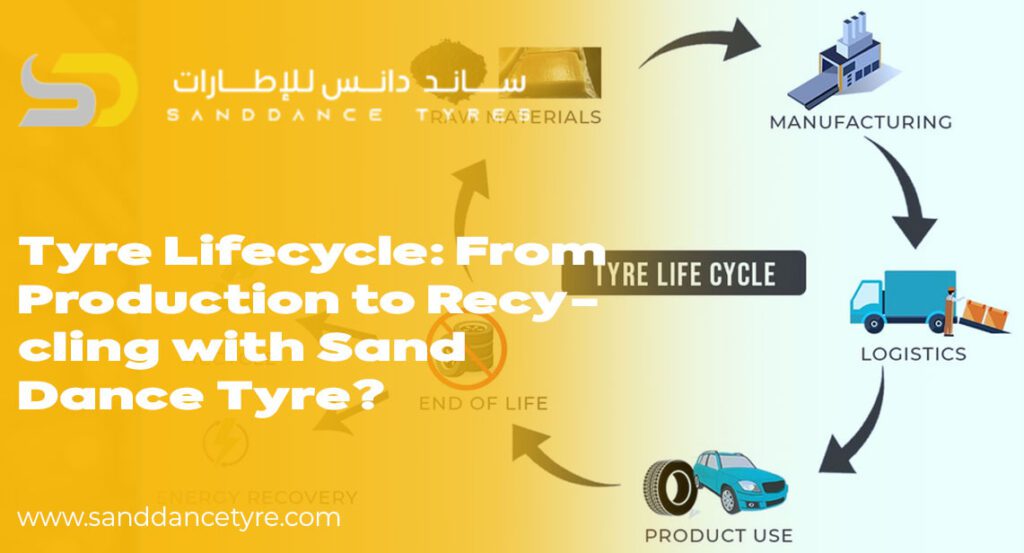
Every time out on the road, your car’s tires are putting up with heat, pressure, and road friction as they also support your safety and performance. But have you ever thought about what goes into a tire’s development before it hits the road and what happens to it after? At Sand Dance Tyre, we are of the mind that drivers who take part in the full tyre lifecycle do better at valuing in to play sustainable, safe, and responsible disposal practices in the UAE’s dynamic automotive scene. Read More: Budget Tyres Desert – Can They Handle Dubai’s Extreme Trips? Tyre Lifecycle: From Raw Material to Road-Ready Product The tyre lifecycle begins way before you put them on your vehicle. We start with the acquisition of raw materials tyres, which mainly are rubber, both natural and synthetic. Natural rubber is obtained from rubber trees, and synthetic from petroleum, which we process via chemical compounds to add strength and elasticity. Also, we mix in carbon black, steel, textile fabrics, and chemical additives, which we do to give tires the wear resistance they need for the extreme temperatures and varied terrain we have in the UAE. Once materials are put together, the manufacturing process goes into forming what will become the tread, side walls, and inner linings, which are the elements that make up the tyre. They are put together and then placed in a mold, which is subject to high heat, thus shaping the tire’s structure and putting in the tread pattern. After going through in-depth quality control and safety inspection, the tire is put out for distribution and sale. At Sand Dance Tyre, we have a large selection of tires that have gone through those in-depth processes, which also see to it that every unit meets international safety and durability standards. Life on the Road and Performance Wear Once a tyre is fitted to a vehicle, it goes into what we term its active life, which is for the most part between 40,000 to 80,000 kilometers, which varies by tyre type, driving habits, and road conditions. In the UAE, we see that tires put into service experience progressive wear of the tread, sidewall stress, and heat aging. In some cases, the tyre lifecycle in the UAE may be reduced if proper maintenance via inflation, wheel alignment, and rotation is not practiced. As tires reach the last third of their tread life, they begin to see performance issues. Braking distances lengthen, fuel efficiency goes down, and wet traction performance suffers. This is a critical part of the tire’s life cycle. It is in this stage that many accidents happen due to worn-out tires, which should have been replaced. At Sand Dance Tyre, we provide tread depth inspections, which will help you determine when it is time for a replacement. We at Sand Dance Tyre put your safety and performance first. Tyre End-of-Life and Environmental Impact When a tyre outlives its usefulness, it reaches what is at present called the end of life. Also, we see that many worn-out tyres end up in landfills or open storage, which in turn causes great environmental damage. Tyres are non-biodegradable, and when left unmanaged, they may trap rainwater, cause fire hazards, and, over time, emit harmful chemicals. However, we see in rubber recycling a great sustainable solution for waste reduction and promotion of circularity in the tyre industry. At Sand Dance Tyre, we are behind initiatives that take end-of-life tires and turn them into rubberized asphalt, playground surfaces, athletic tracks, and also into construction materials. Also, we are conserving raw materials and, at the same time, we are lessening the environmental impact of tire disposal. In the rubber recycling process, tires are ground out into chips or crumb rubber, which is put to new uses. Also, some tires are retreaded, which gives them a second go if the casing is still in good condition. That step in the tire cycle is at times ignored, but is very much a key element in the reduction of the carbon footprint of today’s transport. Driving Change: Sand Dance Tyre’s Commitment to a Responsible Tyre Lifecycle At Sand Dance Tyre, we do more than sell tyres; we are in the business of responsible tyre ownership. We assist you in the choice of high-quality tyres which are built from the best raw materials, and we also educate you on proper tyre care and disposal. Our team is on top of the UAE’s regulations, which include tire age, tread depth, and disposal, which we in turn pass on to you, so your vehicle is not only performing at its best but also operating within environmental guidelines. We also work with recycling organizations that offer tire return programs, which, for our customers, is a convenient solution for getting rid of old tires. Through our support of tyres at end-of-life initiatives and green practices, we aim to be at the front of the pack in terms of responsible mobility. Understanding the full spectrum of your tyre lifecycle will have you making better, safer, and more sustainable decisions. At Sand Dance Tyre, we are your guide through each stage from the showroom to the recycler — we smooth your ride and reduce your impact. FAQs 1. What is the tire wear-out rate in the UAE? Usually between 40,000 to 80,000 km, which may vary with driving conditions and maintenance. 2. When do I know my tyre is at the end of its life? Look out for worn tread, cracks, vibration while driving, or if the tire is over 5 years old. 3. Can tires be recycled in the UAE? Sure. Many recycling companies use tires as a resource for making rubber material for roads, playgrounds, and industry. 4. What’s the importance of tyre disposal to the environment? Improper disposal causes pollution, fire hazards, and mosquito breeding. Recycling, in turn, decreases these risks and also promotes sustainability.
Budget Tyres Desert – Can They Handle Dubai’s Extreme Trips?
In a metropolis like Dubai, which is a mix of luxury and extreme natural settings, we see that planning a desert trip comes into plays a very large role in what vehicles you bring. Also very much up for debate among local drivers and off-road adventurers is the issue of do budget tires live up to the performance that the rough terrain requires of them. The rolling dunes, the extreme heat, and the unpredictable paths of Dubai’s deserts require tires that have great wear resistance, grip, and that also perform well in high heat. But does that mean that budget tyres desert trips are right out? Read More: Budget Tyres Desert – Can They Handle Dubai’s Extreme Trips? Hot Road Budget Tyres Desert Reliability in Dubai’s Heat Changing Perceptions of Budget Tyres When it comes to desert driving, what people picture is 4x4s that have rough all-terrain tires. These tires are made to handle sand that shifts, heat that builds up, and stress that the terrain puts on them. While premium tires do that job almost too well, we are seeing the budget tyres desert the market as they grow in quality. What we used to think of as budget, which is not known for great performance, well, those brands are improving their engineering to put out tires that do well at high temperatures and also do a good job of getting traction in soft sand. Where Budget Tyres Still Fall Short However, we see that which performance differences still exist. In desert-like settings, the performance results of budget tyres desert report that indeed they do well enough on hard-packed surfaces and light off-road, but in deep sand, their performance tends to drop off. Also, the rubber used in budget models may not have the same heat resistance as in the better quality tires. This is very much the case in Dubai, which sees temperatures over 45°C and road surfaces that may get even hotter. City Heat vs Desert Heat – A Tough Environment In summer, driving in the city or on Dubai’s highways puts great stress on tires. The asphalt gets very hot, and tires have to maintain their structure at the same time, performing well in terms of control and comfort. That is the role of what we term hot road budget tyres. Some of the more recent budget models feature silica in the compound and improved tread designs, which in turn better dissipate heat and reduce rolling resistance. Heat Resistance and Tyre Composition Still, not all budget tyres desert are indeed tested for UAE-like conditions. Tyres imported from cooler climate areas may perform below par when put in hot weather. We see that sidewall cracking, tread separation, and uneven wear are more common in such cases. At the same time, some budget tyre brands do put out products that have done desert testing and do very well under moderate use, also when vehicles are maintained properly and tyre pressure is adjusted for off-road use. Trip Durability and the Lifespan of Budget Tyres Desert Conditions How Long Will Budget Tyres Last in the Desert? Durable tires are what you need for desert travel. From a short off-road trip to a drive that takes you from Dubai to Liwa, tire wear out fast. Many drivers question which budget tires will last the distance on multiple desert trips and which ones may fail on us. Maintenance Makes a Difference While premium tires may give you 40,000 to 60,000 km of reliable service, budget tires usually do not last as long. But should you maintain them properly, that is to say, keep them at the right pressure, get them balanced and aligned regularly, and rotate them at the first sign of wear, some budget tires will put in acceptable service for desert use. The main thing is to choose budget models that are labelled for all-terrain or off-road use. Also, see to it that the tire still has good tread depth and is not close to its expiration date, as old tires are more prone to failure in hot weather. Our Expert View on Sand Dance Tyre At Sand Dance Tyre, we take a case-by-case approach. Not all budget tyres are created equal, but we have had some models do well in our performance tests and on the field. We put our customers’ driving habits, what terrain they expect to be driving in, and safety at the forefront of our advice. While we do recommend premium tyres for the frequent desert driver, we also see value in well-chosen budget tyres desert which may suit lighter to moderate adventure without a trade-off on safety or performance. Frequently Asked Questions (FAQs) 1. Are economy tires safe for desert driving in Dubai? Some economy tires do well for short desert trips, but they have to rate well in heat and off-road performance. 2. What is the issue with budget tires in hot weather? Risks of using such tires include reduced performance in heat, faster wear out, and blowouts if the tire isn’t designed for hot weather conditions. 3. How to increase the wear of budget tyres desert? Regular upkeep, proper inflation, and selection of tires that have been tested for desert use will greatly improve durability. 4. What is the performance of budget tires in off-road conditions and dunes? Only some all-terrain budget tyres will do for dunes. For the city, budget tyres do not do well in intense four-wheel driving.
How Tyre Supply Chain UAE Affects Availability
In our present connected world, tires do not simply leave the factory and go onto vehicles; they are a part of a very complex global manufacturing, shipping, and distribution network. In the UAE, the tire supply chain is no exception, and recent international events have brought to light how very vulnerable this chain is. We see in raw material shortages to port delays that any disruption may greatly affect tire availability, price, and customer satisfaction in the UAE. Understanding the dynamics of the tyre supply chain UAE is key for vehicle owners, fleet operators, and tyre retailers to better prepare for changes in product availability and pricing. The Global Tyre Supply Chain UAE: A Quick Breakdown The tyre industry uses a supply chain which includes: At any point in that chain, we see disruption, which in turn causes a ripple effect in the tyre supply chain UAE, which in turn sees inconsistent availability and price increases. Read More: The Science Behind Tyre Rubber Composition: From Raw Material to Road Major Factors Disrupting the Tyre Supply Chain UAE Let us look at what has been affecting the tyre supply chain UAE over the past few years. 1. Global Shipping Crisis Pandemics, port congestion, and geopolitical issues have caused shipment delays. We see that when container supply goes down or sea freight rates go up, tyre importers in the UAE bear higher costs or they have to wait longer. 2. Raw Material Shortages In large use of rubber and petroleum-based products, which is what we see in terms of production fluctuations (for instance of floods in Southeast Asia), play out in the tire manufacturing. This issue of supply then plays in for the UAE tire supply chain, which in turn sees stock issues. 3. Currency Fluctuations and Tariffs Currency exchange rate issues in manufacturing countries or growth in export tariffs have affected the price at the point of purchase of tires, which in turn we see passed on to consumers in the UAE. 4. Demand Surges and Panic Buying Whenever news breaks of delays or price increases, we see consumers and businesses panic-buy tires, which in turn depletes existing stock and puts more strain on the already stressed tire supply chain in the UAE. How This Affects You as a Vehicle Owner If, as a vehicle owner in the UAE, you are affected by: Understanding these factors will help you to plan, which is the case when you are replacing all four tires or getting your fleet ready for the change of seasons. What UAE Distributors and Retailers Are Doing Tyre retailers and distributors in the UAE are going in a different direction. These strategies are putting the rubber to the road in the UAE at a time of global uncertainty. Conclusion The tyre industry in the UAE does not escape global issues. We see raw material shortages, delayed shipments, and political issues affecting every step of the supply from the factory to your garage. By the time it affects your favorite tyre brand’s availability and price, which, by the way, is true for daily commuters, commercial vehicle owners, and automotive businesses. We are at the forefront of this at Sand Dance Tyre as we work with sure-fire suppliers and we watch global trends, which in turn we pass on to you so you have the best info for what is happening in the ever-changing tyre world. Plan, book early, and turn to the experts to help you through the changes in the tyre market. FAQs Why are there tyre shortages in the UAE? In the UAE, we see that at times there are tyre shortages, which are a result of global shipping delays, raw material shortages, and also due to geopolitical issues that play a role in manufacturing and logistics. Tyre prices going up in the UAE? Due to the issues in the tire supply chain, which are a result of increased freight rates, raw material costs, and currency fluctuations, we are seeing tire price increases across all brands and categories. What is the best way to prevent tire issues that present in high-demand seasons? To prevent supply issues, get your tyres before the summer and winter months, which see the most demand. Also, at that time, go for what we have in your area, which we can reliably supply. Which tire brands weather the global disruptions best? Brands that have manufacturing units in the Middle East or strong local distribution networks are less likely to face severe tyre supply chain UAE. Is it safe to purchase tires online in the UAE during supply chain disruptions? Sure, however, check that the seller is reliable and is updating stock info, which is an issue in the UAE at the moment. Also see return policies in case of out-of-stock products.