How Nitrogen Tyre Benefits High‑Mileage Drivers
Nitrogen Tyre Benefits: If you are on the road a great deal, you are always looking for what will put less strain on your maintenance budget, improve fuel efficiency, and also, in turn, will improve tire life. To that end, which often goes under the radar, is nitrogen tire service from better pressure retention to reduced wear and enhanced safety, which is a high point for the UAE’s high mileage drivers, and a big plus. Also, whether you are a daily commuter or head up a fleet of vehicles, switching out to nitrogen from standard air may be a game-changer. What are Nitrogen Tyre Benefits for Frequent Drivers In terms of what nitrogen does best, it is maintaining the same tire pressure for a much longer time. What we see is that nitrogen molecules are larger, which in turn means they pass through rubber tire walls at a slower rate. For those who are always on the road, that is, high-mileage drivers, this translates to less frequent pit stops for pressure check-ups and, in turn, better, consistent performance from your car. Additional nitrogen tyre benefits include: Also includes: In a place such as the UAE, which has very hot weather and long drive times, we see these benefits even more so for daily and commercial drivers. The Science Behind Nitrogen Tyre Benefits Many drivers are confused as to what it is that makes nitrogen better than normal air. Here goes the science which supports nitrogen’s performance. Slower Pressure Loss Air has oxygen and water vapor, which tend to pass out through tire rubber more easily. Nitrogen is a dry gas with large molecules that leaves the tire at a slower rate, which in turn maintains pressure for long periods. No Moisture Inside the Tyre In humid climates, regular air puts moisture into the tires, which in turn can cause corrosion of the internal tire components and wheel rims. Nitrogen is dry, which completely prevents this. Temperature Stability Tyre pressure goes up as the temperature goes up. With nitrogen, we see better stability in pressure, which is why it is best for long-distance highway driving, where heat buildup is great . That is a key benefit for high-mileage drivers in the UAE. Reduces Oxidation Oxygen in compressed air is out to cause rubber to break down, which happens over time. Nitrogen, which we use instead, eliminates this issue and, in turn, preserves tyre integrity for the long term. These are the nitrogen tyre benefits, which add up to a better, safer, and more efficient drive for those who are on the road for long stretches. Real-World Applications in the UAE Many commercial fleets, taxis, and delivery services in the UAE have seen the adoption of nitrogen inflation for the term ahead. In a summer that is harsh and a landscape of vast desert highways, the nitrogen tyre benefits also play a role in reducing opex and improving safety. At Sand Dance Tyre, we have it reported to us by our customers that they are seeing greater time between tire services, improved tire wear-out performance, and also that they notice a great improvement in fuel economy. Drivers who are on the higher end of mileage report to us that they wish they had made the switch to nitrogen inflation earlier. Conclusion: Maximize Mileage with Nitrogen Tyre Benefits For high mileage drivers, every meter counts, as does every liter of fuel, which is why we see value in what nitrogen tire service has to offer. From better fuel economy to reduced tire wear and improved safety, nitrogen tire service presents a practical and affordable solution for better vehicle performance. If you are traveling great distances in the UAE or manage a fleet, we have seen that switching to nitrogen can do great things for your tires’ life, which in turn saves you time and money. Come to Sand Dance Tyre today to find out more about our nitrogen inflation services and begin to see the difference for yourself. Read More: Tyre Cracking Prevention in Sunny Climates: Expert Tyre Maintenance Tips FAQs 1. Is air pressure in tires really better than using nitrogen? Yes, we see that one of the key benefits of nitrogen in tires is better pressure retention, which in turn produces improved fuel efficiency, extended tire life, and less maintenance. 2. How frequently do you need to refill tires with nitrogen? Compared to air, nitrogen leaks out at a much slower rate. In the case of most high-mileage drivers, they report putting in tires only at the time of routine check-ups. 3. Can I use air instead of pure nitrogen? It is best to use pure nitrogen for maximum benefit. But if you have to add air, that is also fine for the tire. Just get back to pure nitrogen as soon as you can to see full benefits. 4. Does air inflation cost more? Yes, at first, nitrogen inflation may go up in price from regular air. But in the long run, we see better fuel economy and extended tire life, which makes it a cost-effective solution for high-mileage drivers. 5. What kind of vehicle can use nitrogen in the UAE? Sure. We see that whether you are driving a small car, an SUV, a delivery van, or a luxury car, the facts of nitrogen in tires are applicable to all of these, which also includes those vehicles that put in a lot of mileage. Also, we note that.
Tyre Cracking Prevention in Sunny Climates: Expert Maintenance Tips
Tyre cracking is an issue which is very much present and often ignored in hot and sunny regions like the UAE. While the heat may present a comfort issue for drivers, it also affects tyre health, which in turn affects safety. Cracks in tyre side walls or in the tread can lead to blowouts, poor handling, and also to the wearing out of the tyre faster. In this blog, we will look in detail at tyre cracking prevention in sunny climates, and we will also put forth simple maintenance tips which will help you to avoid expensive replacements or safety issues. Read More: How Wet Grip Tyre Rating Impacts Safety in the UAE Rain What Causes Leads to Tyre Cracking Prevention in Hot Climates. Before we get into tyre cracking prevention, we must understand what causes tyre cracking, which is a significant issue in high-temperature environments. Tyres are made from rubber, which, over time, degrades naturally. When exposed to great heat and UV rays, this degradation is accelerated, which in turn causes the rubber to lose its elasticity and to develop tiny fissures. Here are the main causes of tyre cracking in sunny climates: Park in the Shade or Use Tyre Covers One way to see your tires’ life extended is by reducing their time in the sun. Park in the shade when you can or in garages. Should you have no choice but to park outdoors, put in a UV-resistant tire cover. These covers act as a barrier to harmful rays and slow down the cracking. Regularly Clean Your Tyres Dust, sand, and chemical byproducts from roads may wear away at the tire’s finish over a time frame which is many years. Use water and a mild detergent for the task at hand. Don’t use strong chemicals or petroleum products, as they will remove the protection that natural oils supply for the rubber. In hot climate conditions, a once-per-month cleaning is sufficient to keep that rubber in tip-top shape. Apply a Quality Tyre Protectant Using UV-protected tire protectants is a great idea for the prevention of tire cracking. These products add back lost moisture to rubber and also create a protective layer against the sun. As for the choice of tire conditioner, get one that is based on silicone and which also has a UV protection label. Maintain Proper Tyre Pressure In very warm weather, we see great changes in tire pressure. Overinflation and underinflation also cause uneven wear and cracking. We recommend you use a digital pressure gauge weekly and also follow the manufacturer’s PSI recommendations. Also note that overinflated tires may experience more cracks in the side walls due to increased tension. Rotate and Balance Your Tyres Tyre rotation and balancing out, which in turn even out the wear of all tyres. What we see with uneven wear is that it puts stress on certain areas, which in turn increases the risk of cracks. As a general rule, we do well to rotate your tyres at the 8,000 to 10,000 km mark or as your vehicle manual recommends. For the most part, what we do for the tyre cracking prevention is to stick to a proper maintenance schedule. Avoid Prolonged Inactivity If your car has been standing for long periods , especially if it is outdoors, the tires will develop flat spots and dry out. It is a good practice to move the car around a little or take it out for a short drive every few days. That way, the rubber stays flexible and the pressure is distributed even. Replace Tyres That Show Signs of Age Even at good tread depth, tires which are over five to six years old should be checked. If you see cracks in the side wall, between the treads, or any sign of dry rot, it is time to think about replacing them. In sunny climates, tires age out faster than in cooler areas. Final Thoughts At Sand Dance Tyre, we are aware of the issues car owners face in the UAE heat. Whether you are a daily driver or only use your car seasonally, do not sacrifice your vehicle’s safety. With the proper care routine and preventive measures, tyre crack prevention is a simple and economic issue. We have expert staff that will do a tire check for you, recommend the best products, and we will help you to be safe on the road. Frequently Asked Questions—FAQs Which are the best products for tyre cracking in the UAE? In the UAE, which has the best products for tire cracking, we see UV-resistant tire protectants, silicone-based conditioners and anti-ozonised sprays. At Sand Dance Tyre, we put forth only what the industry has to offer for the harshest of heat and sun conditions. In what range of time should I check my tyre pressure in summer in Dubai? In places that see high temperatures, like in Dubai, you should check your tire pressure weekly. Temperature changes, large and small, will affect PSI. Also, by doing regular checks, you prevent overinflation, which in turn will cause the tires to crack. Do I have to replace my cracked tires, or can they be repaired? Minor surface cracks may be fine, but when it comes to large or very visible cracks, that’s a different story, which is when the integrity of the rubber is in question. Also, in the great majority of cases, which is to say in most environments, but especially in hot climates, repair of a cracked tyre is not recommended, which is why we recommend a new tire. Is it a widespread issue that all tyre brands are affected in hot climates? Yes, I see that all tyre brands do get cracking in hot and sunny weather. Also, premium tyre brands do indeed put in advanced compounds, which in turn resist UV and heat for a longer time. At the same time, it is a fact that we must implement cracking prevention for all tyre brands regardless of which you choose.
How Wet Grip Tyre Rating Impacts Safety in the UAE Rain
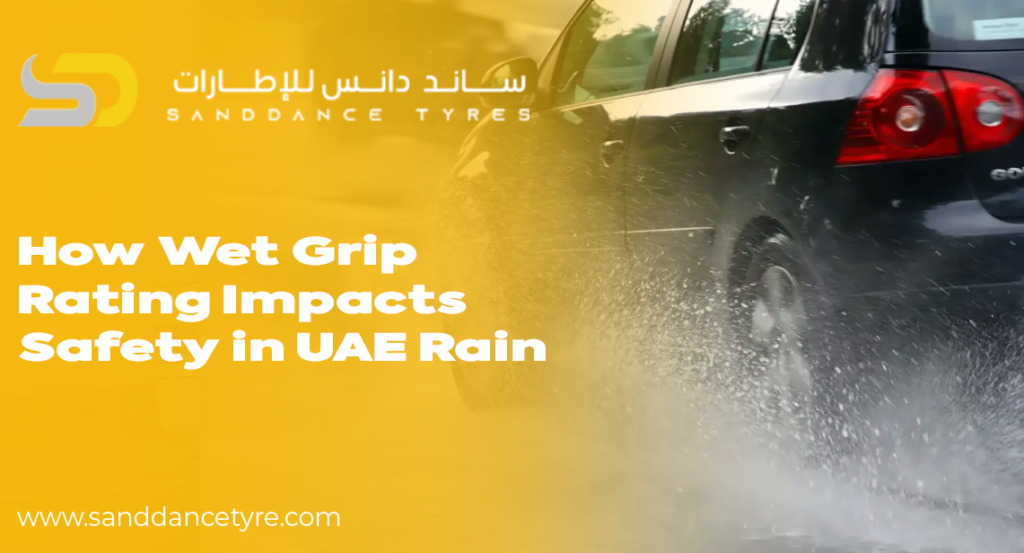
UAE is a place of arid desert climate and experiences rain frequently but is hazardous on roads. Many cities in UAE like Abu Dhabi, Dubai, Sharjah experience slippery roads and dangerous driving conditions even in light rain. This is where UAE drivers need a wet grip tyre rating for a crucial safety factor. What Is Wet Grip Tyre Rating? A part of the EU tyre label to measure the performance of tyres on wet roads is the wet grip tyre rating. The measurement of performance is shown in a rating from A (best) to E (worst), showing how well a tyre can stop on wet roads. This rating is specifically crucial in the region where rain happens suddenly and not frequently catches drivers off, especially in the UAE. Why It Matters in the UAE’s Rainy Weather Regions where rain frequently is not experienced, it can lead to unexpected and flashy floods and water-logged roads. Roads are already filled up with oil, sand, and dust where rain water makes it more worse and slippery, usually called “black ice of the desert”. In such cases, braking efficiency and road grip play their own role whether in safety or potential accidents on wet roads. Let’s see how wet grip tyre rating directly impacts safety inthe UAE rain: 1. Shorter Braking Distance A car which is equipped with A rated wet grip tires may stop up to 18 meters shorter than one which has an E rating at speed of 80 km/h on wet roads. That difference can be the difference between life and death in an emergency. 2. Better Handling and Stability Wet performance also plays a role in cornering which we see especially on roundabouts and exit points at which tires tend to lose traction. Tyres with better ratings improve road contact, which in turn gives you better handling. 3. Hydroplaning Resistance Tyre models that have better wet grip tend to perform great in shedding water off the tread. This in turn reduces the chance of hydroplaning which is when the tyre loses full contact with the road. How to Check the Wet Grip Rating of Your Tyres Most of the tyre manufacturers show the wet grip tyre rating on sidewall label or in product specifications. Check your wet grip rating: Sand Dance Tyre provide wide range of premium wet grip tyres in UAE including the brands like Michelin, Continental, Pirelli, and Bridgestone, with verified ratings. Tips for Safer Driving During UAE Rain Safety habits are crucials during rain after the best wet grip tyres. Get Expert Help at Sand Dance Tyre As we speak to issues of worn out tires which require to be replaced and also for those looking to upgrade for better performance in the rain, Sand Dance Tyre has you covered. We at Sand Dance Tyre in Dubai and all over the UAE put our experts at your service to help you choose the right wet grip tyre rating for your make and model of car, your style of driving, and what you are willing to spend. We provide tyre installation, rotation, balancing, also we include free pressure checks which we do for you. Your safety is what we live for. Drive smart, drive safe with wet grip confidence. Read More: 6 Steps to SUV Tyre Selection UAE FAQs What is the top-rated tyre for rain in the UAE? The top-rated tyre for wet performance is A, which features the shortest braking distance and maximum safety on UAE roads. Do I need to have wet grip tires if we don’t get rain very often? Yes. In the UAE which does see rain at a low frequency it when it does precipitation does cause very slippery roads which in turn makes wet grip rated tires very much a requirement for better braking and hydroplaning control. How do I determine the wet grip tyre rating? Check out the EU Tyre Label on the tire’s side wall or product info. See the “Wet Grip,” which is rated from A to E. Which brands perform the best in the wet form in Dubai? Top of the line brands we have are Michelin, Pirelli, Bridgestone, Continental, and Goodyear all of which are at Sand Dance Tyre.
6 Steps to SUV Tyre Selection UAE
The right SUV tyre selection UAE is crucial for your safety and fuel efficiency, especially when you drive from sandy dunes to long highway commutes. This blog will delve into the guide to match your tyre type to your driving style and tough climate, and read key features like tread depth. SUV Tyre Selection UAE: Choosing the Right Tyre That Matches Your Driving and Climate SUV tyre selection in the UAE is the most hectic process because tyres in Europe and America can not do well in the UAE due to scorching heat and the very dry desert in America. You should buy tyres that are compatible to over 40 degrees Celsius, a tread design to push away sand, and reinforced sidewalls for better resistance to curbing impact. Identify Your Primary Driving Environment The majority of SUV drivers alternate between these two main terrains: Driving Mode Tyre Choice Benefits Daily Commute Highway tyres Reduced resistanceFuel efficiency Weekend Trip Off-road tyres Deep treadStone ejector grooves Compared to heavy all-terrain tires that detract from pavement comfort, you’d better choose off-road tires that you can switch off a bit for some off-road action in an 80/20 ratio in favor of office-to-dune bashing. Tread Depth The new issue rise in tires is a tread of 8-9mm, and in off-road tyres, it is 12mm. UAE rainy days are a little bit hectic and dramatic, so the deeper grooves of tyres remove water and lower hydroplaning risks. You should check your tread depth at every service and if your tread is below 3mm, it’s a time to replace. Contact Sanddance Tyres for ensuring your tyres are in a well condition. Durability Markers High temperatures in the UAE can break tyre rubbers faster. Always look for: Balance Your Ride with Road Noise Look for a top tyre manufacturer’s expert in making variable pitch or silent groove designs. Size and Speed Ratings Analyze what your wheel can handle or choose the load index that what factory says. Upsizing without knowing these factors can damage handling. Keep your O.E. rolling diameter within 3% and ensure speed rating over 201km/h for UAE highways, and load capacity should be at least 109, that is 1030 kg on mid-size SUVs. Tyre Rotation and Seasonal Pressure Stop at 16-18 psi due to the requirement of desert expeditions to float and inflate at highway speeds. Conclusion SUV tyre selection UAE provides you with knowledge about the assessment of your driving habits, key features of your car tires like tread depth, durability, ride comfort, and the knowledge of the manufacturer’s sayings about size and rotation. Spend your money wisely to see the best results in terms of better fuel efficiency, quiet rides, and safe adventures, whether you are driving on highways, long commutes, or in stormy weather. Get your free personal consultation or tire change, book your appointment now with Sanddance Tyres for expert guidance and services to get the best SUV tyre selection UAE. Read More: Wheel Width Tyres: What’s the Impact on Performance and Safety? FAQs Q1: What are the best SUV tires available in the UAE? A: Look for high-end highway tires with extreme temperature ratings, silica in the compound, and a tread wear UTQG of 400 or more, such as the Michelin Latitude Tour HP and Bridgestone Dueler H/L. Because of these characteristics, the rubber performs well on asphalt that is 50° C while maintaining ride comfort. Q2: Can you use your off-road tires for a daily commute in the city? A: They’re not flawless, but they’re safe. Off-road tires may wear out more quickly on smooth pavement, reduce fuel efficiency, and increase road noise. Opt for highway SUV tyre selection UAE if you don’t spend more than 40% of your driving on gravel or sand, and utilize lower pressures only on trails. Q3: How often should I replace my SUV tires in the hot weather of the UAE? A: Even with acceptable tread depth, replace your tires every four years or 60,000 kilometers, whichever comes first, because heat accelerates oxidation. Additionally, look for sidewall microcracks, which indicate that the compound has hardened. Q4: Does tire wear affect how we brake on wet roads in Dubai? A: Yes, it has also been observed that tires with 4 mm tread shatter 15% farther during testing than fresh tires on wet asphalt. What we notice is that as soon as you dip below 3 mm in tread depth, the risk of hydroplaning increases dramatically, as is the situation directly after November rainstorms.
Wheel Width Tyres: What’s the Impact on Performance and Safety?
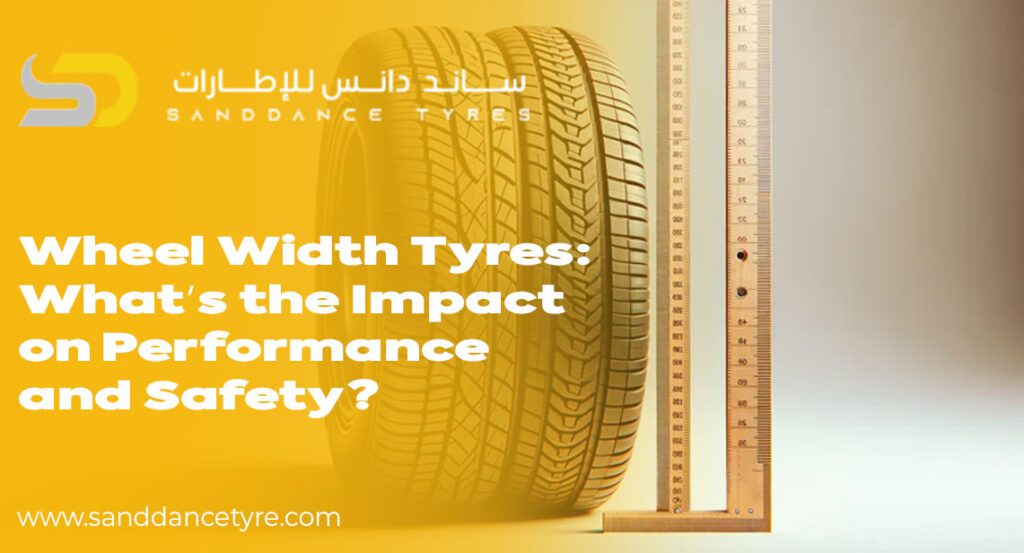
When it comes to the choice of tires, many UAE drivers go for brand name, tread pattern, or rubber quality, but we see little attention paid to wheel width. However, the width of your tires around your wheels plays a large role in your car’s performance and safety. Whether you’re a motorway cruise control, a desert explorer, or an urban commuter, what you put on your rims will affect your car’s grip, comfort, fuel economy, and also your braking distance. In this article, we discuss how rim width and tire sidewall dimensions play a role in your driving experience in the UAE. Read More: How to Choose the Right Caravan Tyres for Safe Towing Understanding Wheel Width Tyres Fitment Wheel dimension, which is the term used for the width of a wheel, refers to the measurement from the inner to outer edges of where the tire sits on the wheel. The tire must fit within a certain range regarding that wheel dimension for best results. Should the tire be either too narrow or too wide, it may cause issues with handling, premature wear out, or blowouts. In the UAE at where we see high speed and very hot temperatures, proper tire fitment becomes even more important for your safety as a driver. How Rim Width Tyre Selection Affects Grip A larger rim in combination with a proper tire size will present a greater contact patch, which is the area of the tire that touches the road. This, in turn, usually increases grip, which in high-speed corners or during emergency stops is very useful. At the same time, though, very wide tires may damage the sidewall and reduce handling precision. What we find is that which wheel width and tire size to use for best results is key, very important for UAE drivers who see lots of quick lane changes and aggressive braking on the highways. Impact on Tyre Sidewall and Ride Comfort The tyre sidewall is a key element in absorbing road shock and improving ride comfort. As you increase wheel width, you also have to go with a shorter sidewall to maintain the same overall tyre diameter. This results in a lower profile tire, which is better, although not as well — reports steering input, but at the same time it does so at the expense of what which was before was great cushioning before. In the UAE, which has mostly smooth roads but also very wide temperature ranges, this is a very significant issue. Thin walls also put out more heat and will wear out faster if proper matching is not done between the tire and the way you drive. Handling Margin and Steering Precision Wider tires on larger rims present better handling, which in turn gives you quick steering response and improved vehicle control. This is very much the case with performance cars or those that see a lot of high-speed travel, a very common scenario in the UAE. But should you go too far without also changing out your suspension or alignment, you may run into issues like tyre rub, loss of steering precision, or uneven wear. That’s why professional advice is so important when you do wheel and tire modifications. Tyre Flex and Safety Risks Incorrect tyre size choice may cause increased tyre flex, which in turn in lead to being true, especially in turns or at heavy loads. We see that excessive flex of the tyre side wall causes instability, heat build up and structural stress. In hot climates, as we do in the UAE, this also plays a role in accelerating tyre failure or reducing grip during fast moves. Also choice of tires, which are too thin for your wheels, may cause the side walls to stretch out of shape, which in turn weakens the rubber out and out and presents serious safety issues. Fuel Efficiency Considerations Tyre size does play a role in rolling resistance, which in turn affects fuel economy. Wide tyres see to it that there is more friction, which in some cases may reduce efficiency by a small degree. Although in day-to-day driving you may not notice the difference, for those who do a great deal of driving, especially between Emirates or in fleet vehicles, you will see that it adds up. Tread on the side of narrow tires for better fuel efficiency, but be aware you may sacrifice some grip and performance. In the UAE, what we see is that drivers have to play this out based on what they use their car for, what type of vehicle it is, and what their personal preferences are. Appearance vs. Function: What Matters More? Many auto owners go for wider wheels for the look aggressive attitude, sporty appearance and better road presence. But look is not the only thing which should play a role in your choice. If the wheel and tire width don’t add up technically it can affect performance and safety. At Sanddance Tyres we provide advice on function as well as form, so your car looks great and performs safely. How to Choose the Right Wheel Width Tyres If you prefer comfort, fuel efficiency, and long tyre life, go with OEM specs or a little narrower. For improved handling, firmer steer response, and better traction, a wider tyre may be the choice you seek, but do it with proper wheel and suspension adjustment. In the UAE’s heat, always put to use tyres that are made for high-temperature performance. Bottom Line Your tire and wheel choice is what makes or breaks your car’s performance and safety. Wide wheels may add to the look of the car and performance, but also affect ride quality, fuel economy, and tire wear. In the UAE, which is known for its speed, heat, and poor road conditions, it is very important to choose the right tires. At Sanddance Tyres, we help you out in finding the perfect tire size for your driving style and vehicle, which in turn will give you the
How to Choose the Right Caravan Tyres for Safe Towing
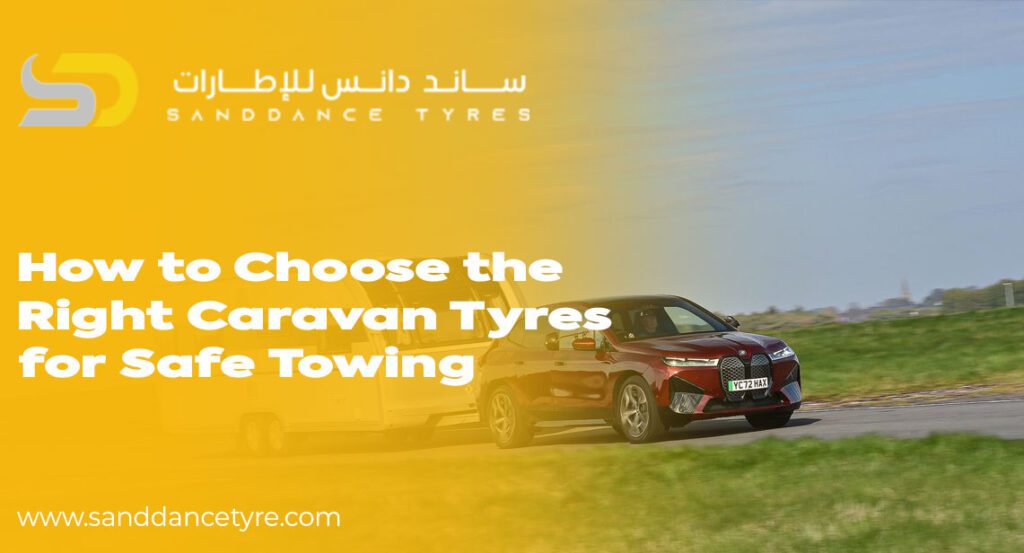
Towing a caravan around the UAE is an adventure which may allow you to explore the desert roads, head out for a family camping trip, or pull a mobile business setup. But the safety and success of your trip depend very much on what you choose for your caravan tires. Unlike car tires, which are for the most part, caravan tires are put to greater loads, extended travel, and also have different handling issues. This guide we put together to help you choose the best caravan tyres in the UAE, which includes trailer tire selection, load rating, and the features which will ensure a safe and reliable tow. Read More: Do Eco‑Friendly Tyres Perform in UAE Heat? Why Caravan Tyres Are Different from Car Tyres Caravans have tires that are made for heavy loads and perform well under stress. A car’s tires support the weight of the vehicle itself, but a caravan’s tires bear the weight of the entire trailer as well as what you put in the caravan. We put a great deal into our caravan tire design we use stronger side walls and stiffer structures to get that high performance out of them at high load levels. That said, it is very dangerous to put regular car tires on a caravan you risk blowouts, sway, or full-scale tire failure, which is very common in the heat we see in the UAE. Understanding Trailer Tyre Choice Your choice of trailer tyre should be based on your caravan’s weight and use. First off, check your caravan’s manual for the recommended tyre size and load index. Get tyres that meet or exceed those values. For a towable car, choose tires that have strong sides, high load capacity, and the right kind of tread for what you usually drive on which may be smooth highways or desert gravel. In the UAE with our large-scale towing do in fact go for reinforced tyres, which give you that extra peace of mind. Load Range Tyres and Weight Ratings Tyre load range indicates what weight the tyre is safe to support at a given inflation level. In the case of caravans, the tyres you use must match the gross vehicle weight rating (GVWR) of the trailer. Inadequate load ratings are a main cause of tyre blowouts. When towing, always choose caravan tyres which have a load index that matches or goes beyond your caravan’s full weight when fully loaded, including water tanks, gas bottles, and supplies. How Reinforced Casing Increases Stability Caravan tyres, in our experience, have a reinforced casing, which is what gives them their strength against heavy loads. We see this reinforcement, which also helps maintain the tyre’s shape while on the highway, which in turn reduces wobble and improves handling. In the high temperatures of the UAE, we see that reinforced casings do a great job at fighting internal heat buildup and structural breakdown, which in turn keeps you safe during those long transports across the Emirates. Also, these tyres do a great job at what they do, which is to maintain a straight line of travel and suppress trailer swing. Highway Stability and Safe Towing at Speed In the UAE, which is what we are talking about here, we see that when it comes to caravans, what you are into is long stretches of smooth and fast highways. Your tires have to perform at high speeds, and also when you apply emergency brakes. Highway stability is what you want to see; it is that which keeps your caravan in step with the tow vehicle and out of left field. Proper choice of tires, which in turn provides this stability, does so through even weight distribution, responsive tread, and just-right side wall stiffness. Tyre Pressure and Heat Management in Desert Conditions Desert climates put great stress on caravan tires. The sun heats road surfaces which in turn raises internal air pressure greatly. It is key to properly inflate your tires based on load and temperature. Over inflation can reduce traction, under inflation increases flex and heat. Choose tires which have heat resistant rubber compounds and also check pressures before you go, also if you are to carry extra equipment or water tanks. When to Replace Caravan Tyres Even if caravans aren’t used often, their tires can age and become unsafe. Sun exposure, long-standing in one place, and dry conditions cause sidewall cracking and rubber breakdown. Tires that are over 5 to 6 years old, even if they still have good tread, may not be safe. Before each trip, check your tires for cracks, bulges, or uneven wear. At Sanddance Tyres, we help caravan owners check the health of their tires and we recommend replacement based on age and use, which includes visual inspection, not just tread wear. Matching Tyres to UAE Driving Conditions Not all caravan tyres are the same. Some are for gravel and off road terrain and some are what we call highway rated. In the UAE which is mostly smooth highway that’s what most travelers deal with which is why we push the highway rated tyres. But if you are into off-roading or will be traveling on coastal and desert tracks, you may want the ones with the more aggressive tread and side wall protection. At Sanddance Tyres, we help drivers choose the best tyre for their car and trip. Bottom Line Choosing proper caravan tires in the UAE is more than just looking at size, it is also about load range, reinforced casing, and performance on rough desert roads. For a safe, smooth, and reliable ride, we recommend you to put on tires that are rated for towing and which also do well in the special heat and driving conditions of the area. At Sanddance Tyres, we present a full range of caravan tires that we designed to do well on the UAE’s highways and in the desert. Stop by before your next trip, we will help you to tow with full confidence. Frequently Asked Questions Can
Do Eco‑Friendly Tyres Perform in UAE Heat?
With the growing global focus on sustainability, many UAE drivers are exploring environmentally friendly options for their vehicles, including eco-friendly tyres. These tyres are designed with sustainability in mind, using green materials and manufacturing processes to reduce environmental impact. But one important question remains: can they withstand the intense UAE heat and deliver performance equal to conventional tyres? In this blog, we dive into how eco-friendly tyres work, how they handle high temperatures, and whether they’re a smart choice for UAE roads. Read More: How to Spot Tyre Belt Separation Early What Are Eco-Friendly Tyres? Eco-friendly tires are designed to decrease rolling resistance, fuel consumption, and CO2 emissions. We see that they put in sustainable materials like natural rubber, silica compounds, and recycled materials in the tread and sidewall. We also see that they are created for good grip, long wear, and a smooth ride, which also includes a smaller environmental impact. Also, some types of these tires focus on noise reduction and improved recycling at the end of the tire’s life cycle. How Do Eco Tyres Reduce Environmental Impact? The environmental benefit of eco tires is in the materials used and in performance. Green tire durability, which means they last longer and are replaced less often. Low rolling resistance, which in turn means your engine uses less fuel to put the car in motion, thus, to the environment we put out less CO2. Over time, that which adds up to a smaller carbon footprint. In the UAE, where we have many who log a great deal of kilometers on their car at home, these savings also have a large environmental and economic impact. How Do Eco Tyres Perform in UAE Heat? Heat is a key element in tyre performance, which is very much the case in the UAE. Also, we see that many green tires today are put together with eco-compounds, which do very well in high temperatures without a trade-off in performance. These compounds are put to play at preventing softening, cracking, or early wear, which are issues seen in cheaper or non-weather-adapted tires. Also, what we note is that large manufacturers now test their eco models in extreme situations, which include hot asphalt and desert heat. Do Eco Tyres Compromise on Safety or Grip? In the past, eco tires had issues of trade-off between grip, braking power, and sustainability. Recently we have seen great improvement in compound and tread design, which has lessened this issue. What we have today in eco tires is reliable performance in dry, fair to good in wet and consistent in cornering, which even includes in high temp environments like Dubai and Abu Dhabi. Also, although they may not outperform UHP tires, they are more than enough for everyday driving. Understanding the Role of Eco-Compound in High Heat An eco compound is a type of rubber mixed to reduce energy loss and improve heat resistance. Also these are tuned to maintain form and performance under stress. In the UAE which sees tire surface temps go over 60°C eco compounds do a great job at preserving tire integrity. This also makes them the best choice for long distance drivers and city commuters which are concerned with fuel economy and durability. Are Eco-Friendly Tyres Durable in Long-Term Use? Durable tires are what UAE drivers report to be the main issue. We do have smooth roads here but very high temperatures. What we see is that eco-friendly tires do in fact last longer, also when paired with careful driving and regular care. They also have lower rolling resistance, which in turn causes less heat to build up and slower wear of the tread. Also, what we note is that manufacturers put in reinforced sidewalls and modern tread patterns which they say will give you great performance over large distances. When Should UAE Drivers Consider Eco-Friendly Tyres? If your primary driving is on the highway or in the city, and you are looking to reduce fuel consumption and environmental impact, eco-friendly tires are the right choice for you. Also, they do very well for hybrid vehicles and fuel-efficient cars, which in turn have low rolling resistance that plays to the car’s strength. Should you be an aggressive driver, or you do a lot of off-road use, or you carry heavy loads often, you may want to look at other types of tires. But for the most part, our UAE drivers see great benefit from eco tires. Sustainability vs. Performance: Is There Still a Gap? Modern tyre technology has seen great strides, in which we see the gap between what is sustainable and what is high performance shrink. Although extreme performance tyres may still outperform eco-friendly ones on the race track, for the average daily driver, eco tyres do the job very well in terms of grip, ride comfort, and braking. Also, with the benefit of reducing your carbon footprint, these tyres are now a great and smart choice for conscious drivers in hot climates. Bottom Line Eco-friendly tires are a thing of the past in the UAE; they are a practical and smart choice for the sustainability-conscious driver who also looks at long-term value. Also, due to advanced eco compounds, we see reliable performance in the high temperatures we experience here, which in turn delivers better fuel efficiency and a lower carbon footprint without a trade-off in safety. At Sanddance Tyres, we put forward a range of eco-friendly tires which we have tested for the local climate, so you can have that green drive without a drop in performance. Frequently Asked Questions Do green tires do well in the UAE heat? Today, we see that modern eco tires are made with heat-resistant compounds, which do well at high temperatures, also in the Gulf climate. Do eco tires not have the same safety as regular tires? Not really. Today, we see that eco tyres do a great job in terms of grip and braking performance for everyday driving in very hot weather. What fuel savings can be
How to Spot Tyre Belt Separation Early
Tyres may present as in good condition on the outside, but internally, issues such as tyre belt separation may be developing, which will only become apparent later. This dangerous situation happens when the steel in the tire begins to wear away from the rubber, causing bulges, vibrations, or, in some cases, the tread to come off at high speeds. In the UAE, with our large amounts of highway driving and very hot weather, it is key to recognize the early signs of tyre belt separation to avoid accidents. This guide goes over how to identify these symptoms early and what you can do to stay safe on the road. What is Tyre Belt Separation? Tyre belt break-out is a term for when there is internal failure of a tyre, which in turn sees the steel belts which are within the tread begin to pull away from the rubber casing. This structural defect is brought forth by high heat, poor manufacturing, overloading, or underinflation. As the belt begins to come apart, the tire’s shape is affected, which in turn causes off-balance vibration or bulging. If left unattended, the separation will progress until full blow out, which is very serious at highway speeds a great risk for drivers in the UAE. What Causes Internal Tyre Defects Like Belt Separation? Many issues lead to internal tire failure. A large factor is extreme heat, which is a common issue on UAE roads. Long-term use at high speeds, which in turn causes heat buildup as well as continuous driving for great lengths of time, causes the rubber to soften and the plies to separate. Also, we see that improper inflation, impacts from potholes or curbs, using tires beyond their date of manufacture, and defects at the point of manufacture play a role. These all break down the internal structure, which in turn causes separation. Early Signs You Shouldn’t Ignore One of the primary early signs is a bulge out of the tyre’s tread or sidewall, which may present as a bubble. What we see is air and pressure that gets trapped under the separate belt layer, which causes this distortion. Also, you may see vibration or wobble in the steering wheel or in the cabin, which is a result of the uneven surface created by the separation. At times, you may notice uneven wear of the tread or a loud thump, which is a sign that the belts inside the tyre are out of alignment. How Vibration Indicates Potential Belt Issues When steel belts in a tire begin to shift or separate, the tire’s balance is disturbed. This unbalance puts out a vibration which is felt in the steering column at certain speeds or during turn. Many drivers think this vibration is from alignment or suspension issues which is not always the case it may be a sign of internal tire problems. If the vibration is along with visible tire damage it is best to stop immediately and take the tires in to a professional for inspection. How to Identify a Bulge Tyre A telltale sign of tyre belt separation is a bulge that you will see right away. This bulge usually appears on the sidewall or tread area and, upon touch, feels soft. It is a result of internal air pressure, which pushes out at a weak spot where the belt has broken up. When you see a bulging tyre, it is very risky to drive it may break at any time. In the UAE’s hot climate, that risk is great, which is also true for long-distance travel or when the load is heavy. The Danger of Ignoring Uneven Tread Tyre separation out which causes early wear out of the tread, we see that some sections of the tyre wear out much more quickly than they should, which in turn causes the tread patterns to deform. Also, this reduces grip and handling and puts the vehicle at risk of a sudden failure. For UAE drivers who spend a lot of time on the highway or in the hot desert sun, it is recommended to check for atypical wear, which in turn will identify belt issues in the tyre early. When to Replace a Tyre Showing Separation Signs If you notice signs of belt separation, like bulges, vibration, or uneven wear, the tire should be replaced right away. Operating on a worn-out tire puts your safety and the safety of other road users at risk. At Sanddance Tyres, we advocate for regular tire checks, also before long trips or in the wake of impact damage. If you are in doubt about a tire’s health, we have experts who can look at the internal structure and give you an assessment of whether it is safe to put that tire back on the road. Prevention Tips for UAE Drivers To decrease the chance of belt separation, properly inflate your tires to the recommended PSI, don’t overload your vehicle, and drive with care on bad roads. Also, see to it that your tires are not over 5 years old, and check the DOT code for the manufacturer date. We also see to regular rotation and balancing, which in turn even out wear and minimize internal stress. Also, have your tires professionally inspected at regular intervals, which will catch issues before they become dangerous. Read More: Are Low Rolling Resistance Tyres Worth It? Bottom Line Tyre belt separation, which is a silent issue that may, at large, become a very serious safety issue if not checked early. What you may see are vibration, bulging, and uneven tread are the early warnings that can save you from expensive repairs or life-threatening blowouts. In the UAE, drivers must be very careful with the intense heat and high-speed driving culture. At Sanddance Tyres, we put together a team of certified professionals who provide expert inspections and replacements to make sure your vehicle’s tyres are in the best possible shape. Drive smart. Drive safely. Frequently Asked Questions Is there tire belt separation
Are Low Rolling Resistance Tyres Worth It?
In an age of fuel conservation, what we are seeing is a great many UAE drivers who are looking into methods to reduce what they put in the tank. Also, a growing trend is low rolling resistance tires, which are designed to decrease the car’s friction with the road and, in turn, improve fuel efficiency. But are they worth the money, especially in the UAE’s hot climate and high-speed settings? This in-depth guide is to help you out with that. We will go over the benefits, the downsides, and the performance of these eco-friendly tires, which in turn will help you determine if they are the right choice for your car. What Are Low Rolling Resistance Tyres? Low roll resistance tires are designed to put out the least energy loss as a tire rolls over a surface. In the past, we saw that regular tires produced more heat and friction, which in turn made the engine work harder and burn more fuel. But these green tires feature in advanced rubber compounds, lightweight materials, and special tread patterns to reduce rolling friction. In doing so, they report better fuel efficiency and a drop in CO2 emissions, which is why they are a hit with eco-conscious drivers. How Do They Save Fuel? By means of reducing rolling resistance, which is what low rolling resistance tires do, we see a drop in engine demand. This is true for long-distance highways, which are a common type of travel for many in the UAE. Also, we see that these tires may improve your fuel efficiency by 2% to 4% which is dependent upon how you drive, the weight of your vehicle, and what the roads are like. Over time, what we notice is that there is a great difference in what you pay at the pump, which may, in turn, translate to large-scale savings for very high-mileage cars. The Role of Green Tyre Economy in Sustainability As we see a growth in issues related to carbon emissions, low rolling resistance tires are a part of a large shift towards more sustainable driving options. These tires play a role in the green tire economy by which the use of fossil fuels and also cutting out on greenhouse gases. UAE consumers who are interested in bettering their environmental impact will see that these tires, which support modern sustainability measures, do so especially for daily commuters and fleet owners who also value economic and environmental benefits. Do They Perform in the UAE’s Heat? The UAE experiences very hot summers, which does put a strain on tyre performance It is fair to question how well these tires do in such harsh conditions. Also, most low rolling resistance tires from recognized brands are put out for the tough, hot climate. They use eco compounds which do a good job of resisting heat and at the same time maintain stability at high speed. That said, it is important to put on tires that are specially rated for the weather in the Gulf in order to have safety and tire life. Tyre Construction and the Secret Behind Fuel Saving A more rigid tread, an optimized sidewall structure, and a lighter internal build. We see that these changes cause the tyre to roll with less deformation, which in turn reduces friction and rolling drag. Though this may be a bit sacrifice in very aggressive driving, it does very well for fuel efficiency in normal highway and city use, which is what we see a lot in the UAE. Are There Trade-Offs in Handling or Comfort? Some drivers have reported that low rolling resistance tires may not give the same feel as a standard tire at first, because of the stiffer materials used that also support greater fuel efficiency. It is also worth noting, though, that current tyre technology has seen large-scale improvement, and in general, most people will not see marked changes in terms of ride quality or noise level. In the UAE, for everyday use, we have found them to do very well in traffic and on open highway settings; however, those who like to hit the dunes or want more performance from their cars may look into other choices. Long-Drive Fuel Gains and Urban Use In the UAE we see that frequent drivers between Emirates or daily long distance commuters benefit from quick fuel savings. Also daily city drivers see great results from reduced fuel use which is most noticeable in stop and go traffic where efficiency is key. When coupled with good driving practices such as proper tire inflation and regular alignment these tires report to also have a consistent performance and a quiet ride over time. When Are Low Rolling Resistance Tyres Not Ideal? While very good at fuel efficiency, which is a plus, these tyres may not be what you want for extreme off-road use, sports performance, or in very loaded commercial vehicles. Our design is more about efficiency, which means we may not be the best for hard cornering or rough terrain. If that is what you do with your car, then you will need something with stronger side walls and more grip. But for standard use in sedans, SUV’s and hybrids on the roads of the UAE, these tires do very well. Read More: How Alloy vs Steel Wheels Affect Tyre Wear Bottom Line Low rolling resistance tyres are a great option if you are looking to reduce fuel use, save money in the long run, and drive in a more environmentally friendly way in the UAE. They may not be the best for all types of driving, but are ideal for regular day-to-day driving, in particular for people who are focused on economy and environment. At Sanddance Tyres, we have a large range of economy tyres that also do well in the heat and on the roads of the UAE. Go ahead and switch today and see the balance of performance and energy use we have to offer. Frequently Asked Questions What fuel can
How Alloy vs Steel Wheels Affect Tyre Wear
When it comes to choosing wheels for your car, the decision between alloys and steel goes beyond what they look like. What you choose for your vehicle’s wheels will change its performance and handling, and also play a great role in tire wear. In the UAE, we see extreme temperatures and roads that range from smooth highways to rough terrain, which is why it is very important to know how wheel types play into tire life. This guide is to help UAE drivers out there understand the impact of wheel choice on tire wear and overall driving comfort. Understanding the Difference Between Alloy and Steel Wheels Alloys are made up of lightweight metals like aluminum and magnesium. They also have a very modern look, are lighter in weight, and perform better. As for steel wheels, which are made from pressed and welded steel, they are heavier but at the same time more durable and cost-effective. Each type of wheel has its pros and cons, but in terms of tire wear, it is a result of driving conditions, load, and heat management, which play a great role. How Wheel Weight Affects Tyre Life Wheel size is a factor in tyre wear, which over time becomes more noticeable. Steel wheels are heavy and add to the unsprung weight of the vehicle, which in turn causes tires to wear out faster especially on rough roads or during braking. Alloy wheels are lighter, which lessens the load on the suspension and tyres thus we see more even wear and better fuel economy. In the UAE which has mainly flat but very busy roads, lightweight wheels help tires perform better over long distances. Heat Dissipation: A Key Factor in Tyre Longevity In the UAE’s very hot summer climate, one of the key issues is heat buildup. As you drive at high speeds or break frequently, wheels and tires generate heat. Alloy wheels do a better job at dissipating that heat, which in turn helps to avoid tire overheating and tread separation. Steel wheels, because of their density, hold onto more heat, which in turn increases the risk of tire degradation. For UAE drivers who include those who commute on highways like Sheikh Zayed Road, alloy wheels provide better thermal management and safer performance. Wheel Material, Tyre Effect on Suspension and Handling The wheel material does play a role in how the suspension performs. With alloy wheels, which are of a lighter design, we see reduced strain on shocks and springs, which in turn provides for smoother handling and more uniform tire wear. Steel wheels, on the other hand, present a heavier option, which in turn does not handle impact as well; we notice this in poor road conditions like potholes or sudden braking. Also, we see that there is a difference in how tires break in shock and in maintaining their tread integrity, which is very noticeable on a mixed terrain. Weight Impact on Fuel Consumption and Tyre Stress In the heat of the UAE’s climate, steel wheels bring on greater stress, which in turn causes faster tread degradation. Also, the engine has to work harder to maintain speed, which in turn increases fuel consumption and puts more pressure on tires during acceleration. Alloys that are lighter in weight bear less stress, which in turn causes better and more uniform wear over time. Also, the issue of reduced rolling resistance plays a role in the improved tire performance. Are Alloy Wheels Better for High-Performance Vehicles? Yes. In most cases of high-performance and luxury cars, what you will see are alloy wheels, which improve speed, cornering, and tyre response. What we see is that in the sports and luxury car market, which is large in the UAE, this combination of alloy wheels with performance tires does better in terms of tread life and also in reducing sidewall damage. Steel Wheels for Tough Terrain: Pros and Cons While steel wheels may be heavier, they still perform better for off-road and commercial use because of their durability. In a construction site, dirt road, or rocky path, you will see steel wheels that stand up to a lot more damage without cracking. At the same time, though they do cause more tread wear due to their weight and poor heat dissipation. In the UAE, if you are an off-road driver but also value tire life, a balance between tough tires and lighter wheels may be the way to go. Choosing the Right Wheel for Your Driving Style Your wheel choice should be based on what you do behind the wheel. For city commutes and highway driving, we see benefit in alloy wheels’ performance that includes better comfort for you and your passengers, better tire health, and better fuel economy. For heavy-duty work or the occasional trip off-road, steel wheels will give you the durability you want, although at a trade-off of more rapid tire wear. At Sanddance Tyres, we assist our customers in pairing the best wheel for their individual needs, which can range from best life span, best performance, or best safety in bad weather. Read More: Why You Need Tyre Rotation Every 8,000 km Bottom Line In the choice of alloy or steel you make, which is what type of wheel you put on your car, you see a direct play out in terms of tire wear, safety, and fuel economy. In the U.A.E.’s special environment of high heat and variable road types, alloy wheels tend to perform better, which in turn gives you better tire life and a more comfortable ride. Steel wheels do fair in terms of durability, but they put more stress on tires and will require more maintenance. At Sanddance Tyres, we are here to help U.A.E. drivers make informed decisions about which wheels and tires to put on their cars, so you get the best out of every drive. Frequently Asked Questions Do wheel alloys extend tire life? Yes, alloy wheels have a lower weight and better heat dissipation, which in