Why You Need Tyre Rotation Every 8,000 km
In the UAE, we see that many drivers pay attention to tire pressure and alignment, but in turn, they ignore the importance of tire rotation. What we should be doing is to rotate your tires regularly, which we recommend every 8,000 km as a very important aspect of tire care that also improves safety, handling, and tire life. Tires wear in different ways based on where they are placed on the car, and also, we see that not rotating them causes uneven wear, poor fuel efficiency, and expensive replacements. This guide looks at why tire rotation is so important and how it plays a role in keeping your car performing at its best in the UAE’s road conditions. What is Tyre Rotation and How Does it Work? Tyre rotation is a practice of moving tyres to different positions on your vehicle, typically from front to rear or diagonally. What it does mainly is to even out wear between all four tyres. Different components of your car put out different amounts of pressure on the tyres, which in turn causes some to wear out faster than others. In front wheel drive cars, for instance, the front tyres do most of the work during turning and breaking, which causes them to wear out faster. By rotating the tyres at regular intervals, you will see that they will wear out at the same rate. Why Every 8,000 km is the Ideal Rotation Interval Tyre manufacturers and auto experts say to rotate your tires every 8,000 km or every 6 months, whichever comes first. This we do to balance out the issue of uneven wear and, at the same time, to maintain tread performance. In the UAE, we have high heat and road friction, which causes tires to wear out faster as compared to what we see in cooler climates. By sticking to this schedule, we are in fact preserving tire integrity and improving your safety while driving. Delaying tire rotation will cause some tires to wear out prematurely and may also cause dangerous blowouts. How Front-Rear Tyre Swap Balances Wear One of the top rotation patterns is the front-to-rear tire swap. In front wheel drive cars, the front tires do the majority of the braking, steering input, and acceleration, which in turn causes them to wear out faster. By switching the front tires to the rear and the rear to the front, you even out the wear, which in turn extends tire life and also improves vehicle balance, which is very noticeable on high-speed travel of the UAE highways. For all wheel drive cars, a cross pattern rotation is usually what is recommended by the manufacturer. Benefits of Tyre Rotation for Wear Balancing Tyre rotation’s greatest benefit is that it equalizes wear. Uneven wear, which is common on our roads from the heat of the desert to the stop-and-go of urban traffic and the stress of long-distance travel, brings about poor handling, reduced grip, and longer braking distances. With rotation, you achieve uniform tire wear, which in turn improves performance and keeps your vehicle stable on turns and out of emergency stops. In the UAE, we see a large improvement in ride quality from proper rotation. Improved Tread Life and Fuel Efficiency Rotating your tyres at regular intervals is a practice that increases their life by a few thousand kilometers. As opposed to the premature replacement of tires, which is brought on by irregular wear, tire rotation will see to it that tread wear is more uniform, and thus you may use your tires till they are worn out naturally. Also, this practice improves fuel efficiency. Uneven tires have more rolling resistance, which in turn makes the engine to work harder and burn more fuel. Tyre rotation also brings about smooth performance and better fuel economy, which is a great issue for long-distance drivers in the UAE. How Tyre Rotation Supports Alignment and Suspension Regular change-out also helps to identify early alignment or suspension issues. If some tires wear out faster or more unevenly, even after rotation, that may be a sign of a bigger mechanical issue. This early detection can save UAE drivers from large repair bills down the road. Rotation of your tires gives techs a chance to look for other issues like bulges, tread separation, or sidewall damage, which are more prevalent in our region’s extreme heat. The Role of Equal Tread Depth in Safety Even tire wear is a performance factor that you notice particularly during emergency breaks or cornering. Tyres that wear unevenly can sacrifice traction, which in turn makes the car harder to handle. For drivers in the UAE who see sudden stops in city traffic or unexpected rain on the highway a bit more often, equal tire wear gives you that extra confidence and safety. Proper tire rotation is key to maintaining even wear across all four wheels. Extend Tyre Warranty and Reduce Long-Term Costs Many tire brands put out warranties that are based on proper care. We see that neglect of tire rotation is a breach of those warranties. By way of a set routine, for instance, every 8,000 km, you do what the manufacturer asks of you. Also, by rotating your tires routinely, you put off early tire replacement, which in turn saves you money in the long term. It is an easy service that in the end, gives you safety and economic benefits, which in regions like the UAE, you see play out very truly where tire conditions wear out faster. Read More: Choosing AWD Tyre vs. RWD Vehicles: What UAE Drivers Need to Know Bottom Line Tyre rotation is more than a technicality it is a key maintenance practice that improves safety, extends tyre life, and which also improves driving comfort. In the hot climate and varied terrain of the UAE, we see that rotation of your tyres at 8000 km intervals brings about even wear, better handling, and best fuel economy. At Sanddance Tyres, we include tyre rotation in every
Choosing AWD Tyre vs. RWD Vehicles: What UAE Drivers Need to Know
When it comes to purchasing tires for your vehicle, you have an AWD or RWD system to determine. The dynamics of AWD tyres vs rear wheel tires play a role in performance and handling, and also tire wear. In the UAE, which has a variable climate from hot highways to off-road dunes, we see that based on your vehicle’s drive train choice, you can see great differences in safety and comfort. This guide is to help you out in identifying the differences and in choosing tires that best fit your vehicle’s performance needs. What is the Difference Between AWD tyre and RWD Vehicles? All wheel drive cars put out power to all four wheels at the same time or on demand, which in turn provides better traction in slippery or rough conditions. On the other hand, rear wheel drive cars transfer power through the rear axle, which may present a sportier, more responsive ride on dry roads. That which tires wear out, how the car handles during acceleration, and how power is distributed to the roads play a role. This is very much the case in the UAE, which sees a transition from smooth asphalt to sand or rough terrain very commonly. How AWD Affects Tyre Requirements AWD systems depend on equal traction from all four tires, which means that uneven wear or different tire sizes will disrupt the drivetrain’s balance. As you choose AWD tires, opt for consistency. All tires should, if possible, be from the same brand and model and wear level to avoid putting stress on the drivetrain. In the UAE, which sees the use of AWD vehicles for city traffic and also desert conditions, drivers must pay special attention to tire rotation and regular checks to maintain even wear. Tyre Choices for RWD Cars in Dry and Urban Conditions Rear wheel drive cars, which are common in performance sedans and sports cars, present a different sort of drive experience, which is tuned toward rear traction and quick handling. Tyre size and tread for RWD cars may differ between the front and rear axles. In the UAE, which has mostly dry and well-paved roads, RWD tires have to balance between strong rear traction and front-end control. Summer tires with high grip ratings do well on RWD cars, in particular for high-speed driving in Dubai and Abu Dhabi. Handling and Traction Distribution in AWD vs. RWD Tyres In AWD systems, what we see is that all tyres play a role in power transfer, which in turn means even wear of tire treads and better grip from all wheels. In RWD vehicles, it is the rear tires that see most of the power, which results in them wearing out faster. This is the reason for the different maintenance schedules between AWD and RWD systems. AWD tires require balanced wear; RWD tires see more frequent need for rear tire changes or front-to-back rotations. Tyre Pressure and Alignment Needs by Drivetrain Type Both AWD and RWD vehicles benefit from routine tire alignment and proper pressure settings. We also see that AWD systems do it to a greater degree. What we mean is that a small change in air pressure can cause great wear or drivetrain issues. Also, in the case of RWD cars, they put more stress on the rear tires, which in turn may require different PSI for best performance. In the UAE, we advise that drivers pay attention to tire pressure, which also includes the variables of road heat, vehicle load, and which type of drive train you have. What Happens When Tyres Are Mismatched on AWD Vehicles Mismatching tyre brands, models, or even tread depths is particularly damaging to AWD cars. These systems are put in place for precise performance, and even small differences in handling type or rolling diameter will cause drivetrain stress. Over time, this results in mechanical damage, higher fuel consumption, and uneven handling. That’s also true for full set tyre replacement on AWD vehicles, which should be performed at the same time, not in isolated single or pair changes. Choosing Tyres for Performance vs. Utility If you own a car that has All Wheel Drive, which is used for off roading or utility, you will see that your tire requirements will differ from that of a Rear Wheel Drive sports car. AWD SUVs and 4x4s may do best with reinforced sidewalls, deep tread, and off-road traction designs, at the same time RWD sedans may do better with performance-focused tires that have short braking distances. Sanddance Tyres helps UAE drivers choose the right tires based on what type of car they have, what they use the car for, and the terrain. Read More: What to Know About Tyre DOT Codes? Bottom Line Understanding what sets APW tires apart from the ones used in RWD cars will greatly improve your driving experience in the UAE’s tough climate and road conditions. Tyres do not fit all vehicles. What you put on your car should be based on its drive type for best results, which includes better traction, improved handling, and extended tire life. At Sanddance Tyres, we provide personal tire recommendations and installation services for your specific make and model, as well as your particular style of driving. Frequently Asked Questions Do AWD vehicles require all four tyres to be the same? Yes, with AWD systems, it is required that all four tires be of the same brand, model, and wear level to ensure even traction, and we also avoid drivetrain damage. Can I put on the same tire rotation for AWD and RWD vehicles? No, rotation patterns will vary. For AWD vehicles tires should be rotated more often and in a cross pattern, also in RWD front to rear rotation is typical. Do AWD tires wear out faster than RWD tires? AWD tyres tend to wear more evenly across the set but may do so at a faster rate, which is a result of constant power flow. In RWD cars, we see greater wear on
What to Know About Tyre DOT Codes?
When it comes to buying new tyres or performing an in-depth check of your present ones, the value of the Tyre DOT codes is often greater than what most drivers think. These codes supply very important info on the tyre’s production date, place of manufacture, and compliance with safety standards. In the UAE, which has an issue with extreme heat that brings forward tyre aging, we see that decoding the DOT mark can help in the prevention of safety issues and that your tyres are, in fact, meeting legal and performance-based expectations. Also, whether you are a daily driver or a rare one in terms of mileage, know how to read tyre DOT codes, which is key for your vehicle’s safety and roadworthiness. What Are Tyre DOT Codes? Tyre DOT codes are present on the sidewall of all tires. “DOT” is an acronym for the U.S. Department of Transportation, which puts forth the worldwide standard format. These codes tell you that the tire meets safety standards and the time and place of its manufacture. For UAE drivers, this info is key in determining tyre age and in the choice of the right tires for severe weather. The Structure of a Tyre DOT Code Explained A DOT code at the start is what we see, which includes a “DOT” and a mix of letters and numbers. It is the last four digits that most consumers pay attention to. These digits indicate the week and year the tyre was produced. For example, a DOT code that ends in 2722 means the tire was made in the 27th week of 2022. This information on the manufacture date of the tire is useful in determining its age and thus its suitability for your car. Why Tyre Age Code Matters in the UAE Tyre aging is brought about by heat, sun, and road conditions, which are common in the UAE. A tyre may indeed have plenty of tread left in it still be unsafe because of internal rubber degradation. The UAE government says to replace tyres that are over 5 years old, regardless of tread depth. By looking at the tyre age code, you can avoid the use of tyres that may look fine but in fact are at risk of cracking, blowouts, or poor grip, which is a result of age-related damage. How to Decode Tyre DOT Codes Safely and Correctly The first 2 digits indicate what week it is and the last 2 which year. For instance code 0321 puts out that the tyre was made in the 3rd week of 2021. also always make sure the tyre is in the recommended age range before you buy or use it. Safety and Expiry Guidelines Based on Tyre DOT Codes In the UAE, tyre safety is a very strict issue. The Road and Transport Authority (RTA) doesn’t allow the sale or installation of tyres that are over 2 years old from the date of manufacture, even if they are unopened. Also, it is a requirement that tyres which are over 5 years old must be replaced, no matter the wear. Non-compliance with these rules may lead to fines, insurance problems, or even serious accidents. Use of the DOT codes for safety expiration is a must, which in turn sees to it that drivers are using within regulated safe parameters and out of high-risk tyres. Difference Between Tyre DOT Codes on Passenger vs. Commercial Tyres While the basic structure of DOT codes is the same, we do see that commercial truck and bus tires may have extra identification for load index, ply score, or speed symbol. That info is for the fleet managers’ and commercial drivers’ use, which they put to use in choosing the right tire for heavy-duty or cross-country transport. As for the average UAE driver, which includes buyers of SUVs, sedans, and 4x4s that drive in the desert or in the city, the issue is mainly with the manufacture date and DOT compliance, which should be your main focus when you purchase. How to Verify Authentic DOT Codes in the UAE To ensure that you buy only real and safe tires, which are also a product of our trusted manufacturers like Sanddance Tyres, go for authorized dealers. Fake tires may use bootleg or doctored DOT marks, which is a risk to your safety. Do a close check for clarity and accuracy in the code. If it looks as if it has been doctored or has the ordinary number of digits than what is usual, it may be a fake. We at reputable tire stores are more than happy to explain the DOT code to you in detail, also we will assist you in checking the tire’s make and safety. Benefits of Knowing Tyre DOT Codes When Buying Tyres Understanding the DOT system gives UAE drivers the tools to make better buying choices. It helps to identify what is old stock, ensures compliance with regulations, and reduces the chance of faulty products. When you know the DOT code, you are not at the mercy of what the seller says or what the tyre looks like. This small step gives you peace of mind, which in turn confirms that you are putting your money into tires that will perform well and last in our tough local environment. Read More: How to Adjust Tyre Pressure for Sand Driving Bottom Line In a climate such as the UAE’s which has great importance for safety and performance of tires we see that knowledge of tire DOT codes is key. These codes provide info on manufacture date, tire age, and what is legal. At Sanddance Tyres we see to it that each of our customers leaves with tires which meet national safety standards and which also have valid DOT codes. Don’t put your safety at risk by ignoring the details — come in and check your tires today and drive with confidence. Frequently Asked Questions Where is the DOT info found in a tire? The stamp of
How to Adjust Tyre Pressure for Sand Driving
Driving in the sand is a thrilling experience that includes the vast deserts and dunes of the UAE. However, it also requires a different approach than what is used on the highways or in rocky terrain. What mostly affects vehicle performance on sand is tire pressure. By learning to change tire pressure for sand driving, you can improve traction, reduce the chance of getting stuck, and protect your vehicle’s drivetrain. For off-road enthusiasts and beach explorers in particular, this is a key skill for a safe and smooth ride. Why Tyre Pressure Matters in Sand Tyre pressure also plays a key role in how your tires perform on sand. On typical roads, high pressure keeps the tires firm, which in turn improves fuel efficiency. But on loose sand, that firmness is an issue. High-pressure tires tend to sink into the soft surface, which in turn reduces traction and increases the chance of your vehicle getting stuck. Lowering the tire pressure causes them to spread out and “float” above the sand, which in turn creates a larger footprint and better grip. Understanding the Science of Traction in Sand Traction is the force that your tyres exert on the base of the road. In sand, that force is hard to maintain as the surface is ever shifting under the vehicle’s weight. When you drop your tyre pressure, what you do is increase the contact patch, which in turn spreads out the car’s weight. This reduces the pressure at any given point, which in turn allows the tyre to stay on top of the sand instead of digging in. This is a common practice in dune bashing, beach driving, and desert safaris, which take place in the UAE. Read More: Why Tyre Balancing Matters More Than You Think Ideal PSI Levels for Beach Tyre Driving There is no one-size-fits-all answer for perfect beach tyre PSI, but what we do see is that most off-roaders report using a pressure between 12 and 18 PSI for sand. What is right for you will depend on your tire size, vehicle weight, and the terrain. We suggest starting out at a higher pressure and then lowering incrementally as you go, at the same time, pay attention to how your vehicle is performing. Of course, go too low and you run the risk of your tire coming off the rim or damage from sharp turns. How to Deflate Tyres Safely Before Sand Driving Before you hit the dunes or the beach, find a safe spot to stop and drop the pressure in your tires. Use a tire pressure gauge for accuracy and release the air in small increments. Specialized deflators are a pro’s tool that makes the job easier. Also, always check that the pressure is even across all tires to avoid any handling problems. In the UAE, many off-road drivers have portable deflation kits that they use to get this done quickly and safely before they head into the sand. Re-Inflating After Sand Driving Is Crucial Once out of your sand driving, do what is needed to get your tires back to the pressure recommended by the manufacturer. Tarmac travel on deflated tires is dangerous; it diminishes brake performance, steering input, which is less responsive, and puts you at great risk of tyre failure. Most off-roaders have portable air compressors, which they bring along or use fill stations at the petrol stops at desert access points. Re-inflation of tires brings you back to a safe condition for highway driving. Common Mistakes in Tyre Pressure Adjustment A typical error that drivers make is going too far in reducing tyre pressure, which in turn may cause tyre bead separation or sidewall damage. Also, it is an issue of not equalizing all four tires, which results in an off-balance car and poor handling. Some drivers also forget to put air back in the tires after a trip in the desert, which may cause a blowout on the way home. For proper tire care, we should check the pressure at any point in the trip, which may see changes in terrain or load, and adjust the pressure as needed. Benefits of Correct Tyre Pressure in Loose Sand When you set the tyre pressure right for sand driving, what you will see is an immediate change in how the car handles and performs. The car will ride better over dunes and have less trouble in soft areas. Also, by doing this, you will put less strain on the engine and drivetrain, which usually will overheat or wear out fast in high-resistance environments. People who like to hit the dunes at Liwa, Al Qudra, or Ras Al Khaimah know the issue with traction and that tyre pressure has a large role to play in that. Choosing the Right Tyres for Sand Driving While pressure adjustments do go a long way but it is also very important to have the right set of tires. Look for tires that have wide walls and flexible treads that are meant for sand. These tires perform better when slightly deflated and are also less likely to get damaged during off-road use. We recommend that you talk to the experts at Sanddance Tyres to choose the best option for your vehicle and your particular need. Whether you are out for a casual beach ride or a dune adventure, the right tires are what make the trip. Bottom Line Master’s in tyre pressure adjustment, which is the base of off-road driving in the UAE. It improves performance, protects your vehicle, and keeps your desert trips fun and safe. Before you hit the sand, lower the pressure and once you are done, sand drive reinflate your tyres; this will get your tyres to perform at their best in both off and on-road. At Sanddance Tyres, we help UAE drivers prepare their cars for any terrain with our expert advice, high-quality tyres, and professional pressure management tools. Sand driving is all about control, and that control begins with the right tyre
Why Tyre Balancing Matters More Than You Think
In the UAE, we see that many drivers pay attention to tire pressure, alignment, and rotation when it comes to the care of their tires, which also means they often pay little attention to tire balancing. But in fact, what we have found is that unbalanced tires play a large role in how your car drives, in the performance of your vehicle, and even in terms of long-term safety. We see that if you understand the importance of tire balancing, which may not be at the front of your mind, it can help you avoid common issues like vibration, uneven wear, and steering problems. Also, it is not just for a better ride; tire balance is a very important aspect of your vehicle’s health. What is Tyre Balancing and How Does it Work? Tyre balancing is a process which sees to it that ensures a tyre and wheel assembly’s weight is distributed evenly around the axle. What we must note is that even the best manufacturing processes can produce minute weight variances in the wheels or tyres. In our balancing procedure, we put on small weights at the wheel rim, which in turn correct any imbalances. This is to say that as the tyre rotates, it does so smoothly without play or wobble. Well-balanced tyres, in turn, reduce vibration and also improve the life of the tyres and suspension components. Signs Your Tyres May Be Out of Balance One of the early indicators of unbalanced tires is that you will notice a vibration in the steering wheel or seat, which is more pronounced at higher speeds. That vibration is a result of uneven weight distribution, which in turn causes the tire to very slightly bounce as it spins. Also, you may see atypical tire wear patterns, reduced fuel efficiency, and put extra strain on your suspension. In the U.A.E., which has a lot of highways and long-distance travel, these issues can become at once irritating and also, in some cases, dangerous if left unattended. The Relationship Between Tyre Balancing and Ride Comfort A good quality balance in your tires improves ride comfort which in turn reduces that which is not needed for vibration and road noise. This is very true for drivers in the UAE who do a great deal of highway and off-road travel. Also, when tires are not balanced properly, the total driving experience is rough and noisy. Over time, that vibration can lead to driver fatigue and also diminish the pleasure of driving. For long trips or daily commutes, balanced tires do make a difference in comfort and control. Impact of Tyre Balancing on Tyre Longevity Tyre wear issues are a result of balance problems. An unbalanced tyre puts more pressure and wear on certain areas than others. This causes uneven wear, which in turn reduces tyre life. You may find yourself going through tires more quickly than you should. By having regular tyre balancing, we see even wear across the board, which in turn preserves the tread and improves overall tyre wear. Also, you will see a reduced risk of premature failure or sidewall damage. How Tyre Balancing Helps Fix Vibration Issues If your vehicle is experiencing vibration at certain speeds and not at others, it is very likely that your tires are out of balance. What we see is that an unbalanced tire will oscillate as it spins, which in turn sends shock waves through the steering system or chassis. At the professional level, we have wheel balance, which corrects for this by making sure the tire rotates evenly. In the UAE, we see that drivers report smoother handling and improved road stability right away after balancing, which is very noticeable, especially when you are on long stretches like Sheikh Zayed Road. Tyre Balancing vs. Wheel Alignment: What’s the Difference? Many drivers mix up what is done at the time of tyre balancing and wheel alignment. While both services are very important, they are for different issues. With wheel alignment, we look at the angle of your wheels, which we set to run true, which in turn will reduce steering drift and improve handling. In case of tyre balancing, we are looking at the weight distribution within the wheel and tyre assembly. Although both play a role in overall vehicle stability and wear of parts out they approach different issues. When Should You Get Your Tyres Balanced? Ideally, every 10,000 to 12,000 km or at each tire rotation, we should get the tires balanced. Should you notice vibration or changes in fuel economy, or find that the tire treads out unevenly, take care of it right away. Here in the UAE, we see that road and weather conditions are hard on tires, so do include tire balance in your regular care. Also, if you have new tires put on, or have a repair done, or run over a pothole, head in for a tire balance check. Professional Tyre Balancing Services in the UAE Not all balancing services are the same. At Sanddance Tyres, we have at our disposal very advanced computer-assisted balancers which we use to identify even the tiniest of tyre weight issues. Our team then takes care of each tyre’s correction, which in turn improves performance, safety, and comfort. No matter if you are driving a sedan, an SUV, or a 4×4, we put tire balance forward as a key element of our tire care advice. A few grams of imbalance may appear a trivial issue — but in actuality, they play a large role in what you feel while you are behind the wheel. Bottom Line Tyre balance is an often-overlooked issue by most drivers. It improves ride quality and also increases tyre life, which in turn improves performance and reduces wear. In a country like the UAE, which has hot roads and high speeds daily, a proper balance is a must. At Sanddance Tyres, we do precise balancing, which in turn gives you a smooth and stress-free drive. Don’t wait
When to Buy Specialty Tyres: Mud‑Terrain vs. All‑Terrain
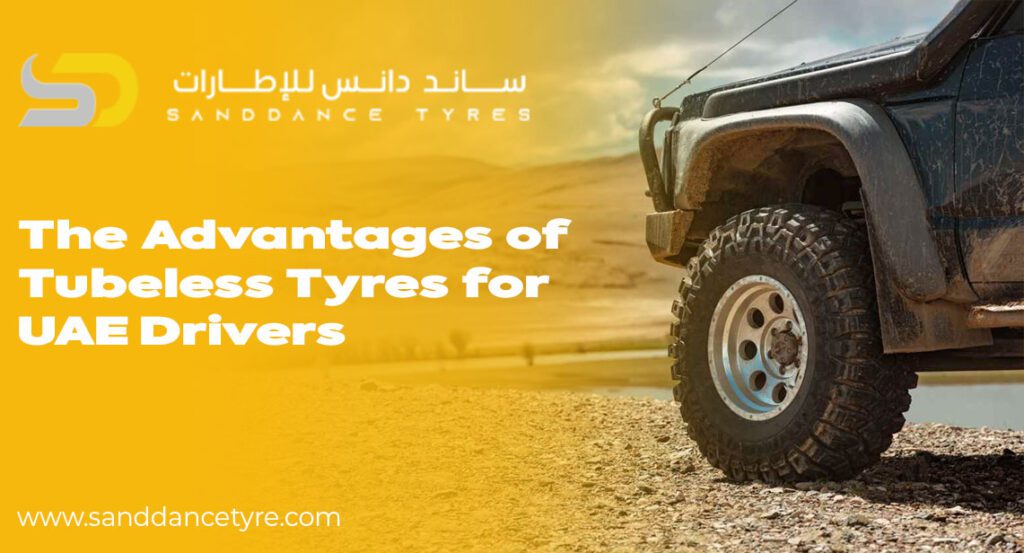
Driving off road in our parts of the world which includes the UAE we see a great deal of people that are into desert adventure, mountain biking, or just plain rough terrain which has brought about a choice between specialty tires like mud-terrain (MT) and all-terrain (AT) which does play a great role in performance and safety. Each tire set is designed for certain off-road conditions, and it is key that you know which to put on your vehicle to get the best out of traction, durability, and control. Understanding Specialty Tyres and Their Purpose Specialty tires are designed for rough terrain, which is out of the range of what regular road tires will do. We see that they differ from the average tires, which are for highway or urban use. Also, they have a rougher tread pattern, more grooves, and reinforced sides. These are what we see in the tires of off-roaders, overlanders, and vehicles which are put to use on hard ground. What you put on your vehicle’s wheels of the specialty kind depends on your style of driving, the type of terrain you are in, and how much you hit the open road. What Are Mud-Terrain Tyres? Mud terrain tires are for when you hit the tough off-road terrain, which includes lots of mud, rocks, and loose terrain. What we see with these tires is large, deep lugs and a wide space between the tread blocks. The tread design also helps them to grip soft ground better, and they clean out mud and debris very well. For the serious off-roader, that is what you go for; these tires do great in unstable weather. At the same time, though they do tend to be noisier and have lower fuel efficiency which you trade in for the performance on the open road. What Are All-Terrain Tyres? All-terrain tires do well in both on and off-road performance. Their tread is not as aggressive as that of mud terrain tires, which in turn makes them quiet and better in fuel efficiency for everyday driving. Also, they do have a great grip on gravel, sand, and light mud. All-terrain tires are ideal for what the average UAE driver looks for, that is, to go from city to desert or wadi tracks in the same vehicle. They present a very good level of performance at which you do not sacrifice too much of one for the other. Key Differences in Groove Depth and Tread Design In terms of design, what you see is that mud-terrain and all-terrain tires differ greatly. In the case of mud-terrain tires, we see deeper, wider grooves which, in turn, better channel out the mud and also prevent it from filling up the tread. All-terrain tires go for shallower grooves with a tighter pitch, which in practice improves the handling of the tire on paved roads at the same time as it still gives you that decent amount of off-road grip. What you get with the mud-terrain tire’s rough tread is better performance in wet and very uneven terrain; all-terrain tires, though, are a more balanced option for use in many situations. When to Choose Mud-Terrain Tyres Mud terrain tires are what you want for over 70% of your off-road use. If you are into dunes, muddy paths, or rocky trails, which you frequent, that is what these tires are for. In the UAE, if you are into weekend desert safaris or mountain adventures, you will see the most benefit from MT tires, which also do very well in terms of wear and performance in extreme conditions. When to Choose All-Terrain Tyres All-terrain tires are what you want if you are in the city and also do some light off-roading. For those who, at times, head out to the desert or up into rough terrain, AT tires are sufficient. They provide comfort, reduced road noise, and better fuel economy for daily commutes. In the UAE, which has a large number of residents who go on weekend getaways but still require their car to do well for daily use, all terrains do it all. Consider Terrain Type and Driving Frequency Before purchase, do a terrain assessment and consider how often you will be off-roading. If you are mostly in urban settings with only occasional forays off-road, all-terrain tires are the way to go. But if you are the type to put your vehicle into rough terrain on a regular basis, go for the mud terrain tires, which are built for that kind of treatment. By matching the right tire to the right terrain, you see better safety, control, and also save in the long run. Read More: The Advantages of Tubeless Tyres for UAE Drivers Vehicle Type and Load Considerations Your tire choice is affected by what type of vehicle you have and how much it can carry. Heavier vehicles like 4×4 trucks and SUVs do better with mud-terrain tires, which have a stronger structure. If you tend to tow trailers or carry large loads in the great outdoors, MT tires will give you better grip and protection for your sidewalls. For lighter vehicles or casual use, AT tires are the more practical choice. Bottom Line In terms of which type of tire to choose between mud-terrain and all-terrain specialty tires, it is based on what you use your vehicle for. In the UAE, drivers who are into extreme off-roading will see great benefit in terms of traction and wear from MT tires. Also all all-terrain tires present the best of both worlds for those who enjoy city driving as well as weekend off-roading trips. At Sanddance Tyres, we help you make the right choice for your lifestyle, which in turn makes every trip a smooth, safe, and performance-oriented experience. Frequently Asked Questions About Specialty Tyres Are all-weather tires a better choice for daily driving? Mud terrain tires do not do well for everyday driving, which is a result of the noise they produce, poor fuel efficiency, and that
How to Prevent Tyre Cracking in Sunny Climates
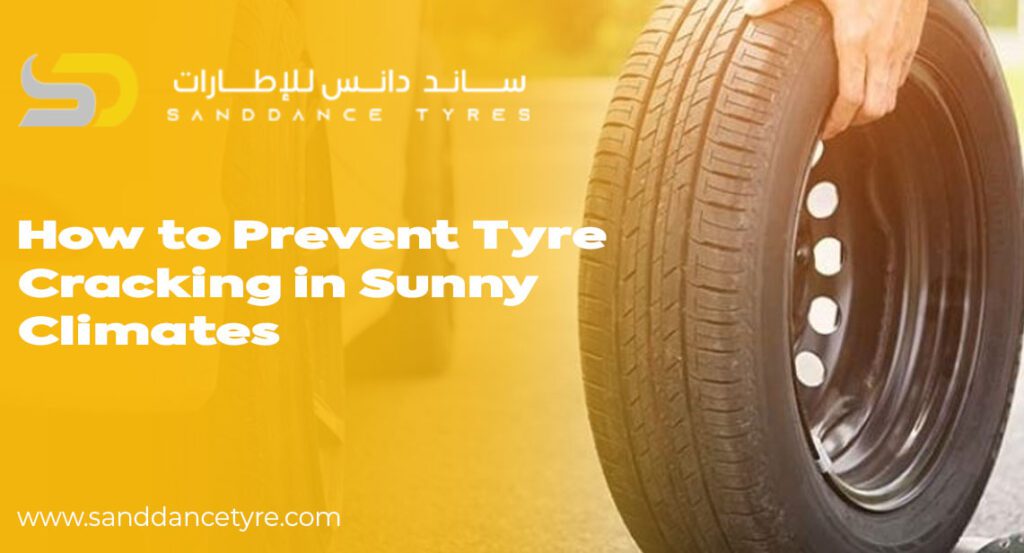
Tyre wear-out is a large issue in hot and sunny climates, which we see in the UAE. It weakens the structure of tyres, which in turn puts them at a greater risk of blowouts and failure. The intense sun, UV exposure, and very high road temperatures play a great role in rubber breakdown. That is why vehicle owners in the region need to know how to prevent tyre wear out. With proper care and a routine of maintenance practices, tyre life can be extended, which in turn saves drivers on expensive replacements and issues related to safety. Why Tyre Cracking Happens in Hot Weather? In hot climates, tires are put to great environmental stress. Continuous UV exposure degrades the rubber components; at the same time, the high road surface temperature causes thermal expansion and contraction. Over time, what we see is the development of fine surface cracks, which in turn deepen. Heat aging also plays a role in this process, which in turn makes tires brittle and more prone to failure. In the UAE’s case, which has high humidity and UV index, we see that tires are at a greater risk of damage if not properly maintained. The Impact of UV Rays on Tyres UV is the main cause of tyre cracking. Prolonged sun exposure to which tires are exposed puts out the rubber’s molecular structure. This, in turn, causes the tyre surface to lose flexibility and to develop cracks. In sunny areas, UV tyre protection is very important. Use of protectants that have UV inhibitors and parking in the shade greatly reduces rubber degradation from sun exposure. How Heat Aging Affects Tyres? Heat-aged tires are a term we use for when tires are exposed to high temperatures constantly, which in turn breaks down the inner structure of the tire. Also, unlike cold, which slows chemical processes, heat does the opposite and speeds them up. This, in turn, quickens the oxidation process within the rubber, which causes it to harden and crack. In the UAE’s case, their extreme heat, which is at its peak during summer, causes tires to age faster than normal. Regular inspections and proper storage conditions are what you can do to mitigate the effects of heat aging on your tires. Importance of Maintaining Correct Tyre Pressure Maintaining proper air pressure in your tires is very important for the prevention of tire cracking. When tires are under-inflated, they flex more during the drive, which in turn causes more heat to be produced, and that brings on wear and more stress to the rubber. Also, if the tires are over-inflated, they become too rigid, and we see an increase in crack activity at the side walls. For that reason, it is best to do regular pressure checks, especially in the morning when the tires are cool, which in turn will even out the pressure and reduce the chance of premature cracking. Best Practices for Tyre Care in Sunny Regions Good tire care is key to preventing cracking. Begin by checking tires weekly for the first signs of wear or very fine cracks. Clean them with mild soap and water, and stay away from harsh chemicals that remove protective oils. After cleaning, do put on a rubber safe conditioner to restore flexibility. Also, get tires rotated, balanced, and aligned every 8,000 to 10,000 km, which in turn will promote even wear. By following these tips, you contribute to having longer-lasting, safer tires in hot weather. How Driving Habits Affect Tyre Cracking? The way you drive impacts your tires more than you think. Aggressive driving, which includes rapid acceleration, sharp turns, and hard braking, puts extra stress on the tires. This causes uneven wear of the tread and an increased chance of the tire cracking under pressure. By avoiding potholes, slowing down over speed breaks, and not overloading your vehicle, you can see a large-scale improvement in tire wear. Also, safe driving is better for your car, which in turn also plays a role in reducing rubber degradation. Storage Tips to Avoid Tyre Damage Even out-of-use tyres will crack if proper storage procedures aren’t followed. Tyres put outside or in contact with heat elements are at risk from the sun, ozone, and moisture. It is best to keep tyres in a cool, dry area inside when not in use, also stand them up straight on a clean base. Use covers or dark bags to screen out UV light, and also avoid piling them on top of each other, which will cause shape issues. If you are storing your summer or winter tyres for the season, make sure to clean and dry them off fully before you wrap them up. The Role of Tyre Conditioners and UV Protectants Tyre care products play an important role in rubber protection against cracking. We have products that put back the oil that is lost because of heat and sun. UV protectants we put a barrier on the tyre, which reflects harmful rays and in turn slows down rubber aging. It is very important to use water-based products that are free of petroleum solvents for best results; some products may do more harm than good. When used as a routine, these treatments will improve flexibility and also extend tyre life. When to Replace Cracked Tyres? Not all cracks are a sign that you will need a replacement right away, but large or wide cracks are a warning. If you see cracks that have formed in the tread or the sidewalls, report them to a tyre professional to assess the issue. By ignoring very serious cracks, you put yourself at risk of a blowout or poor safety while driving. In the UAE, we recommend going for a tire change out of the blue every 4 to 5 years, which is beyond the tread looking fine because of the high degree of heat-related aging. Bottom Line Tyre wear in the sun, as an issue which is very much present for drivers in places like the UAE,
Are Directional Tyres Better for the UAE Rainy Season?
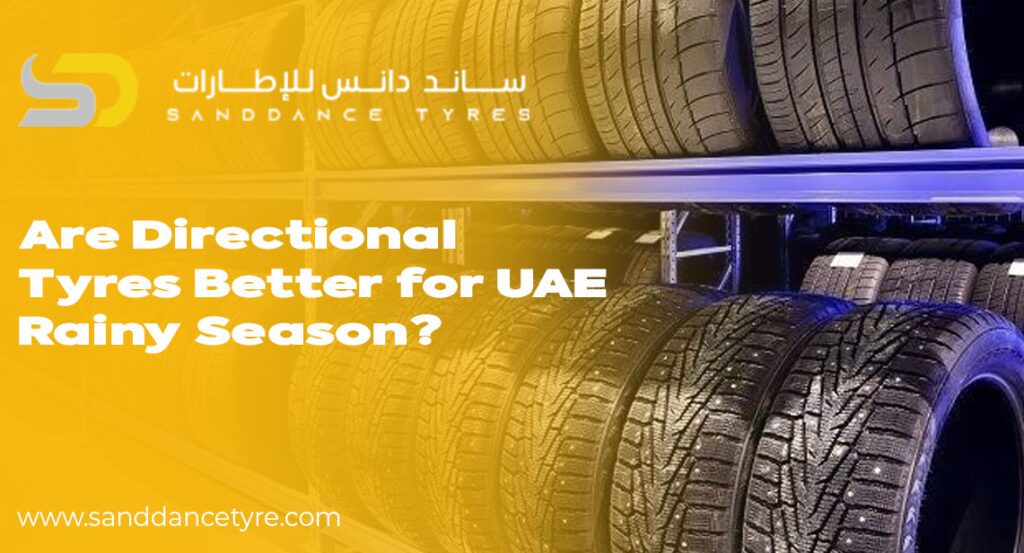
While in the UAE, we have hot and dry weather as a norm, the rainy season, which does come around presents its own set of issues for drivers. We see heavy rainfall, water-filled roads, and slippery surfaces which in turn requires tyres that keep safety at the fore in wet weather. During the rain we also see great interest in a certain tyre type which is the directional tyres. At Sanddance Tyres we report that we get asked often if these tyres are right for the random rain we get in the UAE and the quick answer is yes, but there is more to it. What Are Directional Tyres and How Do They Work? Directional tires, what some also refer to as unidirectional tires come in a specific tread pattern which is to be rotated in only one direction. We see a V shaped or arrow like tread which is meant to direct water away from the contact patch, which in turn improves performance on wet roads. The tire design is put forth for water evacuation which in effect reduces the chance of hydroplaning and also provides better stability at high speed during rain. Why Directional Tyres Are Ideal for Wet Conditions Directional tyres’ unique design reports better wet grip performance. They have a tread that is put together in a way which pushes water out to the sides of the tyre from the center which in turn increases rubber to road contact. This is very true of UAE roads which tend to fill up with water very quickly during rain. At Sanddance Tyres we note that customers which mainly use their cars during rain report better results in braking and cornering which is a result of these tyres. How Directional Tyres Prevent Hydroplaning Hydroplaning is out when a film of water forms between the tire and the road which in turn causes the car to lose grip and slide. Directional tires greatly reduce that risk by what they do to prevent it. They have a strong V shaped tread pattern which pumps out water and quickly gets rid of it and keeps the car planted. That design also improves handling during acceleration, turning and emergency breaks which is very important during sudden rain in the UAE. The Importance of Correct Tyre Installation While directional tires do indeed provide great performance in wet weather, they must be put on properly to get the best out of them. There is an arrow on the tire’s side wall which indicates the correct direction of rotation. If you install them the wrong way you may see a reduction in traction and an increase in wear. At Sanddance Tyres we make sure all directional tires are fitted by our trained staff which align the tire to the car’s rotation for optimal performance and safety. Are Directional Tyres Good for Dry Roads Too? Although we see that they are mainly put out for use in wet conditions, directional tires also do very well on dry roads. They feature great straight line stability and performance at high speed which is why you will see them in sportier cars and on the highway a lot. That said, they do wear out a little faster than asymmetrical tires and also have less flexibility in terms of rotation which in turn affects their life span. Still in the UAE where we have some rain but mostly dry roads that trade off is usually worth it. When Should You Consider Switching to Directional Tyres? If you are a frequent traveler on the highways, live by the coast or in a rainy area, or want better grip in that unpredictable rain, directional tires may be just what you need. They provide a great mix of performance and safety which is especially true when rain water is heavy on the roads. At Sanddance Tyres we look at your driving routine, the areas you drive in, and what type of car you have to put forth the best recommendation for you regarding if a directional tread is the right choice. Read More: How to Choose the Right Tyre Compound for UAE Roads Final Thoughts Though in the UAE which is a dry climate rain is at a premium but when it does come it comes in heavy doses which in turn makes road conditions a lot worse than what is usual. We put at your service directional tires which have better wet grip, which also do a great job at preventing hydroplaning and which handle the water which is on the roads much better. At Sanddance Tyres we put forward to our customers that these are the tires you should go for if you are an Emirati driver looking for year round safety which includes that short but very tough rainy season. It is not just a question of what is comfortable to drive, it is what will keep you safe and perform at the best when you need it the most. FAQs on Directional Tyres in the UAE Do directional tires do better in the rain? Sure. They have tread patterns which improve water flow and which in turn reduce the risk of hydroplaning which is seen particularly on the roads of the UAE. Can I use winter tires all year round in the UAE? Surely. Also they do well on dry roads with great high speed stability and performance. Do directional tyres last longer? They will wear out faster if rotated improperly or driven aggressively. At Sanddance Tyres proper installation and regular alignment checks will see to it that they last longer. How to tell if my tire is directional? Check for an arrow or “Rotation” mark on the sidewall. That indicates the direction the tyre should rotate for best performance.
How to Choose the Right Tyre Compound for UAE Roads
Choosing the right tyre compound for UAE roads is a matter of more than which brand you go with it is about what rubber blend does best in certain weather and surface conditions. In a country like the UAE which has summers that are extremely hot and road tempers to rise well above 60°C tyre compound choice becomes a key factor in performance, safety, and tyre longevity. At Sanddance Tyres we help you choose from our range of compounds according to your drive style, use of the vehicle, and the which roads you drive in we cover the UAE’s highways and city roads. Whether you own a luxury car, an SUV, or a commercial fleet vehicle, the choice of the right tyre compound is very important for your experience. Understanding Tyre Compound for UAE: What Are They? A tyre compound is what we call the chemical make up of the rubber which forms the tire’s tread. That mix is key to how the tyre performs on the road in terms of its grip, wear over time, and also heat build up. In the UAE where the roads are mostly hot and dry all year out that compound has to find that fine line between grip and durability. Soft and hard. Each has a different set of features which play to various preferences and styles of driving. Your driving performance and safety is a great degree dependent on the compound’s performance in terms of traction, wear resistance, and how it adap to the road surface which in turn is very much a issue in the UAE. Soft vs Hard Tyres: What’s the Difference? Soft tyre compounds we use are of a type which perform very well in terms of grip. They do a better job of traction and also report to reduce braking distances which is great for performance cars or aggressive drivers. But in the high temp climate we see in the UAE, soft tyres do tend to wear out faster, also if you are doing daily commute or long distance travel. Hard tires also do this they have better wear resistance and do a great job of holding up to rough and hot roads for longer distances. While they may not perform as well as soft tires in terms of grip, hard tires are what we see in commercial and family cars which prioritize durability out performance in the corners. When choosing between soft and hard compounds we ask that you consider how often you hit the road, what kind of roads you are driving on, and what you want out of your tires’ longevity. At Sanddance Tyres we put at your disposal the expertise of our team which will base guidance on your use in to give you the best compound choice. At Sanddance Tyres get expert advice on what compound to use for max safety and performance. The Role of Road Surface in Compound Selection In what we see the type of road surface you drive on plays a role in rubber compound performance. In cities like Dubai and Abu Dhabi which have urban roads we see that they are usually very smooth and well maintained which in turn allows soft compounds to perform at their best. But for highways, desert routes which are rough, or roads that have lots of uneven patches a hard compound is more so used because of its better heat and wear resistance. Also note the seasonal variances. In summer at it’s peak tyres see the greatest heat stress. What is key are the compounds which resist softening at high temp’s. If you are using performance tyres that have softer compounds it is best to rotate them more often in order to even out wear and to also extend their life. How tyre type and compound interact on the road is what you need to know in order to make that right choice for safety and economy. At Sanddance Tyres we look at your driving and the roads you put your car through to put forward the best option for you. Why Tyre Compound Matters in the UAE In the UAE, in which the weather is a factor poor choice of compound will cause accelerated tread wear, loss of grip, increased fuel consumption, and in some cases blowouts. The compound used is not just a technical term it is what will affect your safety while driving, your comfort, and the cost effectiveness of your vehicle over time. In the field of many brands and models available it is very simple to get lost. That’s where professional advice steps in. At Sanddance Tyres we put together a large variety of tires which do very well in the UAE, also we put a great deal of care into which we choose based on how different compounds perform in our local climate. At Sanddance Tyres we have the right compound for your UAE roads. Visit us for tailored solutions. Frequently Asked Questions (FAQs) Which is the best tyre compound for UAE weather? Hard compounds are more wear and heat resistant which in turn is better for UAE’s tough conditions. But soft compounds provide better grip and may do better for short distance urban drivers. Do soft compounds wear out faster in the UAE? Yes, in the UAE we see that extreme heat and high road temperatures cause wear of soft compounds which is a issue in urban and heavy traffic settings. Are hard compound tyres less safe? Of course not. While they do offer a little less grip what they lack in that is made up in terms of better durability and performance which is very much noticed at high speed or on hot roads. Which compounds are used in my tires? The compound used is usually detailed in the tyre’s technical data sheet. At Sanddance Tyres we have experts that can help you to identify and choose the best compound for your requirements. Can you use a mix of soft and hard comp
Do Run Flat Tyres Make Sense in Sanddance Range?
Do flat free tires make sense for drivers today? At Sanddance Tyres we have noticed a trend towards this which we are very much a part of — in particular we are seeing great interest from customers that value safety and convenience while they are out on the road. Run proof tires bring more than what is new they provide peace of mind. With their feature of keeping your car in motion after a flat they do away with the stress of emergency roadside tire changes. If you are to put in for puncture proof tires which in particular include daily commutes or highway travel in the UAE we recommend you look into the Sanddance range. What Are Run Flat Tyres and How Do They Work? Run flat tyres are put to use when you have total loss of air pressure. We have reinforced sidewalls to blame for this which enable the tyre to hold its shape and support the vehicle’s weight which may just continue for some time after a puncture. Also in case of most run in flat tires you can get along for a 80 km at a reduced speed (around 80 km/h) which in turn gives you sufficient time to get to a repair shop. This feature is what makes them the best choice for emergency tires in situations which do not have immediate access to help from road side services. With no need to pull over in the heat or at risky locations to change tires run flats are a game changer for UAE drivers. Puncture-Resistant Tyres in the Sanddance Tyres Collection At Sanddance Tyres we have a great selection of puncture proof tyres which do very well on the roads of the UAE. We feature premium run flat models from around the world which we know for their performance and durability in the harshest of conditions. No matter what you drive, from a luxury car to an SUV or premium sedan we have options that fit your wheel size and style of driving. In the UAE’s desert setting which includes remote highways the issue of having a spare with run flat tires is a pro. You may break down anywhere and still be able to get to a town or a garage of your choice for repair, instead of breaking down in the middle of nowhere. Drive smart and safe check out our run flat tyre options at Sanddance Tyres. Are Run Flat Tyres Worth It in the UAE? While there is a higher price point for run flat tires as compared to standard tires, in terms of safety and convenience they do often worth it especially in the climate we have in the UAE. Picture this, you’re on the Sheikh Zayed Road or a desert highway at 2 in the morning and you get a flat. Instead of breaking down and waiting for rescue, you are able to get to the nearest service station safely. Another benefit of run flats is that you do not have to include a spare tire which in turn reduces weight and increases boot space which is especially true for small cars or those that see a great deal of travel. Also they feature strengthened sidewalls which in the event of high speed blowouts which may occur during long distance travel will be reduced; that is to say run flats are the better choice for safe long distance driving. Also it is of great importance to note that run flat tyres should be used in conjunction with a Tyre Pressure Monitoring System (TPMS). This is to inform you when the pressure has dropped which in turn will help you to decide your next move. Who Should Consider Run Flat Tyres? Run flat tires are for people that put in many miles of highway driving, that which put in daily commutes through heavy traffic, or which have vehicles that don\’t come with a spare. Also they are very much so put forth to families, female drivers, and those that may not feel at ease changing a tire by the road side. As the demand for immediate tire service increases, run flats give not only better performance but also a greater sense of security while you are out on the road. At Sanddance Tyres we work with our customers to determine if their vehicle and lifestyle are a good match for run flat tires. We have tech experts that do the fitment, pressure set up at install time and also will support you with maintenance through out the tires life. Today at Sanddance Tyres we’ve got expert fitment and after sales support for your run flat tires. Frequently Asked Questions (FAQs) Is it true that any car can have run flat tires? Run out of tyre pressure go well on cars that have TPMS. Also some car suspensions play well with them which is why it is better to check with Sanddance Tyres before you do an upgrade. How much time after a run flat tire puncture do I have? Upon a blow out most tires will still allow you to run for 80 km at 80 km/h which in turn gives you enough time to get to a safe location or service center. Are run flat tyres repairable? In what is mostly true manufacturers do not recommend repair of run flats because of the internal structure issue. We see that in most cases replacement is put forth as the solution after a puncture. Do do flat tires improve fuel economy? While it’s true that the spare tire doesn’t improve fuel efficiency at all we do see a small benefit in fuel performance when it is removed. Is it safe to drive on run flat tires in the hot weather of the UAE? Yes, in the UAE we test for high temperature performance of run flat tyres which also means they are safe for use here. Also their reinforced sides do very well in extreme conditions.