
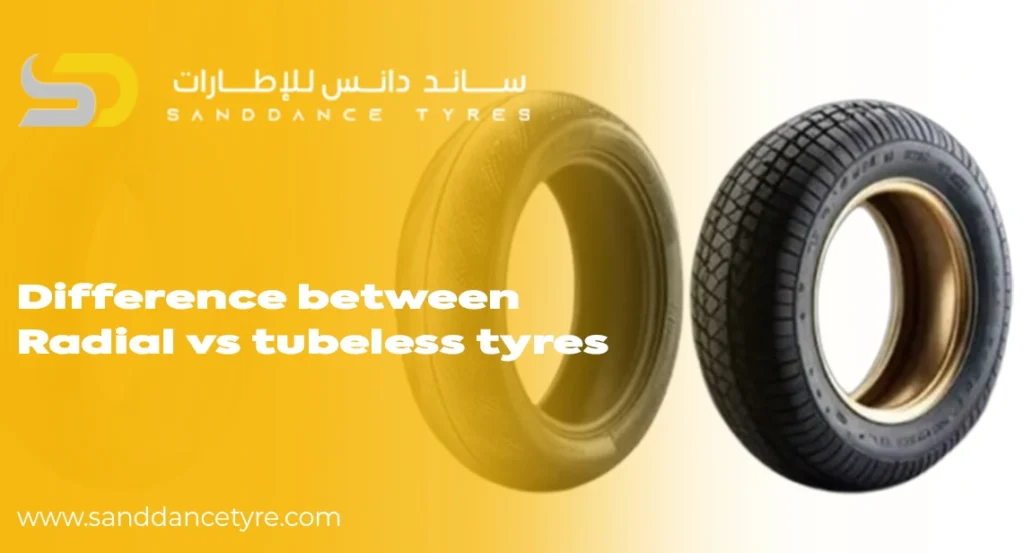
If you’ve ever stood at a tyre shop feeling mildly overwhelmed while someone rattles off technical terms at you, you’re not alone. The difference between radial vs tubeless tyres is one of those topics that sounds complicated but is actually pretty straightforward once someone explains it plainly. That’s exactly what we’re going to do here.
Whether you’re shopping for a new set of tyres, replacing a worn-out one, or just trying to understand what’s already on your car, this guide will walk you through everything you need to know—without the jargon overload.
First Things First: These Are Two Different Classifications
Here’s something that confuses a lot of people right out of the gate—radial and tubeless aren’t actually opposites. They describe different things about a tyre. A radial tyre refers to how the tyre is built (its internal construction). A tubeless tyre refers to whether it needs an inner tube to hold air or not.
So you can absolutely have a tyre that’s both radial and tubeless at the same time. In fact, most modern passenger cars run exactly that — radial tubeless tyres. But understanding what each term means on its own gives you a much clearer picture of what you’re buying and why it matters.
What Is a Radial Tyre?
A radial tyre gets its name from the way its internal cords are arranged. Inside the rubber, steel or fabric cords run perpendicular (at a 90-degree angle, or “radially”) to the direction of travel. On top of those cords sits a stabilising belt — usually steel — that runs around the circumference of the tyre.
How Radial Construction Changed the Game
Before radial tyres became standard, most vehicles used bias-ply tyres, where cords ran diagonally across the tyre. That older design ran hotter, wore faster, and didn’t handle nearly as well at high speeds. Radial construction solved most of those problems.
Key Advantages of Radial Tyres
The sidewall of a radial tyre is more flexible, which means it absorbs road imperfections better. This directly improves ride comfort — you feel less of the bumps and road texture. The contact patch (the part of the tyre actually touching the road) is also more consistent, giving you better grip and more predictable steering.
Radial tyres also run cooler because there’s less internal friction during flexing. Cooler running means longer tread life, which is one of the main reasons radial designs became the global standard for passenger vehicles. If you’re looking to buy tyre online dubai, virtually every option you’ll come across will be radial construction — that tells you how dominant this design has become.
Where Radial Tyres Are Used
Cars, SUVs, trucks, buses, and even aircraft use radial construction. It’s the default for pretty much anything driving on paved roads at modern speeds. The only domain where you still commonly see non-radial (bias-ply) designs is certain off-road applications, agricultural equipment, and some motorsport categories where specific flex characteristics are needed.
What Is a Tubeless Tyre?
A tubeless tyre, as the name says, doesn’t have an inner tube inside it. Instead, the tyre itself is designed to form an airtight seal directly against the rim. Air is held in by the tyre’s inner lining and the bead—the edge of the tyre that locks against the wheel.
The Inner Tube Era and Why It Ended
Older tyres used a separate rubber tube inside the tyre casing to hold air. If that tube got punctured, you got a sudden, dramatic blowout—the kind that could cause you to lose control of the vehicle. Tubeless tyres changed this significantly.
Why Tubeless Is Safer in a Puncture
When a tubeless tyre gets a nail or screw in it, air escapes slowly rather than in a sudden burst. The object often partially plugs the hole as it pierces the tyre. This gives you time — usually enough to pull over safely rather than struggling to control a vehicle with a sudden blowout. That slower deflation behavior is one of the most significant safety advantages between radial vs tubeless tyres in a real-world driving scenario.
Repair Is Simpler Too
Fixing a tubeless tyre with a nail in it is often a roadside job. A plug kit can seal many punctures without even removing the tyre from the wheel. You simply remove the object, ream the hole slightly, push in a rubber plug, and inflate. Tube-type tyres require dismounting the tyre, removing the tube, patching it, and reassembling—considerably more work.
The Requirement: Compatible Wheels
Tubeless tyres need wheels specifically designed to create that airtight seal. Most modern alloy and steel rims on passenger vehicles are tubeless-compatible. If you’re fitting a vehicle that originally used tube-type tyres, the rims may need to be changed or checked before switching over.
Radial vs Tubeless — Direct Comparison
| Feature | Radial Tyre | Tubeless Tyre |
| What it describes | Internal construction method | Air retention method |
| Ride comfort | Better (flexible sidewall) | Neutral (depends on construction) |
| Puncture behaviour | Depends on type (tube or tubeless) | Slow deflation — safer |
| Heat buildup | Low (efficient flex) | Normal range |
| Tread life | Longer than bias-ply | Average — similar to tube-type |
| Fuel efficiency | Better (lower rolling resistance) | Slight improvement (no tube friction) |
| Repair ease | Standard | Easier — plug repairs possible |
| Weight | Lighter than bias-ply | Lighter than tube-type equivalent |
| Cost | Moderate to higher | Generally higher upfront, cheaper long-term |
| Modern standard? | Lighter than the tube-type equivalent | Yes—on most passenger vehicles |
Performance on Dubai Roads: What Actually Matters Here
If you’re driving in the UAE, the conversation around radial versus tubeless tyre choices takes on a slightly different character. Dubai roads are generally excellent — smooth, well-maintained, and fast. But the heat is a real factor, and so is the occasional sand and debris that can cause punctures.
Heat Resistance Is Non-Negotiable
Summer temperatures in Dubai can push asphalt surface temperatures well above 60°C. Tyres that run hot under normal conditions will degrade faster and become a safety concern in these extremes. Radial construction genuinely helps here — the lower heat buildup from more efficient flexing is a tangible advantage in this climate, not just a spec-sheet number.
Slow Deflation Saves You on the Highway
Dubai has some of the busiest highways in the region, and high-speed driving is common. A sudden blowout on Sheikh Zayed Road is a very different situation from a slow puncture in a residential area. Tubeless tyres’ slow deflation characteristic is genuinely important in this context. The few extra seconds of controlled deceleration can matter a lot at speed.
For premium performance in extreme heat, brands like BFGoodrich Tyres are well-regarded for their durability in desert and high-temperature conditions, combining solid radial construction with tubeless compatibility in most of their range.
Can You Mix Radial and Non-Radial Tyres on the Same Car?
No — and this is important. Mixing radial and bias-ply (non-radial) construction on the same vehicle is dangerous and prohibited in most countries. The two types handle completely differently under load, braking, and cornering. If your car uses radial tyres, all four must be radial. The same goes for the same side of an axle—mixing on the front and rear creates unpredictable handling.
What About Mixing Tubeless and Tube-Type?
Technically, you can run a tube inside a tubeless tyre if necessary—mechanics sometimes do this as a temporary fix when a tubeless tyre is damaged beyond a plug repair. However, it’s not a long-term solution and comes with its own risks (higher heat, less predictable behaviour). You should always replace it with the correct type for your vehicle.
Which One Should You Choose?
For the vast majority of drivers on modern vehicles, the question answers itself—your car almost certainly already uses radial tubeless tyres, and you should replace them like for like. But if you’re in a situation where you have a choice (older vehicle, special application, or building a custom setup), here’s a simple framework.
Go With Radial Tubeless If:
You drive a passenger car, SUV, or light truck on paved roads. You want the best balance of comfort, fuel efficiency, tread life, and safety. You drive at highway speeds regularly. You’re in a hot climate. This covers probably 95% of readers.
Tube-Type May Still Apply If:
You’re running an older vehicle with rims not designed for tubeless fitment. You’re using a tyre for specific off-road applications where rim sealing is unreliable (very rough terrain, extreme bead flex). Agricultural or industrial equipment often still uses tube-type for similar reasons.
Bottom line: If your vehicle is from the last 20–25 years and designed for normal road use, radial tubeless is what you want and what you’ll get. The two technologies complement each other rather than compete — and together they represent the safest, most efficient tyre setup available for everyday driving.
A Note on Maintenance — It Affects Both Types
Whichever tyres you’re running, proper maintenance matters more than most people realise. Tyre pressure should be checked at least monthly — and always when cold. Running underinflated puts enormous stress on sidewalls, accelerates wear, and increases heat buildup. Running overinflated reduces grip and makes the ride harsher.
It’s also worth remembering that tyre performance doesn’t exist in isolation. A well-maintained vehicle — including a properly functioning air conditioning system (heat affects driver alertness and focus, especially in Dubai summers) — contributes to overall road safety. If your vehicle’s climate control isn’t performing well, it’s worth sorting out with a trusted car ac repair service before the summer months hit in full force.
Frequently Asked Questions
Q1: Is a radial tyre the same as a tubeless tyre?
No — they describe different things. Radial refers to how the tyre’s internal cords are arranged (its construction). Tubeless refers to how the tyre holds air (without an inner tube). A tyre can be radial and tubeless at the same time, which is what most modern passenger vehicles use.
Q2: Which is better for everyday driving — radial or tubeless?
Most everyday drivers benefit most from a tyre that is both radial in construction and tubeless in design. Radial gives you better comfort, fuel efficiency, and tread life. Tubeless gives you safer puncture behaviour and easier repairs. Combined, they offer the best all-round performance for normal road use.
Q3: Can I fit tubeless tyres on any rim?
Not necessarily. Tubeless tyres require rims specifically designed to create an airtight seal at the bead. Most modern alloy and steel rims on passenger vehicles are compatible, but older or certain off-road rims may not be. Always verify rim compatibility before switching from tube-type to tubeless tyres.
Q4: What happens when a tubeless tyre gets punctured?
Unlike a tube-type tyre, a tubeless tyre deflates slowly when punctured. The object (a nail, screw, etc.) often partially seals the hole as it penetrates, giving you time to safely pull over. Many tubeless punctures can also be repaired with a simple plug kit without removing the tyre from the wheel.
Q5: Are radial tyres better in hot climates like Dubai?
Yes — radial tyres generate significantly less internal heat than older bias-ply designs because of how their cords flex during use. In extreme heat conditions like those in Dubai and the UAE, this lower heat buildup helps maintain tyre integrity and reduces the risk of heat-related failures on long highway drives.
Q6: Can I put a tube inside a tubeless tyre?
It is possible as a short-term fix, but it is not recommended as a permanent solution. A tube inside a tubeless tyre generates more heat and behaves less predictably than a proper tubeless setup. If a tubeless tyre is damaged beyond a plug repair, the correct fix is to replace the tyre rather than insert a tube.