
If your car got caught in a flash flood in the UAE, you already know how stressful those first few hours are. You’re staring at a waterlogged vehicle, wondering what to do next — and whether your flood car insurance claim UAE will actually cover the damage. The good news? If you have the right policy and follow the correct steps, you can get your claim approved without unnecessary delays.
This guide walks you through the exact process, what insurers look for, common mistakes people make, and how to protect yourself from being caught off guard next time.
Why Flood Damage Claims Are Different From Regular Car Claims
Here’s the thing most people don’t realize until it’s too late: not all car insurance policies in the UAE automatically cover flood damage. Standard third-party liability insurance — the minimum required by law — does not cover your own vehicle at all. Comprehensive car insurance does, but only if it includes a natural disaster or “Act of God” clause.
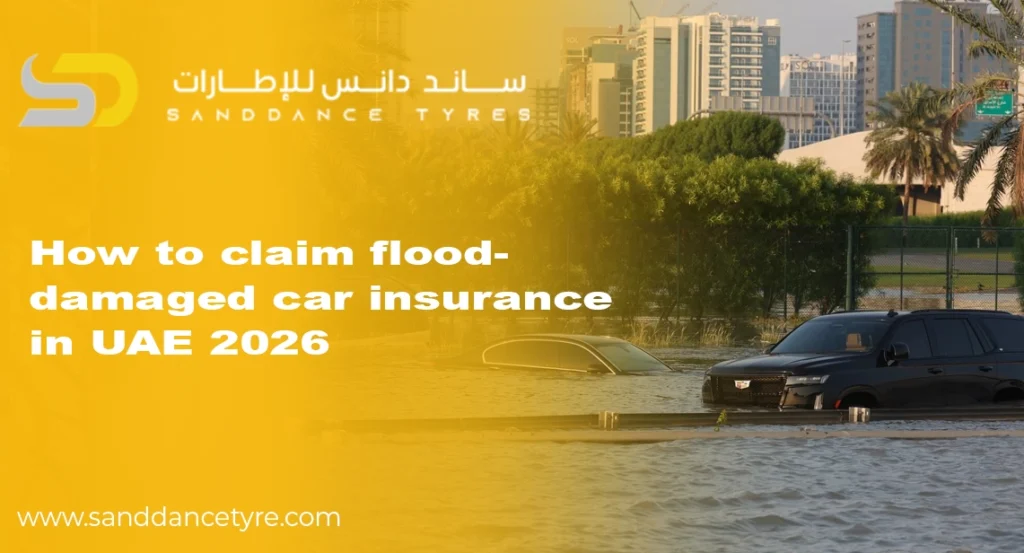
In 2024, the UAE experienced some of its worst rainfall in decades. Thousands of vehicles were damaged, and insurance companies were flooded (no pun intended) with claims. Some were paid out quickly. Others were denied — not because of fraud or bad faith, but because policyholders simply didn’t understand what was in their contracts.
So before anything else: dig out your policy document and look for these terms — “comprehensive cover,” “natural disaster,” “Act of God,” or “flood.” If you see them, you’re likely covered. If you don’t, call your insurer immediately.
Step-by-Step: How to File a Flood Car Insurance Claim in UAE
Step 1 — Don’t Start the Engine
This is the most important thing we can tell you, and it’s completely free advice: do not try to start a flooded car.
When water enters the engine bay or exhaust, starting the car can cause what’s called “hydrostatic lock” — water gets into the cylinders and can destroy the engine beyond repair. If the car was submerged or even partially flooded, treat it as undriveable until a professional assesses it.
This matters for your claim too. If an assessor finds that you attempted to start the car after flooding, the insurer might argue that some of the damage was caused by your own actions — and that could reduce or even void your payout.
Step 2 — Document Everything Immediately
Before you touch anything, take photos and videos. Cover every angle:
- The exterior showing waterline marks
- The interior — carpets, seats, dashboard, footwells
- The engine bay if you can safely open it
- Any visible damage to tyres, suspension, or underbody
- The surrounding area to establish context (street flooding, water levels, etc.)
Timestamp everything. If your phone automatically geotagges photos, even better. This evidence is what separates a fast-approved claim from a long dispute.
Step 3 — Notify Your Insurer Within 24–48 Hours
Most car insurance policies in the UAE require you to notify the insurer within a specific window — often 24 to 72 hours of the incident. Missing this deadline can give the insurer grounds to reject your claim, even if the damage is genuine and significant.
Call the claims hotline on the back of your insurance card, or use the insurer’s app if available. When you call:
- Give your policy number
- Describe the incident clearly and factually
- Ask for a claim reference number (write it down)
- Confirm next steps and expected timeline
Don’t exaggerate or speculate about the damage at this stage. Just state the facts.
Step 4 — Get Your Vehicle Towed to an Approved Garage
Most UAE insurers have a network of approved repair garages. You’ll typically need to take your car to one of these for the damage assessment, or the insurer will send their own assessor to inspect it.
Do not take the car to an unauthorized garage first — even if you think it’ll be faster. Unauthorized repairs before the official assessment can complicate your claim significantly.
If your car is stuck in floodwater or a dangerous location, call for a tow. Many comprehensive car insurance policies in the UAE include roadside assistance — check if yours does. Services like Sand Dance Tyre’s mobile van service can be a lifesaver in situations like these, providing on-location support when your car simply can’t be moved to a garage.
Step 5 — Submit Your Claim Documents
Every insurer has slightly different requirements, but here’s what you’ll almost always need:
Core Documents Required
- Completed claim form (provided by the insurer)
- Copy of your Emirates ID
- Copy of your driving licence
- Vehicle registration card (Mulkiya)
- Original insurance policy
- Police report (if you filed one — see below)
- Photos and videos from Step 2
- Repair estimate from the approved garage
Do You Need a Police Report for Flood Damage?
This depends on your insurer’s policy, but in many cases, yes — especially if the damage is extensive. In the UAE, you can file a traffic incident report online through the relevant emirate’s police portal, or visit a police station. Some insurers will accept a weather event declaration in lieu of a formal police report for natural disaster claims.
Call your insurer and ask specifically: “Do I need a police report for this flood damage claim?” Get the answer in writing (via email or WhatsApp message from their official number) so there’s no dispute later.
Step 6 — Cooperate With the Insurance Assessor
An assessor will inspect your vehicle to determine the extent and cause of damage. Be present during this inspection if at all possible. Walk them through the damage, share your photos, and answer questions honestly.
If the assessor asks about pre-existing damage or prior incidents, be straightforward. Misrepresentation — even unintentional — can void a claim. Honesty protects you here.
After the inspection, you’ll receive either:
- A repair approval — the insurer will pay the approved garage to fix the car
- A total loss declaration — if repair costs exceed the car’s market value (usually 60–75% of the insured value, depending on the insurer), the car may be written off and you’ll receive a settlement payment
Common Reasons Flood Car Insurance Claims Get Rejected in UAE
Understanding why claims get denied helps you avoid those mistakes entirely.
Reason 1 — No Comprehensive Cover
As mentioned, third-party insurance won’t cover flood damage to your own vehicle. Always check your policy type.
Reason 2 — Delayed Notification
Waiting more than 72 hours to inform your insurer — even if you had valid reasons — can lead to rejection. Act fast.
Reason 3 — Driving Into Known Floodwater
If there is evidence (traffic cameras, witness accounts) that you deliberately drove into a flooded area against advice, the insurer may argue this constitutes negligence and deny the claim.
Reason 4 — Unauthorized Repairs
If you get repairs done before the official assessment, the insurer can’t verify the original damage and may deny partial or full coverage.
Reason 5 — Policy Exclusions
Some policies exclude specific regions, vehicle types (e.g., modified cars), or specific causes of damage. Read the exclusions section of your policy — not just the coverage section.
What If Your Claim Is Rejected?
If your flood car insurance claim in UAE gets rejected and you believe it shouldn’t have been, you have options:
- Request a written explanation from the insurer outlining the specific reason for denial.
- Submit a formal complaint to the insurer’s internal grievance team.
- Escalate to the UAE Insurance Authority (now part of the Central Bank of UAE) — they handle consumer complaints and can mediate disputes.
- Consult a legal advisor who specializes in insurance law in the UAE if the amount involved is significant.
Don’t just accept a rejection at face value. Many initial rejections are successfully appealed with the right documentation and persistence.
After the Claim: Getting Your Car Back in Shape
Once your claim is approved and your car is repaired, don’t assume everything is perfectly back to normal. Flood-damaged vehicles can have lingering issues — electrical faults, mold inside the cabin, or corrosion — that show up weeks later.
A few things worth doing after you get your car back:
- Check your tyres carefully. Floodwater can weaken tyre sidewalls. If you notice bulging, cracking, or uneven wear, get them inspected. You can find quality options like Dunlop tyres in Dubai that are designed for the UAE’s demanding road conditions.
- Get the AC system checked. Water ingress can damage the evaporator and blower motor. A professional car AC repair service can spot issues before they become expensive.
- Have a full vehicle inspection at a trusted garage. For comprehensive maintenance and post-flood checks, Sand Dance Tyre offers a range of vehicle services trusted by UAE drivers.
Quick Reference: Flood Claim Checklist
| Step | Action | Timeline |
| 1 | Do NOT start the engine | Immediately |
| 2 | Photograph and video all damage | Within hours |
| 3 | Notify your insurer | Within 24–48 hours |
| 4 | Get vehicle towed to approved garage | Same day if possible |
| 5 | File police report (if required) | Within 24 hours |
| 6 | Submit all documents | As directed by insurer |
| 7 | Cooperate with assessor | During scheduled inspection |
Customer Reviews
Khalid A. — Dubai ⭐⭐⭐⭐⭐ “After the 2024 floods, my car was completely waterlogged. I had no idea how to file a flood car insurance claim in UAE. This guide saved me so much time — I followed every step, got my documents together quickly, and the claim was approved in just 12 days. The tip about not starting the engine literally saved my engine.”
Fatima R. — Abu Dhabi ⭐⭐⭐⭐⭐ “I was panicking when I saw my car after the flash flood in Al Ain. My insurer kept asking for documents I didn’t know about. I wish I had found this article sooner. The checklist at the end is exactly what I needed. Got the claim sorted after two weeks.”
James T. — Sharjah ⭐⭐⭐⭐ “Helpful and realistic. My claim was rejected initially because I took the car to a non-approved garage — exactly the mistake this article warns about. Shared it with my colleagues at work, very practical advice for anyone with car insurance in UAE.”
Priya N. — Dubai ⭐⭐⭐⭐⭐ “Very trustworthy information. I especially appreciated the section on what to do if your claim is rejected — most articles just tell you how to file, not what happens if it goes wrong. The internal links to tyre and AC services were also useful after I got my car back.”
Final Thoughts
Dealing with a flood-damaged car is stressful enough without having to fight your insurance company too. The key to a successful flood car insurance claim UAE is acting fast, documenting thoroughly, and understanding your policy before disaster strikes — not after.
If you haven’t reviewed your car insurance in UAE recently, now is a good time. Check whether you have comprehensive cover, confirm whether natural disasters are included, and keep a digital copy of your policy documents somewhere you can access them even if your phone gets wet.
And once your car is back on the road, give it a proper once-over — from tyres to air conditioning — so you’re not dealing with a secondary problem a month down the line.