
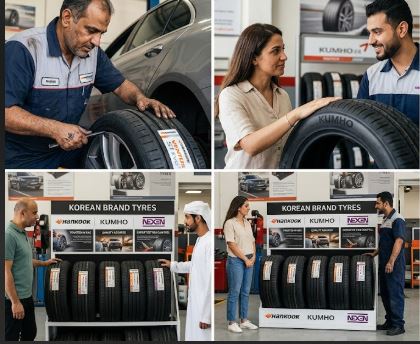
If you drive in the UAE, you already know the challenge: asphalt that can hit 60°C in summer, long highway stretches on Sheikh Zayed Road, and the occasional detour onto sand. Your tyres take the brunt of all of it, which is why Korean-brand tyres have become one of the most searched-for options among Dubai, Abu Dhabi, and Sharjah drivers looking for reliable performance without a premium price tag.
Brands like Hankook, Kumho, and Nexen have spent decades refining rubber compounds specifically for hot, high-mileage conditions. In this guide, we’ll break down why Korean brand tyres are worth considering, how the major players compare, and how to pick the right set for your car.
Why Korean Brand Tyres Work So Well in the UAE
Not every tyre survives a UAE summer. Roads regularly exceed 50°C, and cheap rubber compounds crack, harden, or lose grip within a year or two. This is exactly the gap Korean brand tyres were built to fill.
Here’s what sets them apart for local driving conditions:
- Heat resistance: Korean manufacturers formulate compounds designed to handle sustained heat above 100°C without premature cracking, which matters when your car sits on hot tarmac for hours.
- Value for money: Positioned as Tier 2 brands, these tyres typically cost 30–40% less than Tier 1 names like Michelin or Bridgestone while delivering comparable everyday performance.
- Heavy R&D investment: Hankook, for example, has significantly increased its research budget in recent years to improve durability and fuel efficiency across its range.
- Wide model range: Whether you drive a Toyota Camry, a Hyundai Tucson, or a Nissan Patrol, there’s a Korean tyre model built for your vehicle type.
- OEM trust: Several Korean tyre brands supply original equipment to global automakers, which is a strong signal of manufacturing quality.
The Big Three Korean Brand Tyres
When people talk about Korean brand tyres, they’re almost always referring to three companies: Hankook, Kumho, and Nexen. Each has its own strengths, so let’s look at them individually. Brands like Hankook, Kumho, and Nexen have spent decades refining rubber compounds specifically for hot, high-mileage conditions
Hankook: The Industry Leader
Hankook is the most recognized name in this category worldwide, and for good reason. The company started out as Korea’s very first tyre manufacturer back in the 1940s and has since grown into a global operation running multiple production facilities, producing well over 100 million tyres a year and ranking among the largest tyre makers on the planet.
For UAE drivers, Hankook’s appeal comes down to a genuinely wide catalog: fuel-efficient options for sedans, all-terrain tyres for SUVs, and performance lines for enthusiasts. Popular models on local roads include the Kinergy series for city commuting and the Dynapro AT2 range for SUVs and light off-roading, both frequently searched by drivers comparing specs before buying. The newer Dynapro AT2 Xtreme and its RF12 variant have also gained attention among UAE SUV and pickup owners looking for tougher off-road capability without stepping up to a full mud-terrain tire.
Kumho: Comfort and Longevity
Kumho has built its UAE reputation on quiet rides and long tread life. Founded in Gwangju, South Korea in 1960, the company has grown into one of the country’s largest tyre makers, employing thousands of people worldwide and focusing heavily on passenger and SUV tyre lines.
Drivers who spend a lot of time in traffic on the Dubai–Abu Dhabi highway often favor Kumho for its low road noise and predictable braking. The brand’s SUV lineup, including the Crugen series, is a common recommendation for crossover and mid-size SUV owners, while its sedan-focused models are frequently chosen for fuel efficiency on long commutes.
Nexen: Budget-Friendly Reliability
Nexen rounds out the trio as the most affordable of the three major brands, without cutting corners on basic safety performance. The company traces its roots back to the early 1940s as one of Korea’s original tyre manufacturers and has since rebranded and expanded into a globally exporting business with manufacturing plants across several regions.
For drivers who want dependable, budget-conscious tyres, Nexen’s Roadian and N’Fera lines cover both SUV and passenger car needs, with pricing that typically undercuts both Hankook and Kumho. The brand has also picked up recognition for customer satisfaction in its home market, which reinforces its reputation as a safe, value-oriented pick for UAE drivers who want to keep running costs down without compromising on basic performance. Whether you drive a Toyota Camry, a Hyundai Tucson, or a Nissan Patrol, there’s a Korean tyre model built for your vehicle tyre.
Korean Brand Tyres vs. Premium Brands: What’s the Real Difference?
It’s a fair question: if Michelin and Bridgestone are considered the gold standard, why do so many UAE drivers choose these tyres instead?
The honest answer is a trade-off, not a downgrade. Premium European and Japanese brands generally edge out Korean options in wet-weather braking, ultra-long tread life, and refinement at very high speeds. But for the vast majority of daily UAE driving, city commuting, highway cruising, and the occasional desert track, Korean brand tyres close most of that performance gap while costing significantly less per set.
That combination of near-premium performance and lower cost is precisely why they have grown so quickly in popularity across the GCC, not just in the UAE but in Saudi Arabia and Qatar as well.
How to Choose the Right Korean-Brand Tyres for Your Car
Picking the right set isn’t just about brand loyalty; it depends on your vehicle type, driving habits, and budget. Here’s a simple way to narrow it down:
- Match the tyre to your vehicle. Sedans generally do best with fuel-efficient, low-noise models (Hankook Kinergy, Kumho Sense), while SUVs and pickups benefit from all-terrain options (Hankook Dynapro, Kumho Crugen, Nexen Roadian).
- Check the heat rating. Look for tyres rated to handle sustained temperatures above 100°C, which is standard across most models sold in the UAE market.
- Consider your annual mileage. If you drive long distances regularly, prioritize tread-life ratings over price alone.
- Set a realistic budget. Prices in the UAE typically range from around AED 300 for entry-level passenger tyres to AED 700+ for larger SUV or performance sizes.
- Buy from an authorized dealer. This ensures you’re getting genuine stock with a valid manufacturer warranty, not grey-market imports.
Where to Buy Korean-Brand Tyres in the UAE
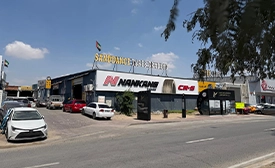
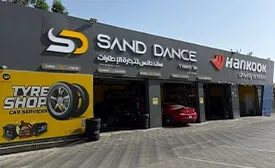
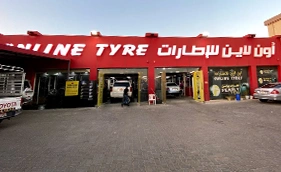
Korean brand tyres are widely available across the UAE through authorized retailers, tyre workshops, and online platforms offering home fitting services in Dubai, Abu Dhabi, and Sharjah. Before purchasing, it’s worth comparing prices across two or three sellers, since promotional bundles (a set of four with free fitting and balancing) can bring the effective per-tyre cost down noticeably.
If you’re unsure which model suits your car, checking your vehicle’s manual for the recommended tyre size and load index is the fastest way to shortlist options before you start comparing models side by side. Popular models on local roads include the Kinergy series for city commuting and the Dynapro AT2 range for SUVs
Getting the Most Out of Your Korean Brand Tyres
Buying the right set is only half the equation; how you maintain them determines whether you get 30,000 km or 50,000 km out of a set. A few habits make a real difference on UAE roads:
- Check pressure monthly. Heat causes tire pressure to fluctuate more than in cooler climates, and underinflated tyres wear faster and overheat sooner.
- Rotate every 8,000–10,000 km. This evens out wear across all four tyres, especially important on front-wheel-drive sedans.
- Get a wheel alignment after any pothole or curb impact. Misalignment is one of the fastest ways to shorten the lifespan of an otherwise high-quality tyre.
- Avoid parking in direct sun for extended periods when possible. UV exposure combined with heat accelerates rubber aging over time.
- Replace in full sets where possible. Mixing tread depths or brands across axles can affect handling, particularly on SUVs used for both city and light off-road driving.
If you’re comparing tyre options for a newly purchased vehicle, it’s also worth checking your vehicle handbook for the manufacturer’s recommended pressure and rotation intervals, since these can vary depending on vehicle type and load.
Frequently Asked Questions
Are Korean brand tyres good for hot climates like the UAE?
Yes. Korean manufacturers specifically engineer compounds to resist heat-related cracking and maintain grip in high-temperature conditions, making them a practical choice for UAE roads.
Which Korean brand tyres last the longest?
Kumho is generally regarded as offering some of the longest tread life among the mainstream options, though this varies by specific model and driving conditions.
Are Korean brand tyres cheaper than Michelin or Bridgestone?
Generally, yes. They’re positioned as Tier 2 products and usually cost 30–40% less than Tier 1 premium brands while offering strong everyday performance.
Can I use Korean-brand tyres on an SUV in the UAE?
Absolutely. All three major Korean tire makers, Hankook, Kumho, and Nexen, produce dedicated SUV and all-terrain lines suited to UAE roads and light off-road conditions.
Final Thoughts
For UAE drivers weighing performance against price, Korean brand tyres remain one of the smartest middle-ground choices on the market. Hankook, Kumho, and Nexen each bring distinct strengths cutting-edge R&D, comfort-focused engineering, and unbeatable value, respectively, but all three share a common thread: tyres built to handle extreme heat without draining your budget.
Before your next tyre change, it’s worth comparing at least two Korean-brand tyre models against your vehicle’s specs and your typical driving conditions. In most cases, you’ll find performance that comes remarkably close to premium brands, at a fraction of the cost.