
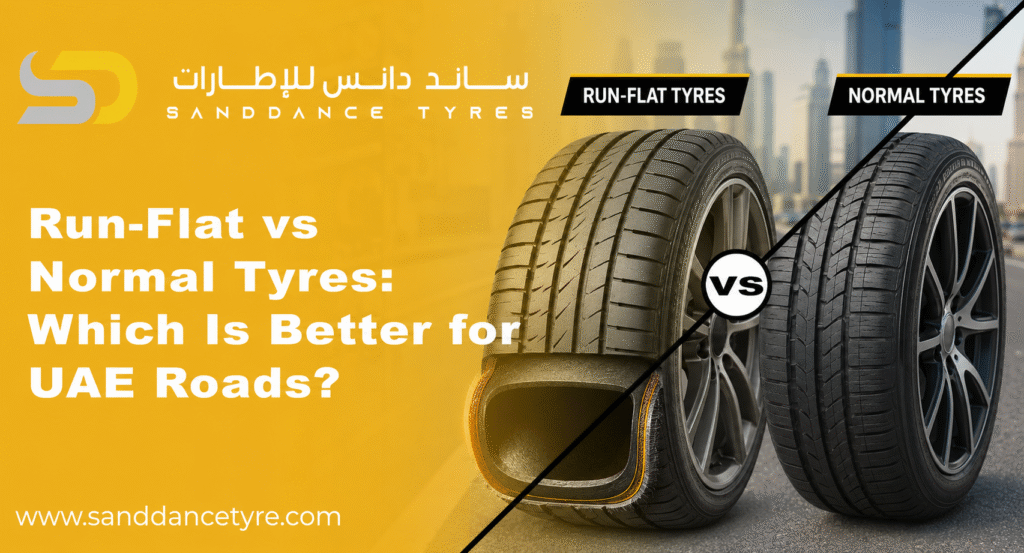
Choosing the right tyres is important for safe and comfortable driving in the UAE. With high temperatures, long highways, heavy traffic, and rough road conditions in some areas, your tyres need to handle more than just everyday driving. One option many UAE drivers consider is run flat tyres UAE, which are designed to keep a vehicle moving for a limited distance after losing air pressure. But are run-flat tyres actually better than normal tyres?
The answer depends on your driving habits, vehicle type, budget, and priorities. In this guide, we compare run-flat and normal tyres to help you understand which option is more suitable for UAE roads.
What Are Run-Flat Tyres?
Run-flat tyres are specially designed tyres that can support the weight of a vehicle even after losing most or all of their air pressure. They use reinforced sidewalls that help prevent the tyre from completely collapsing during a puncture.
Depending on the tyre and manufacturer, run-flat technology can allow you to continue driving for a limited distance at a controlled speed after a puncture. This can be particularly useful when you are travelling on a busy highway or in an area where stopping immediately may not be convenient.
However, run-flat tyres are not designed to be driven normally for an unlimited distance after a puncture. Drivers should follow the manufacturer’s recommended speed and distance limits.
What Are Normal Tyres?
Normal tyres, also called conventional or standard tyres, rely on air pressure to support the vehicle. When they suffer a major puncture, the tyre can quickly lose its ability to support the vehicle safely.
A punctured normal tyre usually requires immediate attention. Depending on the damage, you may need a temporary spare tyre, tyre repair, or roadside assistance.
The main advantage is that normal tyres are generally more affordable and can provide a softer, more comfortable ride compared with many run-flat designs.
Run-Flat vs Normal Tyres: Key Differences
The biggest difference between these two tyre types is what happens after a serious loss of air pressure.
Run-flat tyres are designed to provide temporary mobility after a puncture, while normal tyres generally need to be repaired or replaced before you can continue driving safely.
Run-flat tyres can offer extra convenience and peace of mind, especially for drivers who frequently travel long distances. Normal tyres, however, may offer better value for drivers who already carry a spare tyre or have easy access to roadside assistance.
Are Run-Flat Tyres Good for UAE Roads?
For many drivers, run flat tyres UAE can be a practical choice. The country’s extensive highway network means drivers may sometimes find themselves far from a suitable workshop after experiencing a puncture.
Run-flat technology can reduce the need to stop immediately and change a tyre beside a busy road. This can be especially helpful during long journeys between cities or on major highways.
The UAE’s hot climate is another important factor. High temperatures can increase tyre pressure and place additional stress on tyres. This does not mean run-flat tyres are immune to heat-related problems. Proper inflation, regular inspections, correct load ratings, and choosing tyres designed for your vehicle remain essential.
Advantages of Run-Flat Tyres
One of the biggest benefits of run-flat tyres is improved mobility after a puncture. Instead of stopping immediately, you may be able to drive to a safer location or tyre service centre.
They can also reduce the need for carrying a full-size spare tyre. Some vehicles are specifically designed without spare tyres because they use run-flat technology, which can free up boot space and reduce vehicle weight.
Another advantage is improved stability after a sudden loss of pressure. Because the reinforced sidewall helps maintain the tyre’s shape, the vehicle may remain easier to control than it would be with a completely deflated conventional tyre.
Disadvantages of Run-Flat Tyres
Run-flat tyres also have some disadvantages. Their reinforced construction can make them feel firmer than conventional tyres. Some drivers may notice a harder ride, particularly on uneven roads or over potholes.
They are also typically more expensive than comparable normal tyres. In addition, not every tyre workshop can provide the same level of expertise with every run-flat tyre model.
Another consideration is that a run-flat tyre may not always be repairable after being driven while deflated. Whether it can be repaired depends on the tyre manufacturer’s guidelines and the extent of the damage.
Advantages of Normal Tyres
Normal tyres remain a popular choice among UAE drivers because they offer a balance of cost, comfort, and performance.
They are generally less expensive to purchase than run-flat tyres. They also provide a wide range of choices across different brands, tread patterns, sizes, performance categories, and price levels.
For drivers who prioritise ride comfort, conventional tyres can also be attractive. Their softer sidewalls can help absorb road imperfections and provide a smoother driving experience.
If your vehicle has a spare tyre and you are comfortable using roadside assistance when necessary, normal tyres can provide excellent everyday performance.
Disadvantages of Normal Tyres
The biggest drawback is what happens during a puncture. Once a normal tyre loses significant air pressure, continuing to drive can damage the tyre, wheel, and suspension components.
A puncture can also become a safety concern if it happens at high speed or in a location where stopping is difficult.
This is why UAE drivers using conventional tyres should regularly check tyre pressure and know where their spare tyre and tyre-changing equipment are located.
Which Tyres Are Better for UAE Summer?
UAE summers can be extremely hot, making tyre maintenance particularly important. High ambient temperatures combined with hot road surfaces can increase tyre stress.
Neither run-flat nor normal tyres should be considered automatically better simply because of their construction. The quality of the tyre, correct size, load rating, speed rating, tread condition, and inflation pressure all matter.
For UAE driving, choose tyres that are suitable for your vehicle and local conditions. Check pressure regularly, especially before long highway journeys, and inspect the tread and sidewalls for signs of damage.
If your vehicle manufacturer specifies run-flat tyres, it is generally best to follow the recommended specification rather than switching to a different tyre type without professional advice.
Run-Flat vs Normal Tyres: Which Should You Choose?
Your driving habits should determine your choice.
If you frequently drive between Dubai, Abu Dhabi, Sharjah, Ajman, or other Emirates, run-flat tyres can provide useful peace of mind. Being able to reach a safe location after a puncture can be a major advantage.
Run-flat tyres can also be a good option for drivers who prefer not to carry a spare tyre or who want additional mobility after a puncture.
Normal tyres may be better for drivers who prioritise lower purchase costs and a softer ride. They are also a sensible choice when the vehicle is designed for conventional tyres and has a reliable spare-wheel setup.
Ultimately, there is no universal winner. The best option depends on your vehicle manufacturer’s recommendations and your individual driving requirements.
How to Maintain Tyres in the UAE
Regardless of whether you choose run-flat or normal tyres, regular maintenance is essential.
Check your tyre pressure according to the vehicle manufacturer’s recommended specifications. Do not rely only on visual inspection because a tyre can be underinflated without looking obviously flat.
Inspect the tread regularly and look for uneven wear, cracks, bulges, cuts, or other visible damage. Wheel alignment and balancing should also be checked when you notice vibration, steering issues, or irregular tyre wear.
Tyre age is another important consideration. Even when tread depth appears acceptable, rubber can deteriorate over time because of heat, sunlight, and environmental exposure.
For long UAE road trips, inspect your tyres before departure and make sure your vehicle’s tyre-pressure monitoring system is working correctly.
Final Verdict: Run-Flat or Normal Tyres?
Both tyre types have advantages for UAE drivers. Run flat tyres UAE can offer greater convenience and temporary mobility after a puncture, making them appealing for highway drivers and people who frequently travel long distances.
Normal tyres can offer better value, a comfortable ride, and a broader selection of affordable options. However, they require immediate attention after a serious puncture.
For most drivers, the right choice should be based on the vehicle manufacturer’s specifications, driving conditions, budget, comfort preferences, and access to roadside support. Whichever option you choose, maintaining the correct tyre pressure and replacing worn or damaged tyres on time are essential for safe UAE driving.
If you are unsure whether run-flat or normal tyres are suitable for your vehicle, speak with a professional tyre specialist before making a purchase.