
If you’ve ever seen that little tire-shaped warning light pop up on your dashboard, you already know how unsettling it feels. TPMS service in Dubai isn’t just a technical checkbox — it’s one of the simplest things you can do to keep yourself, your passengers, and everyone else on the road a lot safer. Whether you’re cruising down Sheikh Zayed Road or navigating the tighter streets of Deira, your tire pressure monitoring system is quietly working in the background. And when it stops working properly? That’s when things can go wrong fast.
What Exactly Is TPMS — and Why Should You Care?
TPMS stands for Tire Pressure Monitoring System. It’s a built-in safety feature that monitors the air pressure inside your tires in real time and alerts you when pressure drops to an unsafe level — typically 25% below the recommended PSI.
Most modern vehicles sold in the UAE come equipped with TPMS as standard. But here’s the thing: the system itself needs maintenance. Sensors wear out, batteries die (yes, TPMS sensors have batteries), and recalibration is sometimes needed after tire changes or rotations.
Think of it this way — your TPMS is only as good as the last time someone checked it properly.
Why TPMS Service Matters More in Dubai’s Climate
The Heat Factor Is Real
Dubai’s climate is genuinely brutal on tires. Summer temperatures regularly exceed 45°C on the road surface, and that heat alone causes significant tire pressure fluctuations. What reads as normal pressure in the morning can spike dangerously by noon — and drop again at night.
Your TPMS helps you track those changes in real time. But if the sensor is faulty, you’re essentially flying blind. That’s not a risk worth taking.
Highway Driving at High Speed
The UAE has some of the highest speed limits in the world. Under-inflated tires at high speed generate excessive heat and can lead to blowouts. A functioning TPMS gives you early warning before a small pressure drop becomes a serious incident.
How TPMS Works — The Basics
There are two types of TPMS systems you’ll encounter:
Direct TPMS uses physical sensors mounted inside each wheel. These sensors measure actual air pressure and transmit the data to your car’s computer. They’re more accurate but require battery replacements and sensor replacements over time.
Indirect TPMS works through your ABS wheel speed sensors. It detects pressure loss by measuring how fast each wheel rotates — a slightly deflated tire spins faster. It doesn’t give you an actual PSI reading, but it does alert you when something’s off.
Most newer vehicles in Dubai use direct TPMS, which is generally the more reliable of the two.
Common TPMS Problems We See in the UAE
Sensor Battery Death
TPMS sensors run on small lithium batteries that typically last 5–10 years. Once the battery dies, the sensor stops transmitting. You’ll usually get a warning light, but it won’t tell you your actual pressure anymore. At that point, the system is essentially useless.
Sensor Damage from Potholes or Rim Changes
This is common in the UAE — sensors can get damaged during tire mounting, especially if the technician isn’t careful. A knocked sensor might still show as active but give inaccurate readings. Worse, it might fail silently.
Recalibration Needed After Tire Rotation or Replacement
Every time your tires are rotated, changed, or replaced, your TPMS should be recalibrated. Without proper recalibration, the system may display pressure from the wrong wheel position, which defeats the whole purpose.
When Should You Book a TPMS Service in Dubai?
Here are the clear signs it’s time to get your TPMS checked:
- The TPMS warning light stays on even after you’ve inflated your tires
- The light blinks or flashes (this usually indicates a sensor fault, not just low pressure)
- You’ve recently had tires changed or rotated and the light hasn’t reset
- Your vehicle is over 5 years old and you’ve never had the sensors checked
- You’re experiencing uneven tire wear despite regular pressure checks
Don’t ignore any of these. A blinking TPMS light especially needs attention quickly.
What Does a TPMS Service Actually Include?
H3: At a Professional Tyre Centre
When you take your car to a specialist for TPMS service in the UAE, here’s what a proper service should cover:
Sensor Inspection and Testing — Each sensor is individually tested to confirm it’s transmitting correctly and that the battery is within acceptable range.
Pressure Verification — Technicians manually verify tire pressures against manufacturer recommendations for your specific vehicle.
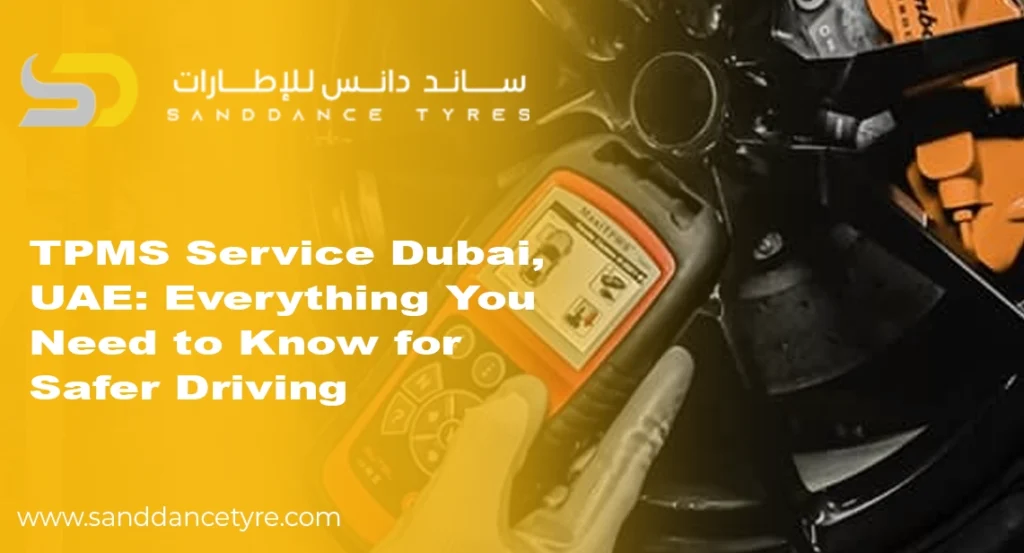
System Reset and Recalibration — The TPMS control unit is reset and recalibrated, especially important after tire work. This is often done using a dedicated TPMS diagnostic tool that communicates with each sensor individually.
Sensor Replacement (if needed) — If a sensor has a dead battery or is physically damaged, it needs to be replaced. This is a relatively straightforward job but needs to be done with the right tools so the valve stem isn’t damaged.
Warning Light Diagnosis — If your dashboard light is on, a proper diagnostic scan identifies exactly which sensor is triggering it and why.
For a complete and transparent TPMS service in Dubai, Sand Dance Tyre handles all of this with the kind of attention that keeps your car safe on UAE roads.
Can You Ignore the TPMS Warning Light?
Honestly? A lot of drivers do. They assume it’s a minor issue, pump up the tires, and move on. Sometimes that’s fine. But here’s the reality:
If the light comes back on within a few days, or if it blinks rather than stays solid, that’s your car telling you there’s a deeper problem. Ignoring a faulty TPMS doesn’t just mean you might be driving on low pressure without knowing it — it means you’ve lost one of your primary early-warning systems for tire failure.
In a country where road speeds are high and temperatures push tires to their limits, that’s a meaningful risk.
TPMS and Your Tyre Choice: They Work Together
Here’s something a lot of drivers don’t think about — your tire type affects how your TPMS behaves. High-performance tires, run-flat tires, and specialty tires all have different pressure requirements and behave differently in UAE heat.
If you’re upgrading your tires, it’s worth pairing that with a TPMS check and recalibration. For example, Bridgestone tyres are a popular choice in Dubai because of their heat resistance and performance profile — but even premium tires need a properly functioning monitoring system to deliver on that promise.
The tires and the TPMS work as a team. One without the other leaves a gap.
How Much Does TPMS Service Cost in the UAE?
Costs vary depending on what needs to be done:
- TPMS reset/recalibration — typically the most affordable service, often included with a tire change at a reputable centre
- Individual sensor replacement — cost depends on your vehicle make and model; luxury and European vehicles tend to have more expensive sensors
- Full sensor set replacement — required if all sensors are aging or if you’re fitting new wheels
What matters most isn’t just the cost — it’s making sure the service is done properly. A reset done incorrectly can leave your system reading the wrong data, which is potentially worse than no TPMS at all.
Choosing the Right TPMS Service Provider in Dubai
Not every tyre shop has the diagnostic equipment needed to properly service TPMS sensors. Here’s what to look for:
Dedicated TPMS tools — Ask whether the shop uses a manufacturer-approved TPMS diagnostic scanner, not just a generic OBD reader.
Experience with your vehicle brand — Sensor programming varies significantly between manufacturers. European brands (BMW, Mercedes, Audi) in particular have more complex TPMS systems.
Transparency — A good tyre centre will show you which sensors are failing before recommending replacements.
Full tyre service capability — TPMS service rarely stands alone. You want a centre that can handle the full picture: rotation, balancing, alignment, and sensor work together. Explore the complete range at Sand Dance Tyre’s TPMS service page to understand what a proper service looks like.
Maintaining Your TPMS Between Services
Between professional visits, there are a few habits that help your TPMS function properly:
Check pressure manually once a month. TPMS alerts you to significant drops, but it’s not a substitute for manual checks. Use a proper gauge, not the built-in air compressor meters at petrol stations (those are often inaccurate).
Check pressure when tires are cold. Hot tires read higher. Always check first thing in the morning or after the car has been parked for a few hours.
Follow manufacturer PSI recommendations. The sticker on your driver’s door jamb has the correct pressures for your specific vehicle. Don’t guess, and don’t use the maximum pressure listed on the tire sidewall — that’s a different number entirely.
Don’t ignore seasonal changes. Even Dubai has temperature variation between summer and winter months. Cooler nights in January and February can drop your tire pressure noticeably — enough to trigger your TPMS if you don’t compensate.
A Quick Word on TPMS in UAE Law and Vehicle Inspections
Vehicle safety inspections in the UAE (Tasjeel/Wasel) check that safety systems are functioning. A persistently illuminated TPMS warning light can flag during inspection. More importantly, driving with a known faulty safety system is considered negligent — and in the event of an accident, that matters legally.
Getting your TPMS serviced isn’t just about comfort. It’s about being a responsible driver on shared roads.
Final Thoughts
Your Tire Pressure Monitoring System is one of those features that’s easy to take for granted — right up until it fails and you realize how much you relied on it. Regular TPMS service in Dubai keeps that system honest, gives you accurate information about your tires, and adds a meaningful layer of protection to every journey.
Whether you’re due for a sensor check, dealing with a warning light that won’t go away, or simply haven’t had your system looked at since you bought the car, now is the right time to sort it out. Your tires do a lot of work in UAE conditions. Give them — and yourself — the backup they deserve.