
Tyre Rotation vs Wheel Alignment: What’s the Difference?
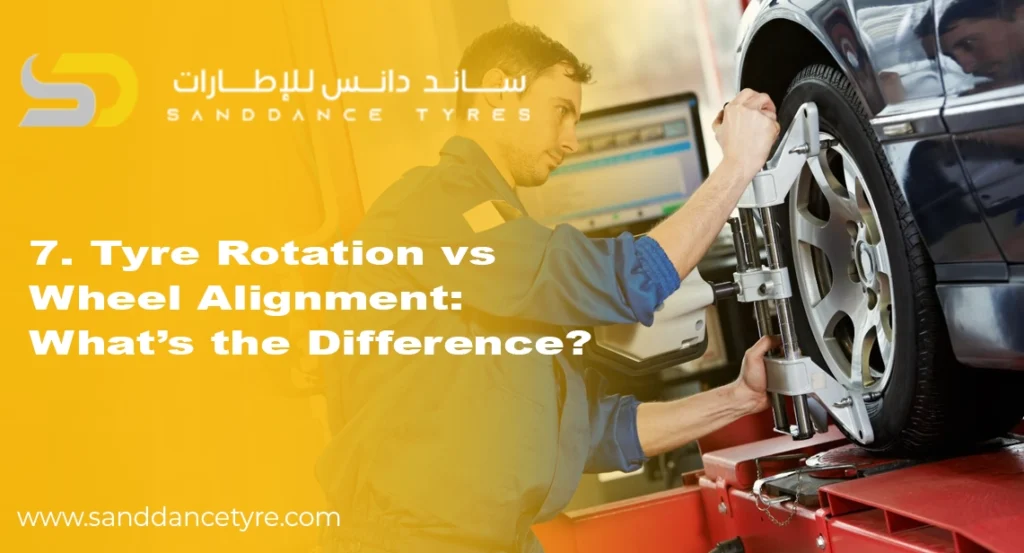
If you have ever been told that your car needs a tire rotation vs. wheel alignment service, you may wonder whether both mean the same thing. They do not. Although tyre rotation and wheel alignment both support better tyre wear, handling, and vehicle performance, they address different issues. Tyre rotation changes the position of the tyres on your vehicle to help distribute tread wear more evenly. Wheel alignment, on the other hand, involves checking and adjusting the angles of the wheels and suspension so the vehicle tracks correctly. Understanding the difference can help you choose the right service instead of paying for maintenance your vehicle does not actually need. What Is Tyre Rotation? Tyre rotation is the process of moving tyres from one position on the vehicle to another. For example, the front tyres may be moved to the rear, depending on the vehicle’s drivetrain, tyre design, and manufacturer’s recommended rotation pattern. The main purpose is to balance normal tread wear. Front tyres often experience different loads from rear tyres because they handle steering and, on many vehicles, braking and power delivery. Regular rotation can therefore help the tyres wear more evenly over time. However, not every tyre can be moved in every direction. Directional tyres generally need to remain on the same side of the vehicle, while vehicles with staggered tyre sizes may have limited rotation options. Always follow the tyre and vehicle manufacturer’s recommendations. What Is Wheel Alignment? Wheel alignment is different because the tyres are not simply moved to another position. Instead, technicians measure the vehicle’s steering and suspension geometry and adjust the relevant angles according to manufacturer specifications. The primary alignment angles include camber, caster, and toe. Correct alignment helps the tyres maintain appropriate contact with the road and allows the vehicle to travel straight with predictable steering. A car with poor alignment may pull toward one side, have an off-centre steering wheel, or develop unusual wear on the inner or outer edges of its tyres. Tyre Rotation vs Wheel Alignment: The Main Difference The easiest way to remember the difference is simple: Tyre rotation changes where the tyre sits. Wheel alignment changes how the wheel is positioned and points relative to the vehicle and road. Feature Tyre Rotation Wheel Alignment Main purpose Distribute tyre wear Correct wheel and suspension geometry What changes? Tyre/wheel position Wheel alignment angles Helps uneven front/rear wear Yes Not directly Corrects a car pulling sideways No Yes, when alignment is the cause Corrects an off-centre steering wheel No Often Requires suspension adjustment No Yes, where adjustment is available Frequency Follow vehicle/tyre manufacturer guidance Check when symptoms or impacts occur and follow manufacturer guidance These are separate services and one does not replace the other. When Does Your Car Need Tyre Rotation? Tyre rotation is mainly useful when your tyres are wearing at different rates. Regular rotation can help distribute this wear across the available tyre positions. You may want to check your rotation schedule when you notice that the front and rear tyres have noticeably different tread wear. It is also sensible to have the tyres inspected during routine servicing. There is no single rotation interval that applies to every vehicle. Some manufacturers specify mileage-based intervals, while others provide recommendations based on service schedules. For example, tyre-service guidance commonly recommends rotation at several-thousand-kilometre intervals, but your vehicle’s owner’s manual should take priority. Signs You May Need Wheel Alignment Unlike tyre rotation, wheel alignment is usually associated with steering or handling symptoms. Common warning signs include: Car Pulls to One Side If the vehicle consistently drifts or pulls left or right on a reasonably level road, alignment should be inspected. Steering Wheel Is Off-Centre If you are travelling straight but the steering wheel sits noticeably to one side, there may be an alignment or steering-related issue. Uneven Tyre Wear Excessive wear on one edge of a tyre can indicate incorrect wheel geometry. However, suspension problems, tyre pressure, and other mechanical issues can also contribute to abnormal wear. Steering Feels Different Changes in steering response or stability can be a reason to have the alignment and suspension inspected. Hitting potholes, kerbs, or other road obstacles can also affect alignment, particularly if the impact is significant. Does Tyre Rotation Affect Wheel Alignment? No, tyre rotation does not normally change wheel alignment. During a rotation, the wheel and tyre assemblies are removed and repositioned on the vehicle. The steering and suspension geometry that determines alignment is not adjusted simply because the tyres have changed positions. However, a tyre rotation can reveal an existing alignment problem. For example, a technician may notice excessive inner-edge wear while inspecting the tyres. In that situation, an alignment check may be recommended to identify the underlying cause. Can You Need Both Services? Yes. Tyre rotation and wheel alignment can be required at the same time because they solve different problems. Imagine your front tyres are wearing faster than your rear tyres, while your car also pulls slightly to the right. Rotation may help redistribute the existing tread wear, while an alignment inspection can determine whether incorrect wheel geometry is causing the pulling or abnormal wear. Performing only one service may therefore leave the other problem unresolved. Tyre Rotation vs Wheel Alignment vs Wheel Balancing Another service that is often confused with both is wheel balancing. Wheel balancing deals with the distribution of weight around the tyre and wheel assembly. An imbalance can cause vibration or shaking, particularly as speed increases. Technicians use balancing equipment and small weights to correct the uneven distribution. So, think of the three services this way: Tyre rotation: Where the tyre sits. Wheel alignment: Where the wheel points. Wheel balancing: How evenly the wheel and tyre assembly spins. Knowing this distinction can make it much easier to explain your vehicle’s symptoms to a technician. Why Tyre Maintenance Matters in the UAE Driving conditions can put additional demands on tyres and suspension components. High temperatures, long-distance driving, speed bumps, potholes, and kerbs can all contribute to
Best Tyres in Dubai for Every Budget: Premium, Mid-Range & Affordable Options
Choosing the right tyres can make a noticeable difference to your car’s braking, handling, comfort, fuel efficiency, and overall driving safety. But with so many brands and price points available, finding the best tyres in Dubai is not simply about choosing the most expensive option. The right choice depends on how much you drive, your vehicle type, road conditions, and how much you want to spend. Dubai’s hot climate, heavy traffic, long highway journeys, and high road speeds put additional demands on tyres. That is why drivers should consider heat resistance, wet and dry grip, tread life, comfort, and the tyre’s specifications before buying. Current UAE tyre comparisons generally place premium tyres at the top for performance and longevity, while mid-range tyres offer a strong balance between price and performance. Whether you drive a compact sedan through the city, commute daily on Sheikh Zayed Road, or own a large SUV, there are tyres in Dubai to match almost every budget. Here is how the three main price categories compare. Premium Tyres in Dubai: Maximum Performance and Long-Term Value Premium tyres are designed for drivers who prioritise safety, handling, comfort, and durability over the lowest upfront price. Brands such as Michelin, Bridgestone, Continental, Pirelli, and Goodyear are commonly positioned in the premium segment. These tyres generally use advanced tread designs and rubber compounds to provide strong dry and wet grip, stable handling, reduced road noise, and better wear performance. For drivers who regularly cover long distances or spend considerable time on Dubai’s highways, paying more upfront can make sense. Michelin is particularly well known for combining comfort, wet grip, and long tread life. Bridgestone is another popular premium choice, especially for drivers looking for highway stability and durability. Continental is often preferred for balanced handling and wet-weather performance, while Pirelli is a strong option for performance-focused and premium vehicles. Prices vary significantly according to tyre size and vehicle, but current UAE market comparisons put premium tyres roughly from AED 550–1,500 or more per tyre for many common sizes, with larger SUV and performance fitments potentially costing considerably more. Premium tyres make the most sense if you drive frequently, regularly travel between Dubai and other emirates, own a powerful or luxury vehicle, or simply want stronger performance and a more refined driving experience. Mid-Range Tyres: The Best Balance for Most Dubai Drivers For many motorists, mid-range tyres offer the sweet spot between affordability and performance. You do not necessarily need to spend premium-brand money to get dependable tyres for everyday Dubai driving. Brands such as Hankook, Yokohama, Falken, Kumho, Nexen, and selected Goodyear and Dunlop ranges sit around the mid-range or value-premium segment depending on the specific model. These manufacturers offer tyres designed for daily commuting, highway driving, family cars, crossovers, and SUVs. A good mid-range tyre can provide strong dry grip, acceptable wet performance, good comfort, and respectable tread life without the premium price tag. For someone driving to work every day, making regular motorway trips, and occasionally travelling between Dubai and Abu Dhabi, this category can provide excellent overall value. Current UAE pricing guides place many mid-range tyres around AED 300–500 per tyre, although the actual price depends heavily on tyre size, model, speed rating, and vehicle. Hankook is worth considering for drivers looking for a balance between price, comfort, and mileage. Yokohama is another popular choice for sedans and SUVs, while Falken can be attractive for drivers who want responsive handling at a competitive price. Affordable Tyres in Dubai: When Budget Makes Sense Budget tyres can be a practical option when the priority is keeping replacement costs low. They can suit drivers who cover relatively few kilometres, mainly drive around the city, or own an older vehicle where premium tyres may not provide enough additional value. However, the cheapest tyre is not automatically the best deal. A low purchase price can become less attractive if the tyre wears quickly, becomes noisy, or delivers weaker wet-road performance. Current Dubai and UAE market estimates show some budget tyres starting at around AED 180–300 per tyre for common smaller-car sizes, while other value options can cost considerably more depending on the manufacturer and size. If you choose an affordable tyre, pay particular attention to its manufacturing date, specifications, load rating, speed rating, and local suitability. Buying from an unknown source simply because the price is lower can create unnecessary risks. For a small car that is driven mostly around town, a reputable affordable tyre may be perfectly reasonable. But if you regularly drive at highway speeds, carry heavy loads, or travel long distances, spending more on a better-performing tyre may be the smarter decision. Premium vs Mid-Range vs Budget Options: Which Should You Buy? The best category depends on how and where you drive rather than simply how much money you have available. Premium tyres are ideal for high-mileage drivers, luxury and performance vehicles, frequent highway users, and motorists who want maximum comfort and performance. Mid-range tyres are arguably the most practical choice for everyday drivers because they offer a strong compromise between purchase price, durability, handling, and comfort. Affordable tyres work best for low-mileage city driving where keeping the initial replacement cost down is the main concern. A recent UAE comparison estimates budget tyres at roughly AED 180–300, mid-range tyres at AED 300–500, and premium tyres at AED 550–1,500+ per tyre depending on size and model. These figures are only market ranges, so you should always check the exact tyre size and current fitted price before purchasing. Why Dubai’s Climate Matters When Choosing Tyres Price should never be the only factor when shopping for tyres in Dubai. The UAE climate creates conditions that can accelerate tyre ageing and wear. During summer, high temperatures can put additional stress on rubber compounds. Long periods of driving on hot roads can also expose tyres to substantial heat cycles. Add Dubai’s busy roads, frequent braking and acceleration, and high-speed highway driving, and tyre quality becomes even more important. Rain is less frequent than in
How to Find the Best Tyre Shop Near Me in Dubai
When your tyres start showing signs of wear, finding the best tyre shop near me involves more than simply choosing the first Google result. In Dubai, where high temperatures, long-distance driving and busy roads can put extra pressure on tyres, choosing the right tyre shop can make a real difference to your vehicle’s safety and performance. A reliable tyre shop should offer quality tyres, professional fitting, wheel balancing, alignment and honest advice. Dubai has many tyre service providers across areas such as Al Quoz, Deira, Al Barsha, Al Qusais and Ras Al Khor, so knowing what to look for can help you make a smarter choice. Current local listings also show a wide range of tyre shops and service centres throughout Dubai. What Makes the Best Tyre Shop Near Me? The best tyre shop is not necessarily the one with the lowest price. You should consider the quality of the tyres, technician experience, available services, warranty and customer reviews before making your decision. A professional shop should first inspect your vehicle and understand your tyre requirements. It should then recommend suitable options based on your vehicle, driving habits and budget rather than simply pushing the most expensive brand. When searching online for the best tyre shop near me, compare several nearby options instead of choosing the first result you see. Check the Tyre Brands Available A good tyre shop should provide tyres from reputable manufacturers and offer different options for sedans, SUVs, 4x4s and other vehicles. Your choice should depend on factors such as tyre size, vehicle specifications, driving conditions and budget. Premium tyres can provide advantages in areas such as comfort, braking and road handling, while reliable mid-range options may provide good value for everyday driving. Always check the tyre size printed on your existing tyre sidewall or refer to your vehicle manufacturer’s specifications before purchasing. Tyre retailers also recommend verifying the exact size because some vehicles can have more than one compatible tyre size. Look Beyond Tyre Replacement Tyre replacement is only one part of proper tyre care. The best tyre shop near me should ideally provide supporting services that help maintain your wheels and tyres. Wheel balancing is important when replacing tyres or when you experience vibrations while driving. Wheel alignment can help address uneven tyre wear and steering-related issues. Tyre rotation can also help distribute wear more evenly when recommended for your vehicle. Some Dubai tyre centres provide additional services such as puncture repair, nitrogen inflation, TPMS-related services and other wheel maintenance. Consider Location and Convenience Location matters when you need tyre service. A nearby workshop can save time, particularly when you have a flat tyre or need urgent replacement. Dubai has tyre shops across several major areas, including Al Quoz, Deira, Umm Ramool, Al Qusais and Silicon Oasis. If you regularly drive long distances or travel on Dubai’s major roads, you may also want to choose a shop that provides emergency or mobile tyre services. Some providers offer mobile fitting, allowing technicians to come to your location instead of requiring you to drive to the workshop. Compare Prices Before Buying Price is another important consideration when choosing a tyre shop in Dubai. However, the cheapest quote is not always the best deal. Ask whether the quoted price includes tyre fitting, balancing, valves, installation and any applicable warranty. Comparing the complete package makes it easier to understand the actual value you are receiving. Tyre prices can vary depending on brand, size, vehicle type and specifications, so it is better to compare like-for-like products rather than comparing different tyre models solely by price. Read Customer Reviews Online reviews can help you identify patterns in customer experiences. Look for feedback about tyre quality, installation, waiting times, pricing transparency and after-sales service. Do not rely only on the star rating. A shop with hundreds or thousands of reviews can provide a broader picture than one with only a handful of ratings. You should also check whether recent customers are reporting consistent service. Ask About Tyre Manufacturing Date Before purchasing new tyres, ask the shop to show you the date of manufacture. Tyres are made from rubber compounds that can age over time, so you should avoid purchasing stock that has been sitting for an unnecessarily long period. Check the tyres’ date code and make sure the tyres are appropriate for your vehicle. A professional tyre shop should have no problem explaining the markings and answering your questions. Make Sure Professional Fitting Is Included Correct installation is just as important as choosing the right tyre. Poor fitting or incorrect wheel balancing can affect driving comfort, handling and tyre wear. A professional technician should install the tyres correctly and check the wheels after fitting. Computerised balancing equipment can help identify and correct imbalance, while alignment equipment can help ensure the wheels are correctly positioned. For this reason, choosing a tyre shop based solely on cheap tyre prices can be a mistake. Look at the complete service package. Consider Dubai’s Driving Conditions Dubai’s climate should also influence your tyre choice. High temperatures and frequent highway driving can place additional demands on tyres. When choosing tyres, consider where and how you normally drive. Someone who mostly drives within the city may have different requirements from a driver who regularly travels long distances between Dubai and other emirates. A knowledgeable tyre technician can help you select a suitable tyre specification rather than simply recommending a popular brand. Check Warranty and After-Sales Support Before paying for your tyres, ask about the manufacturer’s warranty and the shop’s after-sales policy. Find out what happens if you experience a tyre-related issue after installation. A reputable tyre shop should clearly explain warranty coverage, fitting terms and any conditions that apply. Clear warranty terms and responsive after-sales support can make it easier to deal with problems after installation. When Should You Replace Your Tyres? Do not wait until a tyre completely fails before replacing it. Check your tyres regularly for visible damage, cracks, bulges, uneven tread wear or other
Bridgestone Tyres in the UAE: Designed for Heat, Comfort & Long Drives
Driving in the UAE means dealing with hot weather, warm road surfaces, long highways, heavy traffic, and frequent city-to-city journeys. These conditions make tyre quality especially important. Choosing the right tyres can improve driving comfort, stability, braking performance, and confidence on the road. Bridgestone tyres in the UAE are a popular choice for drivers looking for a balance of comfort, durability, performance and dependable road grip. Bridgestone offers different tyre ranges designed for various vehicles and driving needs. Its Middle East and Africa range includes Turanza, Potenza, Dueler, Ecopia, Alenza, and Duravis tyres, covering passenger cars, SUVs, 4x4s, and commercial vehicles. Why Tyres Matter in UAE Driving Conditions UAE roads present unique driving conditions compared with many other markets. Summer temperatures can become extremely high, while long-distance highways connect cities such as Dubai, Abu Dhabi, Sharjah, Ajman, and Ras Al Khaimah. Tyres are constantly in contact with the road, so their condition and suitability directly affect the driving experience. A good set of tyres should provide reliable grip, stable handling, controlled braking, and a comfortable ride during daily commuting and long highway trips. Regular tyre checks are also important. Correct tyre pressure, proper wheel alignment, balanced wheels, and sufficient tread depth can help tyres perform as intended. What Makes Bridgestone UAE Tyres a Popular Choice? Bridgestone has developed a broad tyre portfolio for different driving requirements. Rather than offering one tyre for every vehicle, the brand provides different ranges based on specific performance needs. For example, Turanza focuses on comfortable touring and wet and dry performance, while Potenza is aimed more toward drivers seeking sporty handling. Dueler is designed for SUVs and 4×4 vehicles, including highway and off-road applications. This variety allows UAE drivers to select a tyre based on their vehicle, driving style, and typical road conditions. Bridgestone Tyres for Comfortable Long Drives Long-distance driving is common in the UAE. Whether you regularly travel between emirates or spend hours commuting on highways, tyre comfort can make a noticeable difference. The Bridgestone Turanza range is particularly focused on touring comfort. Bridgestone describes Turanza as a range designed to balance comfort, security, driving performance, and advanced tyre technology. The Middle East range includes Turanza 6, which is positioned for touring cars, SUVs, and 4×4 vehicles. A comfortable tyre can help reduce the harshness and road noise transferred into the cabin. This can make longer journeys more relaxing, particularly when spending several hours behind the wheel. Bridgestone Tyres for SUVs and 4x4s SUVs are extremely popular across the UAE, and they often require tyres capable of handling both highways and more demanding surfaces. Bridgestone’s Dueler range is developed specifically for SUVs and 4×4 vehicles. Depending on the model, Dueler tyres can focus on highway performance, comfort, wet-road control, durability, or off-road traction. For drivers who mainly use their SUV around Dubai, Abu Dhabi, or other urban areas, a highway-oriented SUV tyre may be appropriate. Drivers who frequently travel on gravel, sand, or off-road trails may require a more suitable all-terrain option. The important point is to choose the tyre according to actual usage rather than simply selecting the most aggressive tread pattern. Bridgestone Turanza for Touring and Daily Driving For sedan owners and drivers who prioritise comfort, Turanza can be a suitable option. The Turanza range is designed for wet and dry road conditions, with models offering combinations of comfort, mileage, wet performance, and efficiency. For example, Bridgestone lists the Turanza 6 as offering best-in-class wet performance, superior mileage, and improved fuel or energy efficiency, based on its stated test results. This makes the range worth considering for drivers who spend most of their time on paved roads and want a balance between everyday comfort and road performance. Bridgestone Potenza for Performance-Oriented Drivers Not every UAE driver wants the same type of tyre. Some drivers place greater importance on steering response, cornering, and sporty handling. That’s where the Potenza range comes in. Bridgestone positions Potenza around high-performance driving and responsive handling, making it more suitable for drivers who want a sportier feel from their vehicle. However, performance tyres should always be selected in accordance with the vehicle manufacturer’s recommended tyre size and specifications. A tyre that is excellent for one vehicle may not be the right choice for another. Bridgestone Alenza for Premium SUVs Premium SUV owners may want a tyre that complements the vehicle’s comfort and road performance. Bridgestone’s Alenza family is engineered specifically for SUVs, with an emphasis on performance and comfort. Bridgestone describes Alenza tyres as being designed for SUV performance on wet and dry roads. For UAE drivers using premium SUVs mainly for city driving and highway travel, an appropriate Alenza tyre can be worth considering when it matches the vehicle’s required specifications. Why Tyre Pressure Is Important in the UAE Even high-quality tyres require proper maintenance. One of the simplest things UAE drivers can do is regularly check tyre pressure. Incorrect pressure can affect handling, braking, comfort, and tyre wear. Underinflation can also increase rolling resistance, while excessive pressure may affect ride comfort and the tyre’s contact with the road. Always follow the vehicle manufacturer’s recommended tyre pressure rather than relying on a generic pressure figure. It is also sensible to check tyre pressure when the tyres are cold and inspect them regularly for visible damage, uneven wear, cracks, or unusual bulges. How to Get More Life From Your Bridgestone Tyres Buying premium tyres is only part of the equation. Proper maintenance can help you get the best possible service from them. Wheel alignment should be checked if the vehicle pulls to one side, the steering wheel is off-centre, or the tyres show uneven wear. Wheel balancing is important when vibrations appear, particularly at higher speeds. Tyre rotation, where recommended for your vehicle and tyre setup, can also help manage uneven wear between tyres. Drivers should also avoid ignoring small signs of tyre damage. A puncture, sidewall damage, vibration, or sudden pressure loss should be inspected by a qualified tyre professional. When Should You Replace Your
Top Mobile Tire Change Services in Dubai & Abu Dhabi for Expats
Moving to the UAE as an expat comes with plenty of adjustments, from learning new roads to managing daily travel in a busy city. One thing every car owner eventually faces is a tyre problem. “A flat tyre, damaged tread, or sudden pressure loss can occur while you are commuting to work, shopping, travelling between emirates, or even parked at home.” This is where a mobile car tyre service can make life much easier. Instead of arranging a tow truck or driving to a tyre shop with a damaged tyre, a mobile technician can come directly to your location. Services may be available at your home, workplace, parking area, or roadside, depending on the provider and location. Mobile tyre services in the UAE commonly include tyre replacement, puncture repair, fitting, balancing, and roadside assistance. What Is a Mobile Car Tyre Service? A mobile car tyre service brings tyre-related assistance directly to your vehicle. Instead of taking your car to a workshop, a technician arrives in a service van equipped with tyre tools and replacement equipment. For expats who may not know the location of nearby garages or tyre shops, this can be particularly convenient. You can share your vehicle location, explain the problem, and arrange assistance without having to move a vehicle that may not be safe to drive. Depending on the provider, mobile services can include flat tyre replacement, puncture repair, new tyre fitting, tyre pressure checks, wheel balancing, tyre rotation, and other roadside tyre assistance. Why Expats in Dubai and Abu Dhabi Prefer Mobile Tyre Services Dubai and Abu Dhabi have extensive road networks, busy commutes, and large residential and commercial areas. A tyre problem can therefore become a major inconvenience if you are unfamiliar with local workshops. A mobile service removes much of this difficulty. You do not necessarily need to search for a garage, arrange transportation, or wait for a tow truck. Instead, professional assistance can come to your location. For busy professionals, this also saves valuable time. Some providers offer tyre fitting and replacement at homes or offices, allowing customers to continue with their day while the technician handles the vehicle. Mobile Tyre Change Services in Dubai Dubai has a large selection of mobile tyre providers offering doorstep and roadside assistance. Services vary between companies, so it is important to confirm coverage before booking. A typical Dubai mobile tyre appointment may involve sharing your car make, model, tyre size, and location. The technician can then determine which tyres or equipment are required before travelling to you. Some providers operate from areas such as Al Quoz and Umm Ramool and offer mobile fitting across Dubai. Other providers operate throughout the UAE, so coverage can vary according to the company. For expats living in areas such as Dubai Marina, Downtown Dubai, Jumeirah, Business Bay, Arabian Ranches, or Dubai Hills, checking the exact service area before booking can help avoid unnecessary delays. Mobile Tyre Change Services in Abu Dhabi Abu Dhabi also has mobile tyre services designed for customers who need assistance at home, work, or on the roadside. Mobile services can be especially useful if you experience a flat tyre in areas away from your regular garage. Depending on the provider, technicians may offer tyre replacement, puncture repair, balancing, and other roadside support. Some Abu Dhabi mobile car services cover locations such as Mussafah, Baniyas, Khalifa City, Reem Island, Yas Island, and other parts of the emirate. However, coverage and response times differ between providers, so always confirm your location when booking. What Services Should You Expect? A good mobile car tyre service should provide more than simply changing a flat tyre. The exact package depends on the provider, but common services include tyre replacement, puncture repair, tyre fitting, tyre rotation, pressure checks, and wheel balancing. If you are replacing old tyres, the technician should also check the condition of the wheels, valves, and tyre pressure. Proper installation is important because incorrectly fitted or inflated tyres can affect vehicle stability and handling. Some mobile providers also offer battery replacement and other roadside assistance, which can be useful if your tyre problem occurs alongside another vehicle issue. How to Choose the Right Mobile Tyre Service as an Expat Choosing the cheapest service is not always the best approach. Your priority should be safe and professional tyre installation. Start by checking whether the provider covers your exact location in Dubai or Abu Dhabi. Then ask whether the technician can supply the correct tyre size for your vehicle. If you already know the tyre brand and specification you need, provide those details when booking. It is also worth asking about fitting, balancing, warranty, call-out charges, and old tyre disposal. Some providers offer manufacturer warranties with replacement tyres, while others may have separate workmanship guarantees. Most importantly, use a provider with qualified technicians and appropriate equipment. Professional tyre fitting should include correct wheel installation and tyre pressure checks rather than simply mounting the tyre and leaving. When Should You Call a Mobile Tyre Service? You should consider calling a mobile tyre technician when your vehicle has a flat or severely damaged tyre and driving to a workshop could be unsafe. A mobile service can also be useful when your tyres have reached the end of their usable life and you want replacement tyres fitted at home or work. If you notice repeated pressure loss, sidewall damage, cracks, unusual vibration, or uneven tread wear, have the tyres inspected before continuing to drive. For emergency situations, move the vehicle to a safe location if possible and use hazard lights. Avoid standing close to moving traffic while waiting for assistance. Mobile Tyre Service vs. Traditional Tyre Shop The main difference is where the work takes place. At a traditional tyre shop, you drive your vehicle to the workshop and wait while technicians complete the job. With a mobile service, the technician brings the required tools and equipment to your vehicle. A traditional workshop may be better for extensive mechanical work or services requiring
How Long Do Car Tyres Last in the UAE?
If you drive regularly in the UAE, knowing how long car tyres last is essential for both safety and vehicle performance. Unlike cooler climates, the UAE exposes tyres to extreme heat, hot road surfaces, long highway journeys, sand, and intense sunlight. These conditions can accelerate rubber ageing and tread wear. In general, many tyres can last around 40,000–60,000 kilometres, but actual lifespan depends heavily on driving habits, tyre quality, maintenance, road conditions, and age. The UAE’s Roads and Transport Authority (RTA) also stresses regular tyre inspections, particularly during summer, when high temperatures put additional pressure on tyres. What Is the Average Lifespan of Car Tyres in the UAE? There is no single mileage figure that applies to every vehicle. Well-maintained car tyres may commonly provide several years of service, but the harsh UAE climate can shorten their usable life. Some tyres may reach 40,000–60,000 kilometres under normal conditions, while other tyres can wear out sooner because of aggressive driving, incorrect tyre pressure, poor wheel alignment, heavy loads, or frequent driving on rough surfaces. Age is equally important. RTA guidance has recommended replacing tyres no later than five years, or earlier if they have insufficient tread or visible damage. This means you should not judge tyre condition by mileage alone. A tyre that has covered relatively few kilometres may still need replacement if the rubber has aged or developed cracks. Why Does UAE Heat Affect Car Tyres? Extreme heat is one of the biggest challenges for car tyres in the UAE. As temperatures rise, tyre pressure changes and the rubber is exposed to greater thermal stress. Long journeys on hot roads can increase this stress even further. Recent UAE safety warnings have highlighted the risks associated with worn or poorly maintained tyres during the summer. Heat can contribute to rubber cracking and increase the risk of tyre failure, particularly when tyres are underinflated, damaged, or old. Sun exposure can also contribute to rubber deterioration. If your vehicle is regularly parked outdoors for long periods, inspecting the sidewalls for signs of ageing becomes especially important. 7 Signs Your Car Tyres Need Replacement 1. The Tread Is Too Low Tread depth is one of the most important indicators of tyre condition. In the UAE, the minimum legal tread depth for passenger car tyres is 1.6 mm. However, you should not necessarily wait until the tread reaches the legal minimum. Reduced tread can affect grip, braking and water evacuation, particularly when driving during sudden UAE rain. 2. Cracks Are Appearing on the Sidewalls Small cracks, cuts or signs of dry rubber should never be ignored. They can indicate that the tyre’s rubber is ageing and becoming less flexible. If you notice significant cracking, have the tyre inspected by a qualified professional rather than continuing to drive on it. 3. You Notice Bulges A bulge on the sidewall can indicate damage to the tyre’s internal structure. Unlike normal tread wear, this is a structural problem and can create a serious safety risk. A damaged tyre should be professionally assessed and replaced when necessary. 4. Your Tyres Keep Losing Pressure If one tyre repeatedly loses air, there could be a puncture, valve problem, bead leak or other issue. Do not simply keep adding air. Find the cause and have the tyre inspected. 5. Uneven Tread Wear Appears If the inner or outer section of a tyre is wearing significantly faster than the rest, your vehicle could have an alignment, balancing, suspension or inflation problem. Correcting the underlying issue can help prevent premature wear on your replacement car tyres. 6. You Feel Vibrations While Driving Unusual steering-wheel vibrations can sometimes indicate tyre damage, wheel imbalance, alignment problems or uneven wear. If vibrations appear or become stronger at higher speeds, get the wheels and tyres checked instead of assuming the problem is minor. 7. Your Tyres Are More Than Five Years Old A tyre can look relatively good while its rubber has deteriorated with age. This is particularly important in the UAE because of the country’s hot climate. Check the four-digit manufacturing date on the tyre sidewall. The code identifies the production week and year, helping you determine how old the tyre actually is. How to Make Car Tyres Last Longer in the UAE Proper maintenance can help you get more usable life from your car tyres while improving road safety. Check Tyre Pressure Regularly Always maintain the pressure recommended by your vehicle manufacturer. The correct figure is generally found on the driver’s door-frame sticker or in the vehicle handbook. Check pressure when the tyres are cold because heat changes the reading. During the UAE summer, making pressure checks part of your regular vehicle routine is particularly important. Keep Your Wheels Properly Aligned Incorrect alignment can cause uneven tread wear and shorten tyre life. If your vehicle pulls to one side or you notice uneven wear, have the alignment checked. Rotate Your Tyres Tyre rotation helps distribute wear more evenly between the front and rear tyres. The appropriate rotation interval depends on the vehicle and tyre manufacturer, but regular rotation is commonly recommended as part of routine maintenance. Avoid Aggressive Driving Hard acceleration, sudden braking and high-speed driving can increase tyre wear. Smooth driving helps reduce unnecessary stress on the tread and sidewalls. Avoid Overloading Your Vehicle Carrying loads beyond your vehicle’s recommended capacity puts additional stress on the tyres. Always follow the manufacturer’s load specifications. Park in Shade When Possible Regular exposure to intense sunlight and heat can accelerate rubber ageing. Parking in covered or shaded areas can help reduce unnecessary exposure. How Often Should You Check Car Tyres in the UAE? Do not wait until a tyre looks completely worn before checking it. Make visual inspections part of your regular vehicle maintenance. Before a long UAE road trip, inspect the tread, sidewalls and tyre pressure. Also check the spare tyre if your vehicle has one. Recent UAE safety guidance recommends checking for cuts, cracks, bulges, uneven wear and correct pressure before longer journeys. During particularly
How to Prepare Your Tyres for a UAE Road Trip
Planning a long drive across the UAE can be exciting, whether you are heading from Dubai to Abu Dhabi, exploring the mountain roads around Ras Al Khaimah, or driving towards the desert. Before you leave, however, your tyres deserve more attention than a quick glance. Your tyres are the only part of your vehicle that stays in direct contact with the road. In the UAE, high temperatures, long highway journeys, heavy loads, and rough surfaces can put additional stress on them. Preparing your tire UAE setup properly can improve handling, braking, comfort, and overall road safety. Why Tyre Preparation Matters Before a UAE Road Trip A road trip usually means spending several hours at highway speeds. If a tyre already has low pressure, uneven wear, a damaged sidewall, or an aging tread, a long journey can make the problem worse. Heat is another consideration. Tyres naturally build up pressure and temperature as they roll, and extended driving can place additional stress on tyres that are already underinflated or overloaded. Checking your tyres before departure gives you a chance to identify problems while you are still close to a workshop or tyre service centre. UAE vehicle regulations also require vehicles to be in good working condition and include an air-inflated spare tyre in good condition where applicable. Check Your Tyre Pressure The first thing to check before a road trip is tyre pressure. Do this when the tyres are cold, preferably before driving for the day. Use the pressure recommended by your vehicle manufacturer rather than simply using the maximum pressure printed on the tyre sidewall. The correct figure can usually be found on the driver’s door-frame sticker, fuel-filler flap, or in the owner’s manual. Incorrect pressure can affect handling and tyre wear. Underinflation can increase rolling resistance and heat generation, while excessive pressure can affect ride comfort and road contact. If you are carrying several passengers or a large amount of luggage, check whether your vehicle manufacturer provides a different recommended pressure for heavier loads. Inspect the Tread Before Leaving Look closely at the tread across all four tyres. Uneven wear can indicate alignment, suspension, inflation, or rotation problems. Pay attention to bald areas, cracks, cuts, bulges, exposed cords, or objects stuck in the tread. A tyre may look acceptable from a distance but show damage when inspected closely. If one tyre is wearing noticeably faster than the others, do not simply replace it and start your journey. Find out why the wear is happening first. Examine the Sidewalls Sidewall damage deserves immediate attention because this area is not repaired in the same way as many minor tread punctures. Look for cuts, deep scratches, cracks, bulges, or unusual deformation. A bulge can indicate internal structural damage, particularly after a strong impact with a pothole or kerb. If you notice significant sidewall damage, have the tyre professionally inspected before travelling. Check Tyre Age and Condition Tyres do not remain in the same condition forever. Rubber compounds can deteriorate with age and exposure to heat and environmental conditions. Check the tyre’s manufacturing information and consider its overall condition rather than judging it only by tread depth. An older tyre with visible cracking or deterioration deserves professional assessment before a long journey. If you are unsure about the condition of an older tyre, ask a qualified tyre professional to inspect it. Do Not Forget the Spare Tyre A spare tyre is easy to forget until you actually need it. Before leaving, check that the spare is properly inflated and does not have cracks, severe wear, or other visible damage. Also make sure the jack, wheel wrench, and other equipment needed to change a wheel are present and usable. The UAE’s vehicle requirements specifically refer to an air-inflated spare tyre in good condition for use. A spare that has been sitting unused for years should not automatically be assumed to be road-ready. Check Wheel Alignment and Balancing If your vehicle pulls to one side, the steering wheel is not centred, or the tyres are wearing unevenly, consider getting the wheel alignment checked before your trip. Wheel balancing is also important if you experience steering-wheel vibration, particularly at higher speeds. These symptoms can become more noticeable during extended highway driving. Correct alignment and balancing can help your tyres wear more evenly and contribute to a smoother driving experience. Consider the Load in Your Vehicle Extra luggage, passengers, camping equipment, or other items increase the load on your vehicle. Before starting your journey, make sure you stay within the manufacturer’s recommended vehicle load limits. Distribute luggage sensibly instead of placing most of the weight on one side or at the rear. A heavily loaded vehicle can change handling and braking characteristics, so tyre pressure should also be adjusted according to the manufacturer’s recommendations for the load. Choose Tyres Suitable for UAE Driving If your existing tyres are badly worn or unsuitable for the type of driving you plan to do, replacing them before the trip may be a better option than waiting for a problem on the road. For regular UAE highway driving, look for tyres that match your vehicle’s specifications and are appropriate for the expected conditions. If your trip includes off-road or desert sections, tyre requirements can be different from normal highway driving. Do not choose tyres based only on price. Consider the correct size, load rating, speed rating, application, and manufacturer recommendations. Carry Basic Tyre Emergency Equipment Even well-maintained tyres can suffer a puncture during a road trip. It is therefore sensible to know what emergency equipment your vehicle carries before departure. Check your spare wheel, jack, wheel wrench, tyre-pressure gauge, and any puncture-repair equipment supplied with your vehicle. If your vehicle uses a tyre repair kit instead of a spare, check that the kit is complete and within its usable period. Knowing where these items are located can save valuable time if you experience a tyre problem away from home. Take Extra Care on Long Highway Drives Once your road trip
Best Mobile Tyre Change Services in Dubai and Sharjah for Expats
Moving around Dubai and Sharjah by car is convenient, but a flat or damaged tyre can quickly turn a normal journey into a stressful situation. For expats who may not know the local roads, tyre shops, or roadside assistance options, finding immediate help can be even more difficult. This is where mobile tyre repair services offer a practical solution. Instead of arranging a tow truck or driving slowly to a tyre shop, a mobile technician can come directly to your location. Depending on the problem, the technician may repair a puncture, replace a damaged tyre, or fit a new tyre at your home, office, parking area, or roadside. Several mobile tyre providers in Dubai and Sharjah currently advertise 24/7 assistance and onsite tyre replacement. Why Expats in Dubai and Sharjah Prefer Mobile Tyre Services For someone new to the UAE, dealing with a tyre emergency can be confusing. You may not know which workshop is nearby or whether it is open late at night. A mobile service can make the process simpler because the technician comes to you. Mobile tyre assistance is particularly useful if your car has stopped on a busy road, your tyre is completely flat, or you are parked somewhere away from a conventional workshop. Some UAE providers offer service at homes, offices and roadside locations, making the process more convenient for residents with busy schedules. It can also save you from driving on a damaged tyre. Continuing to drive with low pressure or a severely damaged tyre can increase the risk of further tyre or wheel damage. What Does Mobile Tyre Repair Include? Mobile tyre repair is not limited to fixing punctures. Depending on the provider and the condition of the tyre, the service may include several forms of onsite assistance. Emergency Puncture Repair A puncture caused by a nail, screw, or similar object may be repairable onsite. The technician first examines the tyre to determine whether the damage is repairable. If the tyre has serious sidewall damage or another unsafe defect, replacement may be recommended instead of repair. Mobile Tyre Replacement If a tyre cannot be safely repaired, a technician can replace it at your location. Some mobile services carry new tyres and professional fitting equipment, while others may arrange the required tyre based on your vehicle and tyre specifications. This can be especially useful for expats who do not want to spend time searching for a tyre shop after a breakdown. Flat Tyre Change A completely flat tyre may require replacement or installation of your spare wheel. A mobile technician can assess the situation and perform the change using suitable tools. Tyre Fitting and Balancing Mobile tyre services can also handle planned tyre replacements, not just emergencies. Some providers offer tyre fitting, balancing and other tyre-related services at your preferred location. Dubai vs Sharjah: Where Can You Get Mobile Tyre Assistance? Mobile tyre services operate across major areas of both Dubai and Sharjah. Availability, response time and service coverage depend on the provider and your exact location. In Dubai, mobile technicians commonly serve residential communities, business districts, parking areas and roadside locations. In Sharjah, providers advertise coverage across residential and industrial areas as well as roadside locations. For expats, when booking, provide the technician with your exact location, nearby landmark, building name or road name when booking. This helps the service team identify where you are and dispatch the appropriate vehicle. When Should You Call a Mobile Tyre Service? You should consider calling for professional assistance when: Do not attempt to drive a long distance on a severely damaged or completely flat tyre simply to reach a garage. Getting professional assistance at your location is generally the safer option. How Much Does Mobile Tyre Change Cost in Dubai and Sharjah? The cost varies according to the service required, tyre size, vehicle type, tyre brand, distance travelled by the technician and whether you need emergency assistance. For example, some UAE providers currently publish separate charges for puncture repair, tyre replacement and assessment, while others provide quotations based on the vehicle and location. Before confirming the job, ask what the quoted price includes. Check whether the cost covers the call-out, tyre fitting, balancing, replacement tyre and any additional distance charges. This is particularly important when comparing emergency services because a low advertised starting price may not represent the final cost for your specific vehicle. What Expats Should Check Before Booking Choosing the first mobile tyre service you find online is not always the best approach. Take a moment to check a few important details. Confirm the Service Area Make sure the provider actually covers your location in Dubai or Sharjah. If you are on a highway or unfamiliar road, give the technician a precise location. Ask About Availability A tyre problem can happen at any hour. Many mobile tyre providers advertise 24/7 assistance, but you should confirm availability before booking, particularly during late-night emergencies. Check Whether Repair or Replacement Is Recommended Do not automatically choose replacement when a safe repair may be possible. At the same time, do not insist on repairing a tyre that is unsafe to use. A qualified technician should inspect the damage and explain the appropriate option. Ask About the Tyre Brand and Specification If you need a replacement, confirm the tyre size, load rating and speed rating recommended for your vehicle. Buying a tyre simply because it is inexpensive may not be the right choice. Confirm the Total Price Ask for the expected total cost before work begins. This can help avoid misunderstandings about call-out fees, fitting charges or additional travel costs. Why Mobile Tyre Repair Can Be Better Than Towing For a straightforward tyre problem, mobile assistance can be more convenient than arranging vehicle recovery to a workshop. With onsite service, you do not necessarily need to leave your car at a garage. The technician travels to your location with the necessary equipment and attempts to resolve the tyre problem where the vehicle is parked. Some Dubai and Sharjah
Dunlop Tyres in Ajman: Affordable Tyres for Every Budget
Choosing the right tyres in Ajman is one of those decisions that quietly shapes almost every drive you take. It affects how your car handles a sudden downpour, how quickly it stops at a red light, how smooth your commute feels on Sheikh Mohammed Bin Zayed Road, and even how much fuel you burn every month. Yet many drivers only think about their tyres when something goes wrong a slow puncture, a strange vibration, or a tread that’s suddenly bald. This guide walks through everything you need to know about finding quality, affordable tyres in Ajman, so you can make a confident decision before a problem forces your hand. Why Tyres Deserve More Attention Than They Get It’s easy to overlook tyres. They don’t have a dashboard warning light for “getting old,” and unlike an engine or a gearbox, they rarely fail loudly or suddenly. Instead, they degrade gradually, resulting in slightly less grip, more road noise, and longer stopping distances over time. By the time a driver notices, months of reduced safety margin have already passed. That’s precisely why proactively choosing the right tyres in Ajman matters. Your tyres are the only part of your vehicle actually touching the road. Brakes, steering, traction control, and stability systems all rely on the grip your tyres provide. No matter how advanced your car’s safety features are, they can only work as well as the rubber beneath them allows. Ajman’s Climate and What It Means for Your Tyres Ajman, like the rest of the UAE, experiences long stretches of intense heat, particularly from May through September. Road surface temperatures during summer afternoons can climb well past what most drivers realize, and this heat has a direct impact on tyre compounds: On the flip side, when the rains do come, they can arrive suddenly and heavily. Worn tyres with shallow tread can lose grip much faster than tyres with adequate tread depth, increasing the risk of hydroplaning. This seasonal swing between extreme heat and occasional heavy rain is exactly why selecting durable, well-rated tyres in Ajman is not just a comfort decision, but a safety one. The Myth: Affordable Always Means Low Quality A lot of drivers assume that if a tyre is reasonably priced, it must be cutting corners somewhere. In reality, the tyre market has matured significantly, and today there are well-engineered, rigorously tested options at nearly every price point. The idea that you must overspend to stay safe is largely outdated. What actually separates a good budget tyre from a poor one isn’t just price; it’s the following: A mid-range or budget-friendly tyre from a reputable supplier, properly fitted, will often outperform a “premium” tyre that’s been poorly stored, improperly balanced, or is simply the wrong size for your vehicle. Matching Tyres to How You Actually Drive Not every driver needs the same type of tyre, and one of the smartest ways to save money on tyres in Ajman is to buy based on your actual driving pattern rather than defaulting to the most expensive option available. City Commuters If most of your driving is short trips school runs, grocery runs, office commutes under 30 minutes you don’t need an aggressive, high-performance tyre. A comfort-oriented, fuel-efficient tyre with a solid warranty will serve you well and typically costs less. Highway and Long-Distance Drivers If you regularly drive between emirates or take long weekend trips, tyre stability at higher speeds and heat resistance become more important than they would be for a purely city driver. Look for tyres explicitly rated for sustained high-speed use. SUV and Family Vehicle Owners Larger, heavier vehicles put more load on each tyre. Choosing a tyre with the correct load rating isn’t optional here. An underrated tyre on a heavy SUV can wear unevenly and create a genuine safety risk. Light Commercial and Pickup Owners If your vehicle regularly carries tools, equipment, or goods, tyre durability and puncture resistance matter more than ride comfort. A tougher sidewall construction pays for itself over time. Key Factors to Compare Before You Buy When comparing tyres in Ajman, it helps to have a simple checklist rather than relying on guesswork or sales pitches: Taking five extra minutes to check these details before buying can prevent months of frustration and often saves money in the long run by avoiding early replacements. Why Fitting and Balancing Matter Just as Much as the Tyre Itself Here’s something many drivers don’t realize: even the best tyre in the world will underperform if it’s fitted or balanced incorrectly. Poor installation can cause: When shopping for tyres in Ajman, it’s worth choosing a supplier that treats fitting as seriously as the tyre itself offering proper wheel balancing, alignment checks, and correct torque settings on wheel nuts. Even a high-quality tyre can perform poorly if it is fitted incorrectly, while a well-installed mid-range tyre may deliver better real-world performance. Simple Maintenance Habits That Extend Tyre Life Buying the right tyre is only step one. A few simple habits can significantly extend the life of any tyre, regardless of price point: Frequently Asked Questions How often should tyres be replaced in Ajman’s climate? Because of Ajman’s heat, it is sensible to inspect your tyres regularly for cracks, uneven wear, and tread deterioration. Replacement depends on tread condition, tyre age, visible damage, and the manufacturer’s recommendations rather than climate alone. Can I mix different tyre brands or types on one vehicle? It’s generally best avoided. Mismatched tyres can create inconsistent grip and handling, particularly during braking or in wet conditions. Where possible, all four tyres should match in type and, ideally, wear level. Is a more expensive tyre always safer? Not necessarily. Safety depends more on correct sizing, load rating, tread condition, and proper fitting than on price alone. A well-maintained mid-range tyre often outperforms a neglected premium one. How do I know if my current tyres need replacing? Watch for reduced tread depth, visible cracking on the sidewall, unusual vibration, or a noticeable pull to one
Buy Dunlop Tyres in Sharjah with Wheel Alignment Services
Finding the right tyres is essential for safe, comfortable, and controlled driving in Sharjah. If you are looking for Dunlop Tyres in Sharjah, you can choose from a range of options designed for passenger cars, SUVs, and different driving requirements. Dunlop offers tyres focused on grip, durability, handling, comfort, and mileage, making the brand a practical choice for everyday UAE driving. However, buying quality tyres is only part of proper tyre care. Wheel alignment should also be checked when fitting new tyres or when your vehicle shows signs of uneven handling. Combining Dunlop tyres with professional wheel alignment can help your tyres maintain more even road contact and reduce unnecessary wear. Why Choose Dunlop Tyres in Sharjah? Dunlop has more than a century of tyre development experience and offers products for different vehicle categories and driving needs. Its UAE range includes passenger car, SUV, light truck, and truck and bus tyres. For Sharjah drivers, choosing the right tyre can make a noticeable difference in daily driving. A suitable Dunlop tyre can provide the balance of handling, comfort, durability, and mileage that drivers need for city roads and longer journeys. Dunlop’s UAE range includes options such as SP Sport Maxx 060+, Blue Response TG, and other models developed for different performance requirements. The manufacturer recommends selecting tyres according to the correct vehicle and tyre specifications rather than simply choosing a tyre based on appearance. Choosing the Right Dunlop Tyres for Your Vehicle Not every Dunlop tyre is designed for the same type of driving. Your vehicle, tyre size, driving habits, and performance requirements should all be considered before purchasing a new set. For example, drivers who prioritise comfortable everyday driving may have different requirements from those looking for sharper handling and high-speed performance. SUV owners may also need tyres suited to the additional weight and characteristics of their vehicles. Before purchasing, check the tyre size printed on your existing tyre or listed in your vehicle documentation. Important specifications include tyre width, aspect ratio, and rim diameter. Dunlop also provides a tyre finder to help customers identify suitable products. Why Wheel Alignment Matters After Installing New Tyres New tyres should work evenly against the road surface. If your vehicle’s wheels are not correctly aligned, the tyres can wear unevenly even when they are brand new. Wheel alignment adjusts the wheel angles according to the vehicle manufacturer’s specifications. Proper alignment can help maintain straight-line stability, steering response, and more consistent tyre contact with the road. Common signs that your car may need an alignment check include the vehicle pulling to one side, an off-centre steering wheel when driving straight, or unusual and uneven tyre wear. If you notice these symptoms after installing Dunlop Tyres in Sharjah, having the alignment inspected is a sensible next step. Get Your Dunlop Tyres and Alignment Checked Together Having tyres installed and wheel alignment checked at the same time can make the replacement process more convenient. A professional technician can inspect the existing tyres, confirm the correct size, install the new Dunlop tyres, and check the wheel alignment. This approach is particularly useful if your previous tyres showed uneven wear. Simply replacing worn tyres without addressing an underlying alignment issue could allow the new tyres to develop similar wear. Proper tyre installation also involves checking tyre pressure and ensuring that the wheels are securely fitted. After installation, the vehicle should be tested to make sure steering and handling feel normal. When Should You Replace Your Tyres? Tyres should not be replaced based on age or mileage alone. Their condition, tread wear, damage, and performance should all be considered. Inspect your tyres regularly for visible cracks, cuts, bulges, irregular tread wear, or other damage. Uneven wear can also indicate problems with wheel alignment, suspension, tyre pressure, or other components. If your tyres have reached the legal or manufacturer-recommended wear limit, replacement should not be delayed. Choosing a suitable set of Dunlop Tyres in Sharjah can restore the tyre performance your vehicle needs, while an alignment inspection can help protect the new tyres from unnecessary wear. Benefits of Professional Tyre Installation in Sharjah Buying tyres from a professional tyre service gives you more than a new set of rubber. Experienced technicians can help verify tyre specifications, inspect the vehicle’s existing setup, install the tyres correctly, and identify issues that could affect their performance. This is especially important when replacing all four tyres. Differences in tyre condition or incorrect fitment can affect the way a vehicle feels on the road. Professional installation also gives you an opportunity to have wheel alignment, balancing, tyre pressure, and general tyre condition checked at the same time. Find the Right Dunlop Tyres for Your Car If you are planning to buy Dunlop Tyres in Sharjah, start by identifying the correct tyre size and understanding what you expect from your tyres. Whether your priority is comfortable daily driving, long mileage, responsive handling, or SUV performance, Dunlop has different products designed around different requirements. For the best result, don’t overlook wheel alignment after fitting new tyres. Correct alignment can help your tyres maintain more even contact with the road and reduce the risk of premature uneven wear. Choose the right Dunlop tyres for your vehicle, have them professionally fitted, and get the alignment checked so you can drive through Sharjah with greater confidence.