

If your car’s air conditioning is blowing warm air, making strange noises, or barely working at all, you need a reliable car AC repair service to diagnose the problem before it turns into a bigger, costlier issue. A proper AC repair service checks refrigerant levels, inspects the compressor, and fixes leaks so your system runs efficiently and keeps you cool no matter how hot it gets outside.
Anyone who has driven through a scorching afternoon with a broken AC knows it’s not just uncomfortable — it’s genuinely draining. And yet, car air conditioning is one of those systems people tend to ignore until it completely stops working. By then, what could have been a simple fix often turns into a full compressor replacement. This guide walks you through everything you need to know about keeping your car’s AC in top shape, from common warning signs to what actually happens during a professional repair.
Why Your Car’s AC System Deserves More Attention Than It Gets
Car air conditioning isn’t just about comfort. It plays a role in defogging your windshield, maintaining air quality inside the cabin, and even protecting the engine from certain types of strain. A neglected AC system doesn’t just leave you sweating — it can lead to compressor seizures, refrigerant leaks that harm the environment, and electrical issues that spread to other parts of the vehicle.
Most drivers only think about AC repair service when the air stops being cold. But like brakes or tyres, the air conditioning system benefits from regular checks. Catching a small leak early is far cheaper than replacing a compressor that’s seized up because it ran low on refrigerant for months.
Common Signs Your Car Needs AC Repair
You don’t need to be a mechanic to notice when something’s off. Here are the signals that usually mean it’s time to book a car AC repair service.
Warm Air Instead of Cold
This is the most obvious sign. If you crank the AC to its coldest setting and still feel warm or lukewarm air, there’s likely a refrigerant leak, a failing compressor, or a blocked expansion valve. It rarely fixes itself, and driving around hoping it improves usually just delays a repair that was inevitable anyway.
Strange Noises When the AC Is On
Squealing, grinding, or rattling noises when you switch on the AC often point to a worn-out compressor clutch or a failing belt. These noises tend to get louder over time, so it’s worth having a technician listen to it sooner rather than later.
Musty or Unpleasant Smells
A musty smell when the AC kicks in usually means mold or mildew has built up in the evaporator core, often due to trapped moisture. It’s not dangerous, but it’s unpleasant, and it can be a sign that the cabin air filter needs replacing.
Weak Airflow
If the air is cold but barely reaches you, the issue might be a clogged cabin filter, a failing blower motor, or a blocked ventilation system. This is one of the easier issues to diagnose during a routine AC repair service visit.
Cycling On and Off Rapidly
If your compressor keeps switching on and off in short bursts, it could indicate low refrigerant or an electrical fault. This puts extra strain on the compressor and can shorten its lifespan if left unaddressed.
What Happens During a Professional Car AC Repair Service?
Understanding what a technician actually does can help you feel more confident about the process — and know what questions to ask.
Initial Diagnosis
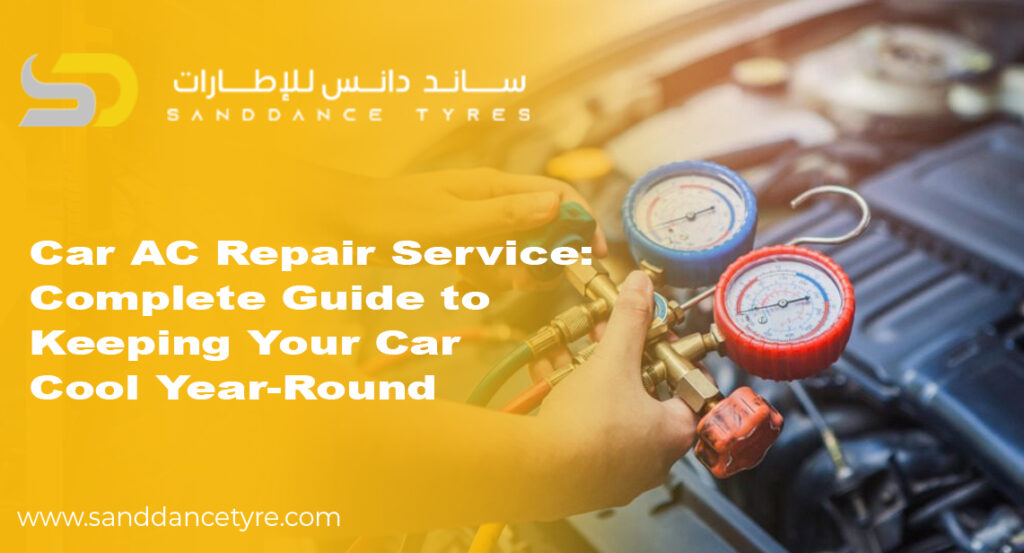
A thorough car AC repair service starts with a diagnostic check. Technicians use pressure gauges to measure refrigerant levels and inspect for visible leaks, damaged hoses, or corrosion around fittings. Modern shops often use UV dye tests to pinpoint exactly where refrigerant is escaping, since even a pinhole leak can drain a system over several months.
Refrigerant Recharge
If refrigerant levels are low, the system gets recharged to the manufacturer’s specified amount. It’s worth noting that overfilling or underfilling can both cause performance issues, so this step should always be handled by someone with the right equipment and experience rather than attempted with a store-bought recharge kit.
Compressor and Component Inspection
The compressor is the heart of the AC system, and a good technician will check its clutch, pulley, and overall condition. They’ll also look at the condenser, evaporator, expansion valve, and receiver-drier, since a fault in any one of these components can affect the whole system’s performance.
Belt and Hose Check
Worn belts and cracked hoses are common culprits behind sudden AC failure. Part of a comprehensive AC repair service includes checking these for wear and replacing them if they show signs of cracking, fraying, or leaking.
Final Performance Test
Once repairs are complete, the technician runs the system again to confirm it’s blowing consistently cold air and that pressures are within normal range. This step matters because a repair isn’t really finished until it’s been tested under real operating conditions.
How Often Should You Get Your Car AC Checked?
Most manufacturers recommend having your air conditioning system inspected at least once a year, ideally before the hot season begins. Refrigerant naturally leaks out at a very slow rate over time, even without a specific fault, so an annual top-up and inspection can prevent bigger problems down the line. If you’ve noticed any of the warning signs mentioned earlier, don’t wait for the annual check — get it looked at as soon as possible.
DIY vs. Professional AC Repair Service
There’s a lot of temptation to grab a refrigerant recharge can from an auto parts store and handle it yourself. For very minor top-ups, this can work temporarily. But it comes with real risks:
- Overcharging the system can damage the compressor
- DIY kits don’t fix leaks, they just mask the symptom temporarily
- Refrigerant handling requires proper equipment to avoid environmental harm
- Misdiagnosing the issue can lead to unnecessary part replacements
A professional car AC repair service uses proper diagnostic tools, follows manufacturer specifications, and can spot underlying issues that a quick DIY fix would miss entirely. What looks like a simple low-refrigerant problem might actually be a slow leak that will just come back in a few weeks if it isn’t properly sealed.
Choosing the Right Shop for AC Repair Service
Not all repair shops handle air conditioning systems with the same level of expertise. When choosing a shop, look for technicians who are certified to handle refrigerants, have modern diagnostic equipment, and are transparent about pricing before starting work. A shop that explains what they found during diagnosis — rather than just saying “it needs a recharge” — is usually a good sign they know what they’re doing.
If you’re in the UAE, Sand Dance Tyre offers a dedicated car AC repair service that covers everything from leak detection to full compressor replacement, backed by experienced technicians who work on all major vehicle makes. Their team also handles broader maintenance needs, so if your car needs new tyres alongside AC work, it’s worth checking out their range of Dunlop tyres in Dubai while you’re there — since a full vehicle check often reveals more than one thing worth addressing at once.
How Weather Affects Your Car’s AC Performance
In hot, dusty climates, AC systems work harder and wear out faster than in milder regions. Dust and sand can clog condensers and radiators, forcing the compressor to work overtime just to maintain the same cooling output. If you live somewhere with intense summers, it’s worth having your AC inspected more than once a year, particularly checking the condenser for debris buildup and confirming the refrigerant charge is accurate before the hottest months hit.
Cold climates bring their own issues too, since seals and hoses can become brittle over winter months when the AC sits unused. When you switch it back on for the first warm day, that’s often when small leaks reveal themselves.
Cost Factors in Car AC Repair Service
Repair costs vary quite a bit depending on what’s actually wrong. A simple refrigerant recharge is usually the most affordable option, while compressor replacement tends to be the most expensive since it’s a major component. Other cost factors include:
- The age and make of your vehicle, since parts availability affects pricing
- Whether the issue is isolated or has caused damage to connected components
- Labor rates, which vary by shop and region
- Whether OEM or aftermarket parts are used
Getting a clear diagnosis first prevents paying for unnecessary parts or labor. A trustworthy AC repair service will always explain the actual cause before recommending a fix, rather than replacing parts on guesswork.
Preventive Tips to Extend Your AC’s Lifespan
A little routine care goes a long way toward avoiding expensive repairs down the line.
- Run the AC regularly, even in cooler months, to keep the compressor seals lubricated and prevent them from drying out.
- Replace the cabin air filter every 12,000–15,000 miles or as recommended by your manufacturer, since a clogged filter reduces airflow and strains the blower motor.
- Keep the condenser clean by having debris and dust cleared away, especially if you drive in dusty conditions often.
- Don’t ignore small changes in airflow or temperature — catching issues early almost always costs less than waiting.
- Get an annual inspection before summer, so any weak points are caught before the heat puts real strain on the system.
Final Thoughts
Your car’s air conditioning system works hard, especially during long drives in extreme heat, and it deserves the same attention you’d give your brakes or engine. Recognizing the early warning signs — warm air, odd noises, weak airflow, or musty smells — can save you from a much larger repair bill later. Whether it’s a simple recharge or something more involved like a compressor swap, getting a proper diagnosis from a trusted car AC repair service is always the smarter move over guessing or delaying.
Staying cool shouldn’t be a seasonal gamble. With regular checks and the right professional support, your car’s AC can run reliably for years, keeping every drive comfortable regardless of what the weather throws at you.