
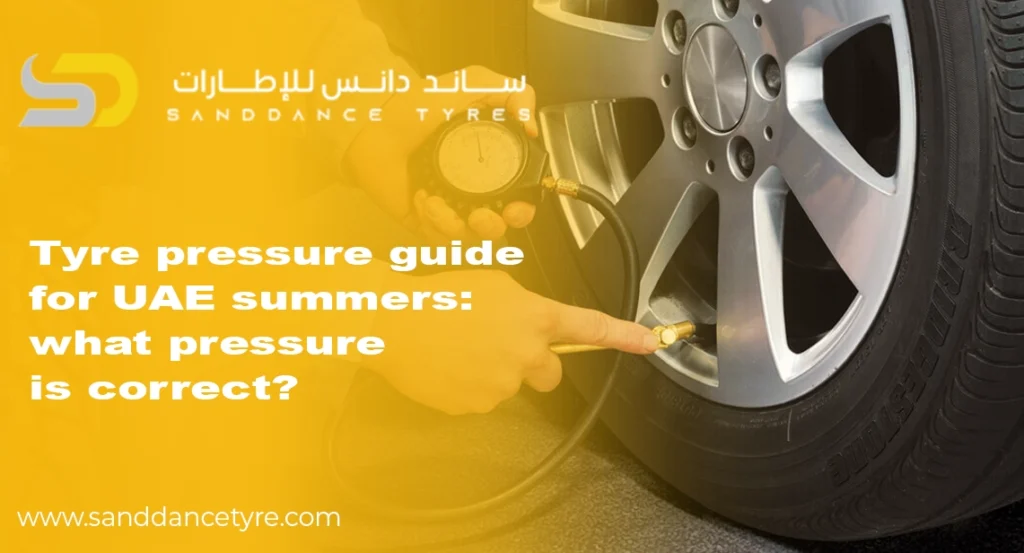
If you’ve ever walked to your car on a July afternoon in Dubai or Abu Dhabi and felt the heat radiating off the asphalt, you already understand why this tyre pressure guide for UAE summers matters more than you might think. The temperature doesn’t just make you uncomfortable—it directly affects the air inside your tyres, and getting the pressure wrong can be genuinely dangerous.
Let’s break it down in plain terms so you drive confidently no matter how brutal the summer gets.
Why Tyre Pressure Changes in UAE Heat
Here’s something a lot of drivers don’t realize: tyre pressure isn’t a “set it and forget it” situation, especially in a climate like the UAE’s.
The science behind it is straightforward. For every 10°C rise in ambient temperature, tyre pressure increases by roughly 1 to 2 PSI. In a country where summer ground temperatures can exceed 60°C and road surfaces get scorching hot within hours of sunrise, that’s not a small shift—it can mean your tyres are running 4 to 8 PSI above what you set in a cool garage.
Now here’s where people go wrong: they see the higher reading and let the air out. Don’t do that. The increased pressure from heat is normal and expected. The real risk is under-inflation—starting the day with tyres that are already low, then hitting a hot highway where the pressure difference between the inside and outside becomes a structural problem.
What Is the Correct Tyre Pressure for UAE Summers?
Follow Your Manufacturer’s Recommendation — Always
The single most reliable source for the right tyre pressure is the sticker on your driver’s door jamb or inside the fuel cap. This number is set by your car’s manufacturer based on the vehicle’s weight, suspension, and intended performance. It’s usually expressed in PSI (pounds per square inch) or Bar.
For most passenger cars in the UAE, this figure falls between 32 and 36 PSI for standard tyres. SUVs and larger vehicles may sit slightly higher.
What you shouldn’t do is go by the maximum PSI printed on the tyre’s sidewall — that’s the maximum the tyre can handle, not the recommended operating pressure. Running at maximum sidewall pressure is actually dangerous.
Morning Checks Are More Accurate
Check your tyre pressure first thing in the morning, before you’ve driven anywhere. Tyres heat up as you drive, which raises pressure. A midday reading on a car that’s been sitting in the sun all day will give you a falsely high number.
If you can only check during the day, add about 3–4 PSI to whatever your cold-inflation target is, and aim for that as your reference point. It’s not perfect, but it’s better than ignoring the check entirely.
Seasonal Adjustments for UAE Conditions
Some experienced mechanics and fleet managers in the UAE recommend staying at the higher end of the manufacturer’s recommended range during summer — for example, if your car calls for 32–35 PSI, targeting 34 PSI gives a small buffer against the natural pressure drop that can happen when you park in shade after a hot drive and the air cools quickly.
You’re not overinflating. You’re working with the environment intelligently.
The Real Risks of Wrong Tyre Pressure in Summer
Under-Inflated Tyres Are a Fire Risk
This isn’t an exaggeration. A severely under-inflated tyre flexes excessively as it rolls. That flexing generates heat internally — on top of the already extreme external heat from UAE roads. The result can be a tyre blowout at highway speed, which is one of the leading causes of serious road accidents in the region.
Under-inflation also causes uneven wear on the outer edges of the tread, meaning you’ll replace tyres far sooner than necessary.
Over-Inflation Reduces Grip
On the other side, a tyre that’s too hard makes less contact with the road surface. That’s a grip problem — particularly on the sudden braking or evasive manoeuvres that UAE driving sometimes demands. Over-inflated tyres also wear faster in the centre of the tread, and they transmit more road harshness into the cabin.
TPMS Isn’t a Substitute for Manual Checks
Many modern vehicles have a Tyre Pressure Monitoring System (TPMS). It’s useful, but it only alerts you when pressure drops significantly — typically 25% below the recommended level. That means your tyres could be running under-pressure for weeks before the warning light comes on. Manual checks are still essential.
How Often Should You Check Tyre Pressure in Summer?
During UAE summers, a weekly check is sensible if you’re doing regular driving. If you’re heading out on a long highway trip — say, Dubai to Abu Dhabi or across to Fujairah — check the tyres before you leave.
Also check after any significant temperature swing, like if there’s a rare cool spell followed by a return to peak heat. Pressure will follow the temperature up and down.
At Sand Dance Tyre, customers often mention they had no idea how much summer heat was affecting their tyres until a technician showed them the difference between their morning and midday readings. It’s one of those things that becomes obvious once you see it.
Tyre Maintenance Beyond Pressure: What UAE Drivers Need to Know
Getting tyre pressure right is step one. But it works alongside a few other things that are equally important in this climate.
Tyre Rotation and Alignment
Uneven wear patterns are accelerated in UAE summers because heat softens rubber compounds and hot roads are more abrasive. Rotating your tyres every 8,000–10,000 km spreads that wear evenly across all four corners. Wheel alignment should be checked at the same intervals — a misaligned wheel scrubs tread away far faster than normal.
Check Your Spare Tyre Too
How many drivers check their spare? Not many. In UAE summer heat, a spare that’s been sitting in the boot for six months can be dangerously low by the time you need it. Add it to your monthly check routine.
Tyre Age Matters as Much as Tread Depth
UAE’s intense UV exposure and heat cycles degrade rubber compounds faster than in cooler climates. Even a tyre with good tread depth can be unsafe if it’s more than five years old and showing surface cracking. Check the manufacturing date (a four-digit code on the sidewall—the last two digits are the year) and replace aged tyres accordingly.
Your Car’s Overall Health and Tyre Performance
Here’s something worth knowing: tyre pressure doesn’t exist in isolation. Your car’s suspension, alignment, and even your air conditioning system affect how your tyres wear and how your car handles.
Overheating is a related concern during UAE summers — not just for tyres but for the entire vehicle. If your car is running hotter than usual, or your car AC repair service isn’t keeping the cabin cool, it’s worth getting the whole system looked at together. A vehicle under thermal stress tends to put more load on every component, tyres included.
Similarly, a well-maintained heating and cooling system is part of keeping the vehicle operating within safe temperature ranges overall, which in turn protects your tyres from the compounding effects of an overheating engine or compromised cooling system.
For a full range of tyre services and expert advice suited to UAE driving conditions, Sand Dance Tyre is worth your time—experienced technicians who understand what local roads and climate actually do to your vehicle.
Quick Reference: Tyre Pressure Checklist for UAE Summers
- Check pressure in the morning, before driving, for the most accurate reading
- Use your door jamb sticker—not the tyre sidewall max — for the correct PSI
- Aim for the higher end of your manufacturer’s range in peak summer
- Check weekly during hot months, and before any long trip
- Don’t let air out just because the pressure reads high on a hot day
- Include your spare in every monthly check
- Look for cracks on tire sidewalls—UV and heat degrade rubber over time
- Get a professional inspection if your car has been sitting for weeks without use
What Our Customers Say
Customer Reviews
⭐⭐⭐⭐⭐ Ahmed R. — Dubai “I came in thinking my tyres were fine, just a routine check before a long drive to Oman. The technician showed me that two of my tyres were nearly 8 PSI under what they should be. Never knew summer heat could mess with pressure that much. Really glad I stopped by. Will be back regularly.”
⭐⭐⭐⭐⭐ Fatima Al Mansouri — Abu Dhabi “Honest advice, no upselling. They checked my tyre pressure, explained why the rear tyres were wearing unevenly, and sorted the alignment on the spot. The team clearly knows what they’re talking about when it comes to UAE conditions specifically.”
⭐⭐⭐⭐⭐ James T. — Sharjah “I’ve been driving in the UAE for four years and never thought much about tyre pressure beyond the TPMS warning light. After speaking with the team here I completely changed my habits — weekly checks, morning readings, the lot. It’s made a noticeable difference to how the car handles in the heat.”
⭐⭐⭐⭐ Priya S. — Dubai “Went in for a tyre rotation and ended up learning more about tyre care in hot climates than I had in years of driving. The staff were patient with all my questions and the service was fast. Would recommend to anyone who’s new to driving in the Gulf.”